Print Story
X




Some citizens believe the Kohsar market’s transformation to an upscale café hub has added depth to the character of the city. For the vast majority though, the products on display are simply unaffordable.
| F |
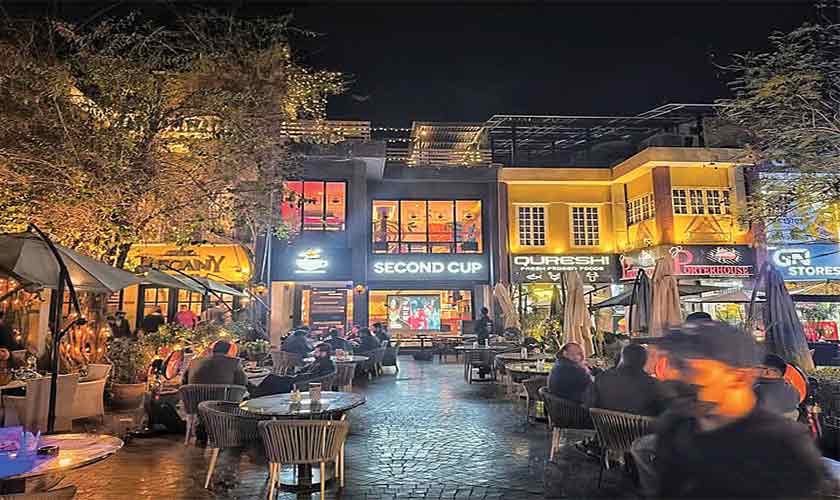
or years, Kohsar Market sat quietly in a leafy pocket of Islamabad’s F-6 sector, calm, refined and mostly frequented by foreigners and long-time residents. Today, the market looks nothing like its old self. What was once a sleepy corner of the capital has turned into one of Islamabad’s liveliest social spots, thanks in large part to a wave of new coffee shops and artisanal food outlets that have reshaped its atmosphere and identity.
Over the last few years, Islamabad’s café culture has exploded. The city once relied on hotel lobbies for a decent cup of coffee as its streets became deserted after 10pm. The landscape is entirely different today. Specialty roasters, gourmet bakeries and boutique cafés have mushroomed across the capital and stay open till late night. Kohsar Market’s recent transformation stands out. Its newest coffee shops, nestled among old bookstores and longstanding expat-run stores, have drawn a surge of young professionals, remote workers, influencers and coffee aficionados.
New cafés, designed with minimalist interiors, have become the main attraction. On any given afternoon, especially on weekends, finding a place to sit is nearly impossible. By early evening, the parking lot, once half-empty even on weekends, is overflowing. Drivers double-park, security guards whistle in vain and latecomers circle repeatedly for a spot.
For many Islamabadis, this is a pleasant change. “The new cafés are beautiful and the food is genuinely good,” says Maryam Khan, a frequent visitor and self-proclaimed coffee lover. “For years, I wondered why Islamabad didn’t have proper options. Now, Kohsar has become my go-to place.”
The charm, however, extends beyond coffee. Among the biggest attractions is a high-end meat shop that has redefined the idea of a neighbourhood butcher. Inside, glass-fronted chillers display an assortment rarely seen in Pakistan — premium lamb cuts, grass-fed beef, organic chicken and exotic options like rabbit, duck and turkey; even imported seafood ranging from sol to salmon. For many, the shop alone warrants a visit to the market.
This curated mix of specialty food, gourmet coffee, artisanal cheese and imported produce has given Kohsar Market a unique appeal. The possibility of coming across a celebrity has made it a lifestyle destination.
“There’s something about this place,” says a long-time resident of F-6. “Maybe it’s the location, maybe the atmosphere, or the blend of old shops and the new ones. Kohsar has its own character that keeps pulling people back.”
The location is hard to beat. Tucked against the backdrop of the Margalla Hills and surrounded by leafy boulevards, Kohsar Market offers an ambience that few other markets can match.
But the charm comes at a cost. Kohsar has always been an upscale market. Its recent makeover has made it even more exclusive. The influx of imported goods, gourmet delicacies and high-end cafés has raised prices across the board. Inside the market’s two popular departmental stores, shopping feels more like browsing through a boutique grocery store somewhere in Europe than through a local Pakistani market. Ordinary items such as cereal, candies or breakfast spreads often carry price tags high enough to surprise even regular shoppers.
For many residents of Islamabad, this exclusivity is part of Kohsar’s identity. For others, it highlights a growing economic divide. With inflation putting pressure on millions of households, markets like Aabpara, Peshawar Mor, Karachi Company and Sunday Bazaars remain the only realistic shopping options for those struggling to make ends meet. Kohsar has increasingly become a place for those with deep pockets, or those seeking an occasional treat.
Despite its steep pricing, the market’s transformation seems to have boosted business rather than slowed it. Store managers may be reluctant to openly acknowledge a rise in sales, especially at a time when many businesses blame the state of economy for stagnation, but the swelling crowds tell their own story.
Part of this revival can be attributed to how Islamabad’s social habits have changed. Post-pandemic, the capital has seen a notable shift toward outdoor dining, leisurely café visits and remote work culture. With thousands of young professionals, entrepreneurs and freelancers now working from laptops instead of offices, cafés have become informal workplaces. Kohsar Market’s new outlets, with their bright interiors, reliable Wi-Fi and outdoor spaces, have captured this demographic.
The market has also become a favourite spot for tourists, international visitors and diplomats, many of whom stay in nearby guesthouses and boutique hotels. Their presence has encouraged shop owners to expand their imported product lines, adding to the sense of an international marketplace.
Kohsar remains a place of contrasts. It is charming yet expensive, bustling yet serene, cosmopolitan yet deeply rooted in its old character. Its small lanes are filled with both luxury SUVs and old hatchbacks; its cafés host both students with laptops and expats looking for a taste of home. In many ways, it reflects the evolving identity of Islamabad — a city still growing into a modern self.
The writer is a reporter for The News International