Print Story
X




From Abdul Qadir to Aamer Sohail, the ground has produced cricket greats for the country

Dharampura’s historic Mian Mir Baradari Ground, a cradle of Pakistani cricketing talent and one of Lahore’s last surviving public sports spaces, is facing a grave threat as reports circulate that the ground may soon be auctioned for commercial development.
Alarmed by the possibility, local cricket clubs and former players have appealed to Punjab Chief Minister Maryam Nawaz Sharif and Punjab Sports Minister Malik Faisal Ayub Khokhar to intervene and ensure that this precious sporting heritage remains intact for the youth of the area.
For generations, the Baradari Ground, situated beside the Darbar of Hazrat Mian Mir, has served as the only accessible cricketing space for the densely populated and predominantly working-class community of Dharampura. Just as Lahore’s iconic public grounds like Iqbal Park (formerly Minto Park) near Minar-e-Pakistan, M.A.O. College Ground, and the Islamia and Muslim Schools’ grounds in the Cantonment nurtured cricket at the grassroots level, the Mian Mir Baradari Ground has stood as a sporting lifeline for thousands of young boys who dreamed of wearing Pakistan’s green jersey.
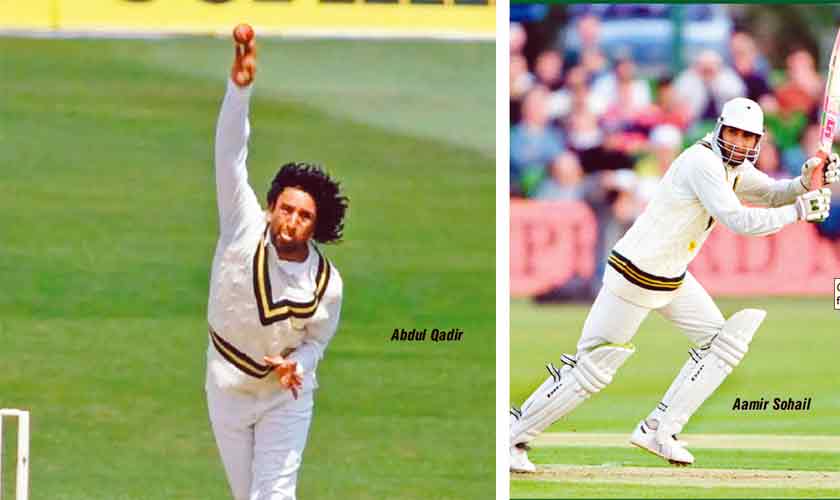
Few public playgrounds in Pakistan can boast a legacy as rich as this. It is here that two of Pakistan’s cricketing icons, the legendary leg-spin wizard Abdul Qadir and former Test opener and noted commentator Aamer Sohail, sharpened their skills and set the foundations for international glory.
The ground’s history stretches back to pre-Partition days when Dharampura was a predominantly Hindu locality. After 1947, as the area transformed into a bustling working-class settlement, this barren piece of land became the only open space where the children of Dharampura could run, play, and dream. Over time, it evolved from an empty field into a vibrant cricket nursery. A smaller ground behind the Dharampura Police Post did exist, but it was eventually handed over to the Education Department for the construction of a girls’ school. That shift made the Baradari Ground even more critical.
Although the ground never became a lush, manicured facility, it nurtured raw talent with unmatched consistency. Three clubs, Dharampura Club, Dharampura Gymkhana, and Dharampura Sports, all affiliated with the Lahore City Cricket Association, continue to conduct their nets and training sessions here. Their contribution to Pakistan cricket has been substantial.
Beyond Qadir and Sohail, the ground produced Test cricketer Naveed Anjum, Shahzad Altaf, and Saleem Raza, the latter two representing the UAE in the 1996 ICC World Cup. Post-retirement, Shahzad Altaf became a transformative figure in UAE cricket, founding the influential Young Talents Cricket Academy (YTCA). Alongside these renowned names, dozens of first-class players owe their careers to the dusty pitches and humble coaching culture of the Baradari Ground.
Today, however, uncertainty clouds the future of this historic patch of earth. Rumours of its auction for commercial use have caused widespread concern among players, coaches, residents, and club organisers, many of whom fear that Dharampura’s only sporting facility could soon disappear in the name of real estate development.
For an area teeming with youth but lacking even basic recreational infrastructure, the loss of this ground would be a cultural and social tragedy. Generations of families have seen their children grow, learn discipline, find mentorship, and nurture ambitions on this very soil.
The organisers of the three longstanding Dharampura clubs have collectively submitted appeals to the Chief Minister of Punjab, the Sports Minister, and the local Member of the National Assembly (MNA), urging them to intervene and safeguard the ground’s status as a public cricket facility.
They argue that the Mian Mir Baradari Ground is not merely a piece of land, it is an institution, a heritage site, and the beating heart of a community. To convert it into commercial property would be to erase decades of sporting history and close the door on the aspirations of thousands of young cricketers.
Local players insist that if Punjab wishes to revive grassroots sports, preserve its heritage, and honour the contributions of legends like Abdul Qadir, then protecting the Mian Mir Ground is not just an option, it is a responsibility. The ball is now in the government’s court. The youth of Dharampura wait anxiously, hoping their voices will be heard, and that the sacred soil which once shaped champions will not be lost to concrete and commerce.