Print Story
X




Unchecked population growth rate has cost Pakistan no less than 2-3 percentage points annually in its GDP
| O |
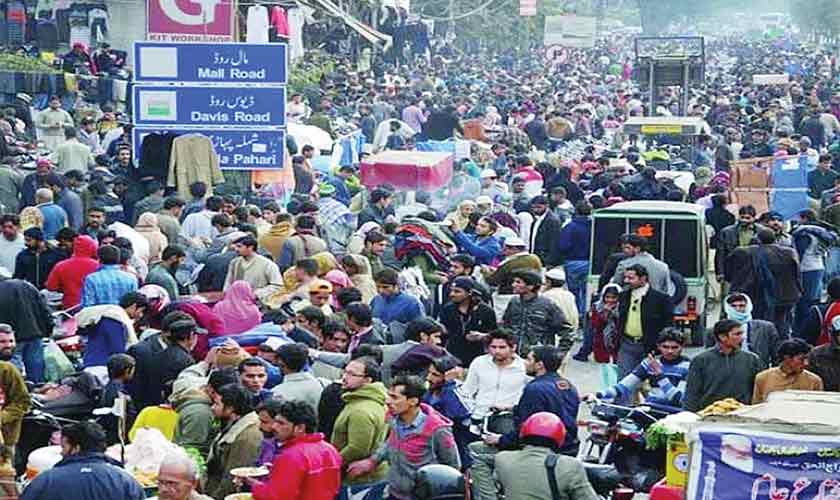
Over the last three decades, i.e. from 1995 to 2025, Pakistan’s population has increased so rapidly that it has more than doubled from ~110 million in 1995 to ~240 million in 2025. Meanwhile, the average annual GDP growth rate was ~4.2 percent, not too bad given the political and security situation in and around Pakistan. However, our population growth rate of 2.3 percent during this period forced the government to support the ever-rising recurring costs in health, education and other sectors, leaving very little to invest in economic development and jobs creation.
Sadly, we still don’t have a full idea of how this unchecked population growth rate has stunted the living standard of people on one hand and our national economy on the other. Studies by various organisations, such as Population Council and UNFPA, indicate that Pakistan has lost no less than 2-3 percentage points annually in its GDP that could have been in the range of 6-7 percent annually throughout this period. Consequently, the size of our economy today could have been $600-700 billion, rather then $380-400 billion. Pakistan would not have needed the half a dozen bailout programmes from the IMFduring this period.
Beyond the numbers, it has been painful to watch how people had to suffer the consequences of rapid population growth in their daily lives. The high population growth rate kept adding hundreds of thousands of job seekers far, more than the available jobs. According to the Labour Force Survey 2024-25, the labor force grew from ~72 million to ~83 million in the last four years. This means ~2.8 million new entrants every year. Meanwhile, the number of employed people increased from ~67 to ~77 million, which means ~2.5 million jobs were created annually on average. As a result, the number of unemployed job seekers rose from 4.5 million in 2021 to 5.9 million in 2024-25; as many as 1.4 million new people were added to the already large unemployed population.
It is for the alarming high rates of population growth and unemployment that in Pakistan we see a very high working age dependency ratio at ~69 percent, meaning there are about 69 dependents for every 100 working-age individuals. Remember, not all working-age individuals are earning individuals. For comparison, Bangladesh and India have dependency ratios of ~ 52 percent and ~46 percent, respectively. The high dependency rate makes it extremely difficult at household level to find resources for health and children education, let alone any savings: the reason why we continue to have over ~25 million children out of schools, the second highest globally.
At macro-level, the state faced severe challenges in finding resources to invest in human development; similar to what people faced at household level. Whatever modest investment governments made in education and health sectors proved was insufficient in the face of unbridled population growth. Not only did it fail to meet the health, educational and skill development needs in quantitative terms but in qualitative terms too, given the pressure of population. Long story short: we ended up with workers of which a majority is poorly educated, only nominally trained and in poor health. Most of the new labour force entrants end up in informal, low-productivity jobs, expanding the unskilled labour pools, with an uncertain income future and near certain poverty.
Over the period, Pakistan also suffered immensely from the menace of terrorism, especially after 2001. It might sound shocking but the economic losses incurred by Pakistan from terrorism are lower than those from the unrestrained population growth. According to the Ministry of Finance, terrorist incidents caused around $150 billion losses during 2001-2015, the worst period in the country’s internal security history.
On the other hand, the cost of unchecked population growth has been insidious, constant and compounding over the decades with systemic damage, eroding per capita income, resource depletion and infrastructure strain. As population growth consistently outpaced economic growth, the economy stagnated and prosperity for masses remained a distant dream. The lost 2-3 percent points in Pakistan’s annual GDP growth rate over the last three decades because of rapidly growing population, as mentioned earlier, compounded to a cumulative loss of at least $2.5 trillion. That’s like losing more than six years of our GDP at current size.
Pakistan must not be contented with cliched reforms rhetoric but act on war footing in two areas at the same time: one is expanding the economy for more jobs creation and increase in people’s incomes. The second is family planning i.e. promotion of small family size. It can easily learn from other Islamic countries. The provincial governments must make their social protection programmes conditional on a small family size.
If we fail to rein in the population growth and expand the economy simultaneously, Pakistan’s population will be around 400 million in 2050. Such a population size will leave Pakistan with many more millions of uneducated, undernourished youth. It goes without saying that this will pose an existential challenge to peace, order, democracy and the state.
The writer is a sociologist with extensive work in social policy and development. He’s accessible at [email protected]