Print Story
X




Pakistan always had the raw ingredients for take-off. What it has lacked is policy coherence and continuity
| P |
akistan has never been short on ambition, but it has rarely managed to convert ambition into altitude. That is why the mood at the URAAN Pakistan Conference at Oxford this month felt different. For once, the discussion was not orbiting the usual gravitational pull of crisis, politics and repair jobs. Instead, it focused on a structured attempt to rethink the country’s economic direction. The 5E’s framework presented: exports; e-Pakistan, environment; energy and infrastructure; and equity and empowerment, rested on a simple discipline: diagnose clearly, plan coherently and enforce ruthlessly. It was almost disarming in its clarity. Perhaps that clarity was what felt new.
Minister for Planning, Development and Special Initiatives Ahsan Iqbal spoke with rare precision about what it will take to change the country’s trajectory. In a conversation afterwards, he was candid about the central challenge: Pakistan is not condemned to repeat past mistakes, but escaping them will demand consistency, political backbone and the active involvement of Pakistanis abroad. The ambition, in other words, cannot remain state-bound; it must become national.
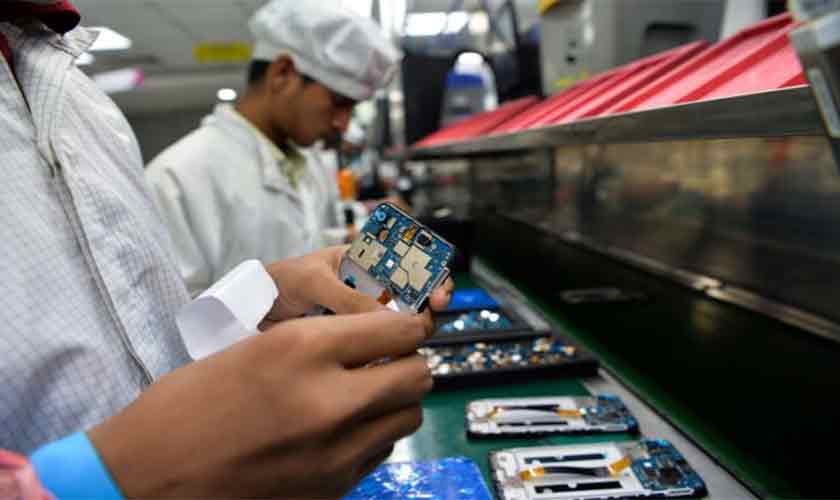
His argument rested on a decisive break with the old doctrine of import-led growth — a model that once promised industrialisation but ended up creating dependency, inefficiency and a shallow production base. “We are moving to an export-led model; that is the only path countries like us have,” he said. The point is hardly controversial: no country has raised incomes or stabilised its macro-economy without expanding what it sells to the world. Vietnam, his preferred example, did not climb by accident. It climbed through discipline, openness and relentless competitiveness. Pakistan’s pivot in this direction is rational, overdue and unavoidable.
The urgency is reinforced by the country’s current economic fundamentals. Growth has returned but remains too weak to absorb a restless young labour force. Inflation has eased yet remains vulnerable to global shocks. The current-account deficit, briefly subdued, is widening again. Climate volatility is wiping out gains that take years to accumulate. Pakistan’s export base is narrow, concentrated and fragile. It cannot carry the weight of a modern economy.
The minister did not shy away from this. “We have depended too much on textiles,” he said. “We will not abandon them, but we are diversifying.” The diversification map runs through higher-value agriculture, IT services, engineering goods and minerals, not as isolated ventures but as parts of an integrated national strategy. That strategy sits within the URAAN pillars, which, unusually for Pakistan, seem aligned rather than aspirational.
If Pakistan wants to follow Vietnam’s path, it must borrow Vietnam’s seriousness: predictable rules, depoliticised reforms, incentives tied to tangible outcomes and an insistence on productivity rather than protection. It must expand digital access.
Yet the most striking part of our discussion was not economics but climate justice. The minister’s frustration was unmistakable. “The world has double standards,” he said. “They tell us to adapt and build resilience, but they still aren’t giving us the share we deserve. We are paying the price for emissions we did not create.” Few countries face climate damage on Pakistan’s scale; fewer still have contributed so little to causing it. For Pakistan, climate action is not a moral accessory; it is the central organising principle of its development strategy. But resilience requires capital, and capital requires fairness. Until the global financial architecture recognises this, Pakistan will keep rebuilding what others have destabilised.
Even so, the minister was not seeking partners. “We need the Diaspora,” he said. Not for remittances only, Pakistan already receives those, but for something more valuable: networks, expertise, patient capital and credibility. Pakistan cannot transition to an export-driven, climate-resilient economy purely through bureaucratic planning. It needs a distributed engine of citizens who see opportunity rather than distance. URAAN, unlike earlier visions, seems intentionally designed to integrate them.
But elegant frameworks have come and gone. The test now lies in execution. The diagnose-plan-implement sequence is deceptively simple but historically elusive. The diagnosis is clearer than it has been in years. The planning has sharpened. The implementation will decide whether this moment becomes transformative or simply the latest in a long line of promising blueprints.
If Pakistan wants to follow Vietnam’s path, it must develop Vietnam’s seriousness: predictable rules, depoliticised reforms, incentives tied to tangible outcomes, and an insistence on productivity rather than protection. It must expand digital access, so opportunity does not remain urban. And it must climate-proof infrastructure and agriculture, because the alternative is a perpetual cycle of rebuilding and regression.
There is reason for optimism. Stabilisation has taken hold. The narrative is shifting from firefighting to strategy. And the Diaspora, particularly those who witnessed the discussions in Oxford, senses a moment worth investing in.
Pakistan always had the raw ingredients for take-off. What it has lacked is coherence and continuity. URAAN may yet prove different. If the country sustains this pivot; from imports to exports, from reaction to resilience, from isolation to intelligent global integration, the vision unveiled at Oxford could mark more than a conference. It could mark the moment Pakistan finally began trading ambition for altitude.
The writer is a senior lecturer in finance, leading partnerships and apprenticeships at Birmingham City University’s Department of Accountancy, Finance and Economics.