Print Story
X




With small investments sheep milk can enhance food security and household incomes in Thar
| T |
harparkar is a land of livestock and vast arid sands. Unpredictable rains frequently challenge the Thari people, who have accumulated deep wisdom and traditional knowledge of livestock management. However, due to a lack of resources and business linkages, they are sometimes unable to turn this knowledge into sustainable opportunities.
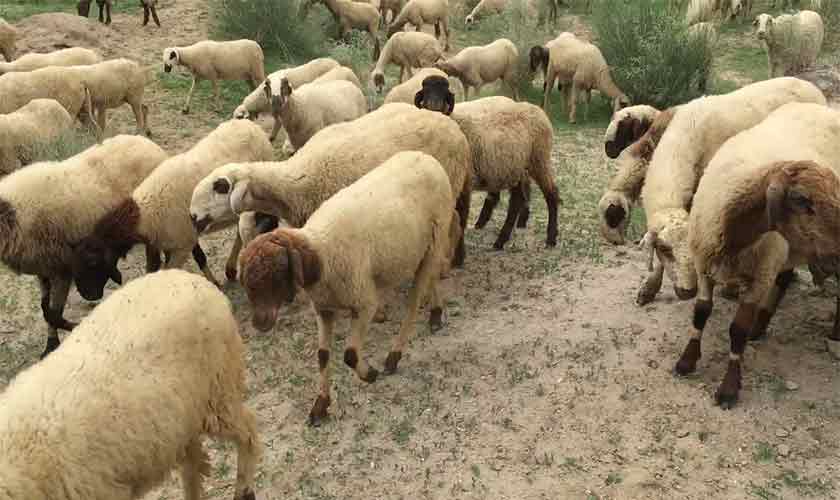
In Thar, most households own small ruminants, such as sheep, yet they do not use sheep milk because of its different taste, odour and color. Certain myths and taboos discourage them from utilising this valuable resource.
Many Tharis believe that sheep milk is meant only for lambs. They rarely invest in proper fodder so that their sheep mostly graze on the pastures, eating whatever is naturally available.
Their livestock management practices are based on old methods of adapting to harsh desert conditions. Most Thari people are unaware that sheep milk is highly nutritious and has considerable commercial potential.
Most households keep sheep for breeding. Some Muslim communities raise them mainly for meat. Among both Hindus and Muslims, sheep milk is always reserved for lambs, used sparingly and collected rarely. This practice has caused Thari communities to miss valuable opportunities for improved nutrition, income generation, value-added rural enterprise and climate-resilient livelihoods.
Sheep milk is scarce in both traditional diet and markets across Thar. There are several cultural, economic and technical reasons why Thari people rarely consume or sell sheep milk. In terms of tradition and animal management, many shepherding families prioritise the survival and growth of lambs; the ewes’ milk is reserved for them. Only a small surplus—if at all—is considered for human use. This cultural norm is deeply rooted and widely practiced throughout Thar.
The second major reason is the low yield per animal and the seasonal nature of production. Compared to cows or buffaloes, a sheep produces less milk. Further the lactation period in sheep is short and seasonal. This makes routine collection and a year-round supply difficult without proper aggregation. Moreover, most herders are unaware that providing a balanced feed can significantly increase milk production.
As Thar has no established practice of selling sheep milk, there is virtually no market for it. There are no recognised buyers, processors or trusted local brands for fresh milk, cheese, yogurt or cosmetic products made from sheep milk. This absence of market infrastructure causes uncertainty and financial risk for potential producers.
Thari people traditionally prefer cow or buffalo milk. The lack of awareness about the nutritional benefits of sheep milk further reduces its demand across most parts of the desert.
There is a need to guide Thari people in understanding these barriers and changing their practice. Awareness and sensitisation are essential to help communities realise the nutritional and economic benefits of sheep milk. Sheep milk is highly concentrated in solids — it typically contains more protein, fat, calcium and certain vitamins per litre than cow or goat milk. This makes it especially efficient for producing cheese, strained yogurt and infant or clinical nutrition products.
The rich protein and micronutrient profile of sheep milk can help address the issue of malnutrition in Thar, provided it is made safe and accessible. Economically, since sheep milk yields more cheese and dairy solids per litre, even small quantities can become profitable value-added products, particularly benefiting women and small producer households. These simple facts need to be communicated to Thari communities so they understand that even a small amount of sheep milk holds great nutritional and financial value.
There are many lessons and examples from other countries that Thar can replicate in selling and marketing sheep milk. In Greece, Spain and Italy, many classic cheeses are made from sheep milk and fetch premium prices when supported by protected designation of origin (PDO) status and linked to tourism and culinary markets. These regions successfully combine breed selection, seasonal grazing, artisanal processing and strong marketing to build profitable value chains.
There is a need to guide Thari people in understanding these barriers and adopting practical change. Awareness and sensitisation are essential to help communities realise the nutritional and economic benefits of sheep milk.
Thar does not need to copy the PDO model exactly, but it can learn from these examples to focus on product specialisation, local branding and milk enhancement strategies. With proper nutrition and management, the region can triple its sheep milk output while improving the value of its livestock population.
In India, cooperative milk collection models have shown remarkable success. Many smallholder dairy cooperatives aggregate milk, provide timely payments, offer animal health services and share infrastructure — transforming farmer incomes and improving market access. The cooperative principle, which includes village-level milk collection points, quality testing and federations for processing and marketing, can also be adapted for small ruminant milk.
Companies from Pakistan can invest in similar cooperative models for sheep milk in Thar, guiding and sensitizing local communities about the potential benefits. Such initiatives can significantly boost the region’s growth in both meat and milk production while strengthening the livelihoods of Thari herders.
Such a model can be implemented through a phased strategy involving local government, cooperatives and private partners. It is practical, low-risk and builds on global best practices — offering a win-win business approach for sustainable growth and prosperity in Thar.
Thar can begin on a small scale through demonstration households and school nutrition pilots. There is a need to establish model households and pilot school feeding programs where processed sheep-milk yogurt, cheese and other dairy products are provided in safe, pasteurised form. Seeing children consume sheep-milk products and mothers earning income from small-scale sales can change community perceptions more effectively than awareness pamphlets. Nutritionists should also be engaged to adapt these products to meet the dietary needs of children.
Thar holds the largest population of sheep among all Sindh districts. There is a strong need to introduce cold-chain and processing systems such as micro-chillers, solar-powered options and mobile pasteurisers. Investment in small chilling units, solar refrigerators and simple pasteurisation equipment can ensure that sheep milk is safely transformed into high-value products like strained yogurt, local cheeses and whey-based items. Off-grid technologies should also be explored in areas where electricity is unreliable. Aggregated sheep milk can become a profitable enterprise because of its high solids content — meaning less volume but greater value.
There is only one sustainable solution for Thar — to focus on value addition and market linkages. It is essential to produce shelf-stable or semi-stable products such as strained yogurt (labneh style), traditional cheeses, sweetened yogurt cups and infant nutrition powders. Cooperatives can brand these products as Thar Sheep Milk and target nearby urban markets, tourism sector and specialty food channels. This approach will not only create market demand but also build a unique regional identity for Thar’s dairy products.
There is a need to change mindsets in Thar to shift from traditional practices toward safer, income-generating and economically beneficial approaches. Sensitisation and awareness campaigns led by the Livestock Department can play a vital role in promoting adaptation and encouraging local communities to participate in this emerging business.
Women often manage small livestock such as sheep, so providing them with proper training and income opportunities can create strong local advocates for sheep-milk utilisation and enterprise development.
With small investments and proper sensitisation, sheep milk can enhance food security and household incomes in a way that aligns perfectly with Thar’s ecology — transforming the region into a potential business hub for Thari communities. As Thar already has more than two millions sheep, and the population continues to grow each year, this opportunity can be effectively managed through corporate partnerships or government-supported enterprises. Such initiatives can help strengthen the Thar economy by creating new business avenues, promoting local industries and improving livelihoods.
The writer, based in Umerkot, has more than 13 years of experience in the development sector. He can be reached at [email protected]