Print Story
X




An abandoned section of the Gujranwala railway station is being repurposed into an Adbi Baithak for the poets, students and civic activists
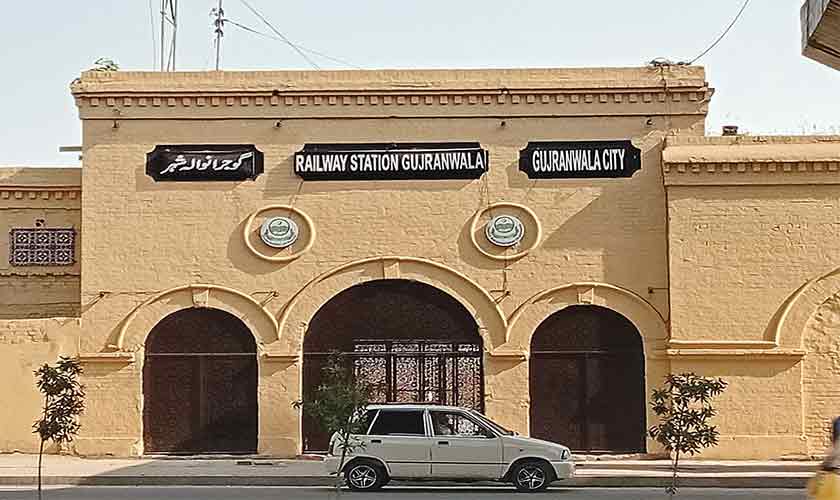
Poets, writers and political figures belonging to all schools of thought would daily congregate in the Tea Room. They used to discuss everything over numerous cups of chai amid the din of the trains arriving at and leaving the station.
The renovation of the historic Gujranwala railway station building, a 144-year-old landmark, has been welcomed by the citizens. The building was no longer in use and had stood derelict and forlorn. One still noticed it while whizzing past the noisy GT Road on way to Rawalpindi.
The railway station was constructed in 1881. It had since been a testament to vicissitude of the history. After the horrendous massacre at Jallianwala Bagh in Amritsar in 1919, many cities of the Punjab saw brief uprisings. Gujranwala was one of the cities in which resistance against colonialism was so intense that the Royal Air Force bombed the city in April 1919. A portion of the railway station was severely damaged in the incident.
The damaged portion was reconstructed. However, the building was discarded and another place came to be used for railway traffic. Over time, the building was reduced to a hollow skeleton devoid of any purpose.
When the divisional administration announced plans for this abandoned section of the Gujranwala railway station to be renovated and turned into a meeting place for the literati, writers, poets and civic activists were genuinely excited. They lauded the plan and called for more initiatives along the lines.
The administration also said that the building would have a library and arrangements were under way to equip it with the facilities needed for an Adbi Baithak.
This is not unprecedented for the Gujranwala railway station. There used to be a daily gathering of the poets, writers and activists (both right and left wing) in a part of the building that was known as the Tea Room.
Poets, writers and political figures belonging to all schools of thought would daily congregate in the Tea Room. They used to discuss everything over cups of chai amid the din of the trains arriving at and leaving the station. The Tea Room served as a nursery for poets and budding writers of Gujranwala. It shut down when the railway station shifted to another location.
“After the station was shifted, the regulars at the Tea Room started meeting at other places but it was never the same as having an Adbi Baithak at the station,” says Khalid Fateh Muhammad, the novelist.
This is not new for the Gujranwala railway station. There used to be a daily gathering of the city poets, writers and activists (both right and left wing) in a room of the building that was known as the Tea Room.
The writer says when he heard that an Adbi Baithak was being set up, he was pleased. “But, there should be a proper parking facility nearby.” He says that the Gujranwala Arts Council could also host events there.
Khalid Mahmood, a progressive writer and activist, has welcomed the initiative to convert the old building into a space designated for literary meetings. He remembers that he and some friends had produced a Vlog on the derelict building. Mahmood hopes that the building will again attract writers and activists of the city.
However, senior writer and political activist, Mahmood Ahmad Qazi, has a slightly different take. He says today the city is more densely populated so that it may be harder for “oldies” to attend regular sittings. Qazi hopes, however, that the younger lot of writers and poets will meet regularly and make the initiative a success.
In his book, Yeh Gujranwala Hai, Qazi has brilliantly captured the sociopolitical history of Gujranwala. He has discussed at length the various writers, poets and activists and the places where they used to hang out in the city.
Mahmood Qazi says that the Tea Room was instrumental in the intellectual growth of both right-wing and left-wing writers. He said these people would dissect every ideology. Sometimes the arguments led to fierce debates.
Writer Toseef Khan, who owns a big personal library, was also among the regulars of the Tea Room. He says it wasn’t only a meeting place for writers. “Businessmen, bankers, lawyers, political leaders and activists, even some of the local clerics, used to sit there.”
During the 1977 anti-Bhutto movement and, later, the Movement for the Restoration of Democracy against Zia, he recalls, the local leaders planned their strategies here.
As far as the district administration is concerned, they hope to make it a suitable location for the literati of the city. Commissioner Syed Naveed Haider Shirazi tells The News on Sunday that the Adbi Baithak shall be opened within a few weeks.
“The Adbi Baithak shall have a library, a reading room and a cafeteria for the readers,” says Shirazi. “An attempt has been made to provide an ambience mirroring that of Pak Tea House in Lahore.”
Divisional Superintendent Railways Muhammad Inamullah says that the repair work is being carried out by the district administration.
A resident familiar with the Tea Room says, “One hopes that the younger lot of the writers will reclaim the Adbi Baithak. A parking facility is needed to make the space functional.”
The contributor is a freelance journalist. He can be reached at altafhussainasad @gmail.com