Print Story
X




Afghanistan announces plan to build new dams over the Kunar and Kabul rivers
| T |
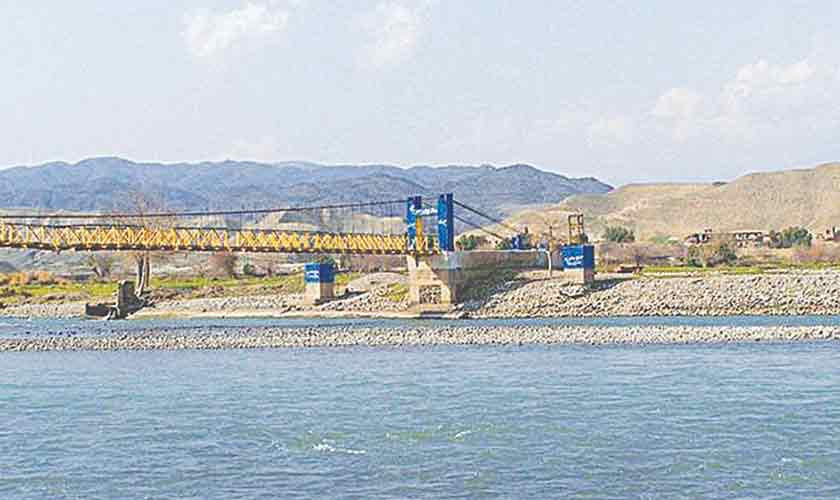
he ongoing debate over Afghanistan’s stated intention to build dams on the Kunar and Kabul Rivers has reignited regional concerns about trans-boundary water management and the geopolitics of the Indus basin. Pakistan, the downstream nation is heavily dependent on these water sources. It views such developments with a mix of caution, concern and a renewed call for structured cooperation. For Islamabad, the issue is not simply about water—it is also about regional stability, responsible governance and the sanctity of international norms governing shared resources.
Afghanistan’s recent pronouncements about building dams over the Kunar and Kabul Rivers have come at a time when the region is already witnessing heightened political tensions. The timing and tone of Kabul’s statements suggest a deliberate attempt to assert leverage against Pakistan, echoing what Islamabad has described as India’s hydro-aggressive approach. In Pakistan’s assessment, Afghanistan’s efforts to weaponise water resources mirror a broader political design—using development rhetoric to advance strategic pressure.
The shared river system between Pakistan and Afghanistan is ancient and vital. Afghanistan comprises five major river basins: Amu Darya, Indus-Kabul, Northern, Harirod-Murghab and Helmand. Of these, the Indus-Kabul Basin is the most critical for Pakistan. The two countries share nine rivers in total—three flowing through Khyber Pakhtunkhwa and six through Balochistan. The total average annual inflow from Afghanistan is approximately 23 million acre-feet, of which 17.5 MAF is contributed by the Kabul River system alone.
The Chitral River, which originates in Pakistan, flows into Afghanistan, joins the Kabul River, and then re-enters Pakistan. Its contribution of around 8 MAF underscores the interconnected nature of these waterways. The Kabul River system sustains nearly 80 percent of Khyber Pakhtunkhwa’s agriculture—making it a lifeline for millions of farmers and communities in northwestern Pakistan.
Currently, Afghanistan’s utilisation of shared waters is estimated at about 1.8 MAF annually. Kabul plans to increase this to 3.6 MAF by 2030, through an ambitious dam-building programme. Afghanistan already operates 21 dams—11 of them located in the Indus-Kabul Basin. It has plans to construct 12 new dams alongside more than 200 hydropower projects. These initiatives are said to require nearly $3 billion in investment, with technical input reportedly facilitated by Indian entities.
In 2011, India pledged $2 billion to assist Afghanistan in dam construction. However, most of these projects remain at the feasibility stage. If Afghanistan were to proceed with large-scale upstream dams, Pakistan’s Indus basin inflows could decline by nearly five percent. Such a reduction—roughly 0.75 MAF during the Rabi season and 3.7 MAF during Kharif—would have devastating consequences for Pakistan’s agricultural productivity, food security and rural livelihoods.
From Pakistan’s perspective, Afghanistan’s unilateral dam-building announcements come at a politically sensitive moment. Kabul, lacking an internationally recognised government and facing sanctions alongside frozen financial assets, lacks the resources and institutional capacity to undertake such massive infrastructure projects on its own. Pakistan sees external encouragement—particularly from India—as the driving force behind Kabul’s renewed water posture.
The strategic logic behind this alignment, in Islamabad’s assessment, is transparent. India, having suffered military and diplomatic setbacks in 2025, is seeking to re-establish influence in the region through indirect means. Encouraging Afghanistan’s dam-building ambitions allows New Delhi to exert pressure on Pakistan from two fronts—east and west—thus creating a hydropolitical pincer effect. Afghanistan’s leadership appears to be using the water issue as leverage to dissuade Pakistan from publicly raising concerns over the presence of anti-Pakistan groups, such as the Tehreek-i-Taliban Pakistan and the Balochistan Liberation Army, operating from Afghan territory.
The timing and tone of Kabul’s statements suggest a deliberate attempt to assert leverage against Pakistan, echoing what Islamabad has described as India’s hydro-aggressive approach.
Pakistan considers this a dangerous precedent. In Islamabad’s view, weaponising shared natural resources for political gain undermines regional trust and violates the principle of equitable and reasonable utilization, a cornerstone of international water law. As a lower riparian state, Pakistan has legitimate legal and moral rights to equitable access, prior consultation and protection from upstream harm. Any interruption of established water flows without bilateral agreement is not only illegal but also destabilising.
Islamabad’s position is anchored in facts, law and responsibility. Pakistan has repeatedly affirmed Afghanistan’s right to utilise its water resources for development, but insists that this must occur within the framework of a mutually agreed mechanism. The lack of such a framework creates unnecessary ambiguity, leaving both nations vulnerable to misunderstanding and manipulation by external actors.
In highlighting the potential consequences of unilateral upstream actions, Pakistani officials often cite the example of Egypt’s reaction to Ethiopia’s construction of the Grand Renaissance Dam on the Nile—a project that nearly escalated into a regional conflict. The lesson, Islamabad argues, is clear: water, as a lifeline, must be managed cooperatively, not competitively.
Pakistan also warns against the growing trend of hydro-aggression being normalised in South Asia. India’s threats to review or suspend the Indus Waters Treaty, combined with its current encouragement of Afghan water projects, signal an emerging pattern of regional water weaponisation. Islamabad sees this as part of a broader destabilisation strategy that risks igniting “wars of survival” over access to vital resources.
Pakistan advocates a multi-layered approach rooted in dialogue and diplomacy. It proposes that water-sharing discussions be institutionalised within existing regional mechanisms such as the Moscow Format, the Quadrilateral Grouping (Russia, China, Pakistan, Afghanistan) and the Trilateral Dialogue (China, Pakistan, Afghanistan). Such forums can facilitate transparency, joint monitoring and data sharing, while preventing misunderstandings from escalating into disputes.
At the same time, Islamabad seeks to project itself as a responsible and constructive stakeholder in regional hydro-politics. It emphasises that Pakistan has consistently honoured international agreements, including the IWT, despite its complex relations with India. By contrast, Afghanistan’s abrupt and unilateral pronouncements—absent formal consultations—reflect political desperation rather than genuine developmental intent.
Ultimately, Pakistan’s message to Kabul is one of cooperation over confrontation. Islamabad respects Afghanistan’s developmental aspirations but insists that any dam construction or water diversion must be preceded by a negotiated understanding ensuring fair distribution, environmental protection and hydrological transparency. Both countries share not only rivers but also destinies shaped by geography, culture and interdependence.
As the region faces mounting challenges from climate change, droughts and population growth, collective management of shared water resources becomes more urgent than ever. For Pakistan, the Chitral-Kabul River system is not merely a hydrological asset—it is a test of regional maturity and mutual trust. The choice before the two nations is clear: they can either allow water to become a source of rivalry or turn it into an instrument of cooperation and stability.
Pakistan stands ready to engage, negotiate and cooperate—but it will also defend its rights, interests and the livelihoods of millions who depend on these waters.
The author works for The News. He can be contacted at [email protected]