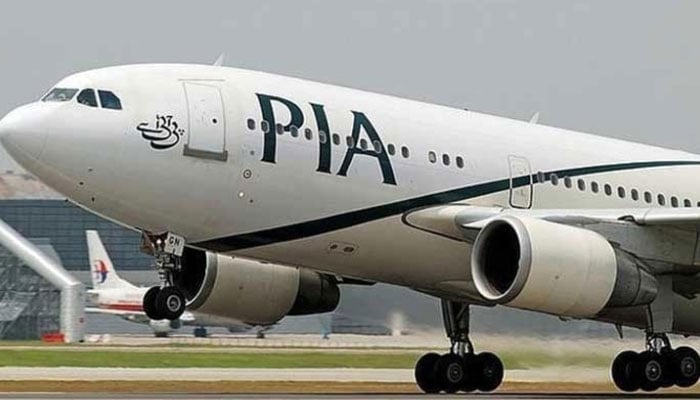
For the better part of three decades, the sale of Pakistan International Airlines (PIA) existed in the national imagination as something that could be announced but never carried out, a reform every government endorsed in principle and abandoned at the first sign of resistance.
So, when a 75 per cent stake in the flag carrier passed to a consortium led by the Arif Habib group in a televised auction last December, the first major privatisation the country had completed in close to twenty years, it marked a break with the country’s long habit of flinching. A state long accused of lacking the nerve to touch its own loss-making giants had finally touched the largest and most symbolic of them.
The power distribution companies of Faisalabad, Gujranwala and Islamabad are now moving through the same process, with bids invited across the coming months. Whatever else is said, the taboo has been broken.
The contrast with Washington’s own attempt at the same thing is hard to miss. The American Department of Government Efficiency (DOGE) arrived last year with a promise to cut two trillion dollars, and within a year it had shrunk its own claims to a fraction of the figure, padded its ledger with savings that did not exist, and eventually dissolved into an existing personnel office. It had gone after the visible and the photogenic, the federal payroll and the office leases, while leaving the vast entitlement programmes where the real money sits entirely alone.
Pakistan, with far less noise and far more at stake, walked towards precisely the kind of entrenched and politically defended asset that the Americans could not bring themselves to confront.
Cutting is only one half of the work, and on its own the less interesting half. A country cannot shrink its way to prosperity, and the more consequential question has always been whether Pakistan can build the apparatus that makes it earn. Here, the past two years have produced something genuinely new in the Special Investment Facilitation Council (SIFC), the single-window body that brings the civilian government and the military leadership into one room to clear the bureaucratic undergrowth that had strangled investment for a generation.
Under the council, the state has pursued capital with an energy the foreign ministry alone has never managed, courting Saudi Arabia, the Gulf, China and Washington, convening a minerals summit to place the country’s vast and barely touched reserves before international houses, and treating economic facilitation as a matter of national security.
Nowhere has the shift been more pronounced than in defence. A military-industrial base that existed only to substitute for imports has begun to export, with reported aircraft and systems deals already concluded and negotiations underway for others, the JF-17 at the centre of an effort to convert hardware into foreign exchange. Whatever the debates about building so much of the economy around a single institution, the instinct behind it is sound: that a country labouring under a chronic external deficit must find things the world will pay for, and that a state which has spent 70 years acquiring military-industrial capability might as well earn from it.
The honest distinction between the two halves is one of authorship, and it is the distinction that should guide what comes next. The privatisations, for all their courage, were in large part demands made by the International Monetary Fund (IMF) in return for its latest loan, as nearly every serious Pakistani reform of the modern era has been the price of one IMF programme or another.
The investment and export architecture, by contrast, is something Pakistan is choosing and constructing for itself, which is why it matters more: reform a country owns will almost certainly outlast reform a creditor imposes. The encouraging truth is that the state appears to be pairing the discipline demanded by the IMF with an economic strategy of its own design.
The task that remains is delivery – and here candour serves the country better than applause. The Economic Survey presented this month confirmed that the external account has genuinely steadied, with a primary surplus, a current account in modest surplus, and reserves rebuilt above $20 billion. It also confirmed that growth came in below target and that foreign direct investment actually slipped during the year despite the council and its summits, which is the clearest possible signal that an architecture will not, by itself, produce a result. The machine has been assembled with skill. The inflows it was built to attract have yet to arrive at the scale the country needs.
None of which diminishes what has been done, and a great deal has been done that earlier governments only ever discussed. Pakistan has broken its most stubborn privatisation taboo, pulled an economy back from the edge, and stood up an institution that for the first time treats earning as seriously as it has always treated cutting.
The work that follows is to convert facilitation into factories and summits into shipments and to keep the discipline alive in the years when no IMF mission is in town to demand it. Do that, and the reform stops being something done to Pakistan and becomes something Pakistan does.
The writer is a non-resident fellow at the Consortium for Asia Pacific & Eurasian Studies. He tweets/posts @umarwrites