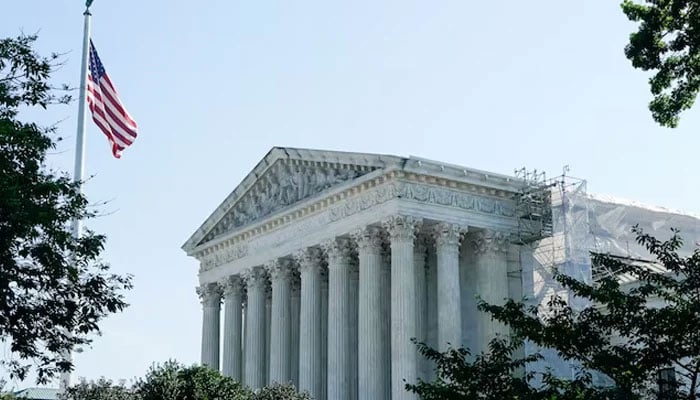
When the Supreme Court on June 25 cleared the way for the Trump administration to end Temporary Protected Status for more than 350,000 Haitians and roughly 6,100 Syrians, it treated the matter as a question of executive authority. Yet the same government warns Americans not to travel to Haiti or Syria because of kidnapping, violence, terrorism, armed conflict, and collapsed security. It can acknowledge danger when those at risk carry US passports, then allow the protection shielding Haitian and Syrian families who have built lives in the United States to be withdrawn, leaving many vulnerable to removal into that danger.
That is not a technical inconsistency. It reveals the governing logic of the Republican immigration agenda. America helps produce or deepen instability abroad, then criminalizes, detains, and expels many of the people who flee its consequences. The border is where this contradiction becomes visible, but it is not where it begins.
No honest argument should claim that the United States causes every migrant’s journey. Haiti’s crisis has Haitian causes. Syria’s catastrophe has Syrian, regional, and international causes. Corrupt elites, armed groups, authoritarian governments, and local political failure matter. But those facts do not absolve Washington. A country that exercises military power, uses sanctions and financial leverage, and helped build a carbon-intensive global economy cannot pretend that displacement begins only when someone reaches the Rio Grande.
The Republican story begins too late. It sees the migrant in a detention cell, at a checkpoint, or before an immigration judge. It does not see the family calculating whether its children can survive another year; the worker pushed out by economic collapse; or the community uprooted by violence, climate shocks, and failed institutions. Once that history is erased, people fleeing insecurity can be recast as the source of insecurity.
Haiti makes the point with unusual force. Washington is not a neutral observer in Haiti’s history: the United States occupied the country from 1915 to 1934, exercising direct control over key financial and security institutions. That past does not explain Haiti’s present catastrophe by itself. It does, however, make the pretense of American innocence untenable. As of March 2026, more than 1.4 million people had been displaced inside Haiti by violence and insecurity. Ending TPS does not restore public safety, curb gang control, or make return humane. It simply transfers risk from the American legal system back to people who have already carried it.
Climate sharpens the same contradiction. The United States remains the largest historical contributor to carbon dioxide emissions, while the harshest costs of the fossil-fuelled global economy fall on societies least equipped to absorb drought, heat, food insecurity, and disasters. Climate change does not mechanically propel every victim across an international border.
It does make livelihoods more precarious, compound conflict, and weaken already fragile states. Washington cannot plausibly treat those forced to move as strangers to a crisis it has helped intensify.
Excerpted: ‘America Creates the Displacement It Then Punishes’. Courtesy: Counterpunch.org