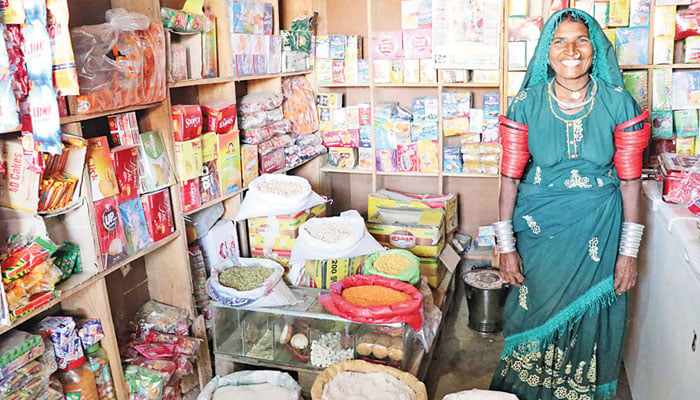
Imagine, for a moment, a different Sindh. A young woman in Sukkur runs a small food-processing unit, employing a dozen people from her neighbourhood. She has a business account and accesses working capital through a microfinance institution.
In Tharparkar, a farmer who once sold his harvest at whatever price the nearest middleman offered is now linked directly to a corporate buyer. In Larkana, a 28-year-old is building a logistics business that connects rural producers to urban markets via a mobile platform, with a lease on a small warehouse and two employees on formal contracts.
None of these people is exceptional. They are ordinary entrepreneurs doing ordinary things – the kind that happen every day in Bangladesh, Vietnam, Indonesia. Countries that decided, at some point, that their small businesses were worth investing in.
Pakistan has not yet made that decision. And, given that UN MSME Day just passed a few days back, this decision is worth sitting with.
Every year on June 27, the UN observes MSME Day, a moment to recognise the outsized role that micro, small and medium enterprises play in the global economy. The numbers are hard to argue with: MSMEs account for 90 per cent of businesses worldwide, generate 70 per cent of all employment, and contribute roughly half of global GDP. They are, in the plainest sense, how most of humanity earns its living. In Pakistan and particularly in rural Sindh, the story of MSMEs is not one of absence but of abandonment. Businesses exist. The support does not.
Sindh holds the second-largest provincial economy in Pakistan, contributes nearly a third of national GDP, and sits on major agricultural value chains – dates, mangoes, rice, alongside a vast reservoir of untapped enterprise energy. Its 55 million people include nearly 17 million between the ages of 15 and 29: the exact demographic that, in other economies, drives the small business boom.
Globally, MSMEs create seven out of every ten jobs. In a province where the job market cannot absorb a generation of young people entering the workforce, enterprise development is not one policy option among many but is one of the most direct routes to income, sustainable livelihoods, and economic activity at scale.
The Poverty Alleviation & Inclusive Development Across Rural Sindh (PAIDAR) programme – funded by the European Union and implemented by the United Nations Industrial Development Organization (UNIDO), represents one of the most substantive enterprise development efforts the province has seen in years.
Backed by a EUR20 million fund, the programme awards direct grants to micro, small and medium enterprises – but money is only the start. Working alongside the Sindh Enterprise Development Fund (SEDF), PAIDAR helps entrepreneurs develop business and feasibility proposals that give rural enterprises the technical foundation they most likely have never had. It treats them as businesses to be built, not beneficiaries to be assisted. Women entrepreneurs receive preferential cost-sharing of up to 70 per cent, easing the access-to-capital barrier that has long held back women-led enterprise in the province.
What PAIDAR shows is that when rural entrepreneurs in Sindh are given real support and not just a one-time grant but investment identification, technical support, market linkages, export readiness and follow-on guidance, they build businesses that sustain. That is not a small finding. It is a blueprint for what enterprise development in the province could look like at scale.
In the 2022 World Bank Enterprise Survey, firms named political instability as the single biggest obstacle to doing business (27 per cent), followed by access to finance (15 per cent) and tax rates. The pattern is sharper for smaller firms: for medium-sized enterprises, access to finance was the most important constraint, cited by 18 per cent, while for small firms it ranked second at 15 per cent. Finance, then, sits alongside unreliable power, unusable land records, customs and trade hurdles, and unpredictable regulation – a set of gaps that hold rural enterprise back.
The gender picture is its own indictment. Pakistan ranks last of 148 countries on the World Economic Forum’s 2025 Global Gender Gap Index, with a parity score of 56.7 per cent – a national starting line tilted against women before they ever pitch a business. The financing system compounds it: 91 per cent of women in Pakistan have never applied for a loan, held back by cultural norms, low awareness, and banking procedures too complex to navigate. Those who do seek formal credit find little waiting for them – women-led SMEs received just 3.2 per cent of total SME lending in 2022.
The exclusion runs deeper than credit alone, with 68 per cent of women across developing economies, Pakistan included, still unbanked entirely. The pattern is not unique to Pakistan – globally, companies founded by women attract less than 3.0 per cent of all venture capital – but here it is at its most acute, and its cost is a generation of enterprises that never get built.
Add to this the infrastructure reality: nine-hour daily power outages, average internet speeds of 4.2 Mbps in SME clusters, and a banking system that cannot verify land records in Sindh. These are not accidents. They are the cumulative result of choices made year after year about where to invest and whom to invest in.
The future sketched at the opening of this piece is not utopia; it is simply what adequate investment, functioning infrastructure and financial systems that actually reach rural entrepreneurs would produce over time. Programmes like PAIDAR show what adequate support produces – businesses that survive, employ and strengthen local economies.
With MSME Day having just passed, the question worth asking is not whether Sindh’s entrepreneurs are capable. They have answered that already. The question is whether we are finally ready to support them and to build, seriously and systematically, the Sindh they are trying to create.
The writer is the national technical adviser for the PAIDAR programme at the United Nations Industrial Development Organization (UNIDO).