The term ‘civilisation’ entered the popular imagination in 1993 when Professor Samuel Huntington published his seminal article, ‘The Clash of Civilizations?’, in Foreign Affairs. He argued that in the post-cold war era, culture would replace ideology as the primary driver of conflict.
Economic and political differences among nation-states would remain, but the fault lines of global clashes would be defined by the cultural and religious identities of the world’s major civilisations. Identifying eight key civilisations, Huntington surmised that as non-Western civilisations, particularly the Chinese and Islamic civilisations, gained power, they would begin to challenge Western hegemony. This, according to Huntington, would shape future geopolitical rivalries and alliances.
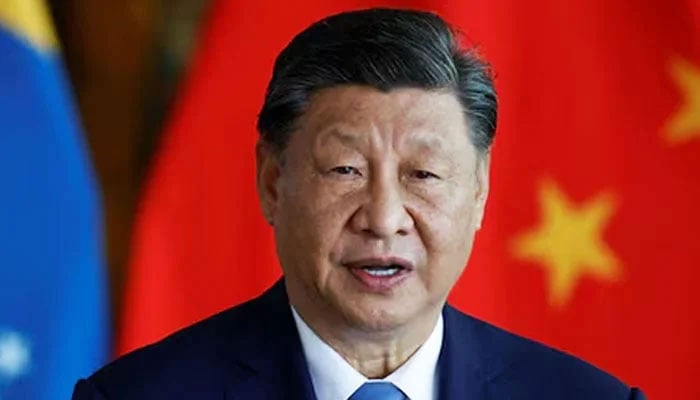
In this context, Western policymakers received China’s Global Civilization Initiative, launched by President Xi Jinping in 2023. The West labelled the initiative as China’s attempt to further its influence among Global South countries by promoting its model of governance and launching a surreptitious attack on the Western-led international order. This was a complete misunderstanding of its scope and a gross misinterpretation of its intent. The focus is not international politics and warfare but development and modernisation, and it is not addressed to military strategists of the great powers but to economic planners and political leaders of poor nations. It does not propose an alternative theory of future international disputes, but seeks to shift the focus away from political and economic confrontation towards mutual learning among civilisations to achieve the universal human aspiration for progress and development.
President Xi Jinping’s speech on March 15, 2023, announcing the initiative revolved around one fundamental question: what kind of modernisation does the world need and how can we achieve it? The speech provided an answer. Modernisation should foster “sustainable development” and secure “a happy and stable life for the people”. While nations cannot achieve modernisation through “a cookie-cutter approach”, there are nonetheless broad parameters all developing countries can follow to find their own path to sustainable development.
President Xi’s speech, titled ‘Path Towards Modernization: The Responsibility of Political Parties’, highlighted China’s successful experience and identified three elements of modernisation: the general laws of progress, the national conditions of each country and the cultural inheritance of each society. General laws encompass scientific truths about the physical world, the historical progression of institutions and universal civic virtues. These laws of progress are the common inheritance of humanity. The unique conditions of nations are defined by the current stage of each society’s evolution. National conditions must be taken into account when determining the correct sequence of reforms. Cultural inheritance denotes the spiritual and ethical ideals that give meaning to life beyond material goals.
Modernisation requires the ‘creative transformation’ of each civilisation’s cultural heritage to achieve progress while preserving society’s timeless moral, spiritual and ethical insights. China found its correct path to modernisation after an arduous ‘journey of over 100 years’. In the words of President Xi, other developing countries must “explore the modernisation path with their distinctive features based on their national realities”. Such modernisation would not result in the ‘end of history’ but in the blossoming of a thousand flowers existing in harmony.
Despite this unambiguous focus on global growth, development and modernisation, US and European policymakers interpreted the initiative as an ideological tool intended to undermine Western liberal-democratic norms. This misunderstanding, bordering on paranoia, results from the inability of Western intellectuals to discard the geopolitical framework of the cold war even 35 years after the collapse of the Soviet Union.
Western countries continue to interpret China’s diplomatic moves and global initiatives through the lens of cold-war vocabulary – ideological divide, spheres of influence and containment. China’s century-long attempts at modernisation were marked by ceaseless experimentation and failure until the Chinese people found the correct path to national rejuvenation under the CPC’s leadership. Through the initiative, the CPC seeks to contribute to the theory and practice of humanity’s modernisation by sharing with the world the hard-won lessons of the Chinese people. The West, however, interprets China’s initiative not as a win-win proposition but as a zero-sum game.
The failure of Western intellectual and political leaders to understand the initiative reflects their historical and cultural bias. Historically, having had the advantage of being the first to modernise, the West fails to recognise the unique national conditions that developing countries currently face. Culturally, the West harbours a disparaging attitude towards non-Western spiritual, cultural and ethical traditions, believing that only the adoption of Western doctrines, values and systems of governance can lead to progress. This belief has blocked non-Western societies’ path towards modernisation, development and industrialisation.
The West’s portrayal of the initiative’s four advocates – diversity of civilisations, common values of humanity, inheritance and innovation of civilisations and people-to-people exchanges – as an attempt to undermine the international rules-based order is disingenuous. For centuries, countries of the Global South have found themselves in a developmental cul-de-sac due to the West’s overbearing promotion of liberal democracy, laissez-faire economics and human rights as the sole path to modernisation. By contrast, the Chinese initiative calls upon these countries to transcend the ideological and cultural constraints imposed by Western prescriptions and to pioneer their own distinct path to modernisation.
Unlike the West, China does not promote a dogmatic one-size-fits-all approach to modernisation. It does not prescribe any unchallengeable model, ideology or institutional form. It merely invites developing countries to study China’s modernisation and draw their own lessons.
The message to developing countries is that beyond the West’s cookie-cutter approach, there are multiple paths to modernisation that, while conforming to the general laws of progress, are better suited to each country’s national conditions and rooted in its historical and cultural inheritance. The initiative is not meant to present China’s development model as universal but to provide ‘impetus to humanity’s exploration’ of its own unique paths towards modernisation.
The author is the chairperson of Crescent Foundation Pakistan.