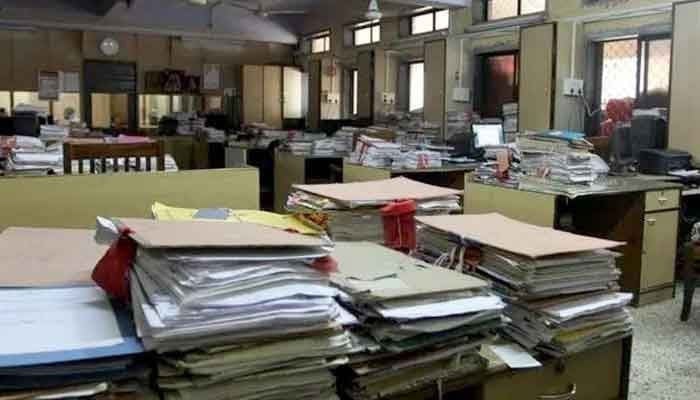
Most Pakistanis have been there. A file that cannot be found. An office that demands three visits for something that should take one. An application stuck ‘under process’ for weeks until someone knows someone. A cash payment made with no receipt. A land record that contradicts itself across two departments.
We treat these as facts of life. They are not. They are symptoms of a system that, whether by design or by decades of neglect, has made corruption easy.
Governments have been promising accountability for as long as anyone can remember. Anti-corruption campaigns arrive with each new administration, full of energy, and disappear just as reliably. We keep treating corruption as a people problem – find the bad actors and remove them – when it is really a design problem. Take out the individual, and the next person walks into the same system with the same temptations and the same opportunities.
The most effective anti-corruption tool Pakistan may have is not another watchdog body. It may be digitalisation. Corruption is not random. It follows opportunity. It grows wherever processes are slow, records are on paper, and ordinary citizens have no way of knowing what is actually happening to their own applications. Every unnecessary signature, every in-person visit that could be handled online, every cash window that could be a digital payment – these are not just inconveniences; they are opportunities.
The power to delay is the power to extract. Digital systems close those openings. When services move online, the middleman loses his role. When payments are electronic, they leave a trail. When approvals are logged, someone is accountable. Corruption survives on invisibility. Digitalisation is, at its core, a system of making things visible.
And we have already seen it work. The FBR’s digital tax filing has pulled more people into the formal system and made it harder to quietly negotiate your way out of what you owe. Punjab’s computerised land records have made it more difficult to alter ownership histories than before. Now the Punjab government is going further; the Green Property Certificate aims to digitalise land records end-to-end, making every title traceable and every transfer verifiable. The idea is simple: if a record cannot be quietly changed or duplicated, fraud becomes much harder to commit. Mobile banking, meanwhile, is drawing everyday transactions out of untraceable cash and into the formal economy. None of this is finished. But the direction is right.
There is a money argument here too, and it deserves to be said plainly. Pakistan’s tax collection is weak, not because the country cannot afford to pay, but because too much economic activity simply goes unrecorded. When property deals, business income and financial transfers exist only in cash and handshakes, the state cannot see them or tax them. Bring those transactions into digital systems, and evasion becomes harder without anyone having to pass a new law or hire more inspectors. The goal is not to burden people who already pay. It is to make hiding harder for those who do not.
Beyond tax, there is the simple matter of waste. Paper-based bureaucracy is slow, expensive and produces surprisingly little. A government that digitises its processes can do more with the same budget and put the savings towards things people actually need. Schools, hospitals, roads that get built rather than planned.
It would be dishonest, though, to make this sound easier than it is. Digitalisation does not make corruption disappear. It changes where it hides. Cash envelopes become kickbacks in IT contracts. Missing files become manipulated access controls. The system that is supposed to reduce corruption can itself become a source of it if nobody is watching. That is a real risk, not a hypothetical one.
There is also the question of people who get left behind, communities with no reliable internet, older citizens unfamiliar with online systems, workers whose jobs simply vanish when a process is automated. These are not small concerns. A transition that ignores them creates its own kind of injustice.
And underneath all of it is the political problem, which is the hardest one. Opacity is not an accident for everyone. For the official who controls a file, the fixer who knows the right door, the network that runs on favours, transparency is a genuine threat to how they live and work. Digitalisation does not just inconvenience these people. It dismantles the thing they depend on. That is why it meets resistance. And that is why technology, on its own, is never enough. Without the political will to implement these systems honestly and maintain them under pressure, the best digital tools end up as expensive decoration.
Pakistan does not need more promises about accountability. It needs systems where accountability is simply the way things work. Every paper file that becomes a digital record, every cash payment that becomes an electronic transaction, every closed-door process that becomes trackable, each one shrinks the space where corruption can operate. Not to nothing. But enough to matter.
The question is not whether digitalisation can fix everything. It cannot. The question is whether we can keep defending systems that make corruption this easy. That defence is getting harder to sustain. The cost of staying where we are, in lost revenue, in broken institutions, in a generation of citizens who have stopped expecting anything better, is not invisible anymore. It never really was.
The writer is a freelance contributor.