We read last week how Pakistan’s financial system, as an engine for intermediating investment, is impaired. Low on horsepower (sub-scale with an undeveloped capital market). And misaligned with purpose (operating principally as the government’s deficit finance broker and not as a banker to business).
Pakistan’s Gordian knot of low savings is largely explained by a large informal sector which keeps capital out of the formal financial system; persistent negative real interest rates; de facto tax on savings; and stagflation from lack of investment and exports. Aligning the financial system with the finance industry requires eliminating the structural fiscal deficit, a politically expensive and complex surgery. It also requires improvements in corporate governance and documentation, as well as faster and more reliable legal recourse.
The only short-term fix, then, to generate long-term capital is to mobilise development finance at scale and deploy it productively. In a nutshell, leverage public funds to de-risk and crowd-in private and multilateral capital to invest in growth and jobs.
A professionally managed, private-sector- and multilateral-led patient capital fund to modernise priority economic sectors is one place policymakers can start as they ponder the open-heart surgery the system requires.
This is how we do it: The finance minister convenes a consortium of reputable Pakistani business and investment houses, along with a syndicate of international development finance institutions. The two form a sponsors group that becomes the principal shareholder of a national development fund set up to provide long-term capital to industry.
The fund aims to promote exports and substitute imports while targeting market-rate returns for its investors, which is essential to scale through successor funds. The fund co-invests project equity and underwrites syndicated loans and project finance to enterprises with credible potential for scale nationally and, via deeper integration and value add, in export supply chains.
Yes, we can, as we have: The idea is neither novel nor unique. In seven short years between 1958 and 1965, Pakistan built the bulk of its economic, energy and agriculture base that sustains the economy to this day. The stewards include our favourite national whipping boy – the ‘elite’ and ‘colonial’ civil service – with a healthy dose of enlightened despotism from a Bonapartist general at the helm. Directed concessionary patient capital was crucial in financing Pakistan’s formative economic modernisation – as it was in the economic success of Asia’s tigers and the dragon.
By the early 1960s, Pakistan had established several national development finance institutions to finance industry and agriculture: notably the Industrial Development Bank of Pakistan (IDB, 1961, its predecessor was established in 1949), Pakistan Industrial Credit and Investment Corporation (PICIC, 1957), and the Agricultural Development Bank of Pakistan (ADBP 1961, predecessors established in 1951 and 1957).
In the early 1960s, IDB and PICIC were critical in financing the establishment of basic industries, including textiles, sugar, cement, fertilisers, petrochemicals, autos, marble processing and fishing. The ADBP was instrumental in providing concessionary capital that financed the green revolution of the 1960s.
Nationalisation in the 1970s, followed by falling public service standards, political interference, and transition to commercial banking ensured these institutions did not sustain their mission and build scale by crowding in commercial finance.
In 2025 Pakistan received about $2.5 billion in net foreign direct investment, 80 per cent concentrated in two industries – power and financial services. Durable growth requires larger sources and broader uses of capital. Circa $1 billion in patient capital, denominated in Pakistani rupees, deployed over three years, directed at manufacturing, agriculture, logistics, services and clean energy, can provide just that first voltage to jump-start capital investment.
Problem with the plumbing: Most businesses in emerging economies earn revenue in local currency. To grow, they need long-term capital denominated in their own currency.
The multilateral development banks – the custodians of global development finance – are substantially funded by the capital markets. Their access to capital markets is contingent on their credit ratings, which kills their appetite for emerging-market local-currency risk. Therefore, they lend in hard currency, principally to governments and, through smaller private-sector arms, to large corporations and banks. Handcuffed, the outreach of international development finance to the private sector is limited. Yields on World Bank bonds are near those of US government bonds (the global risk-free rate), which tells you about the level of risk they assume.
To be more effective, global development finance needs robust localised conduits to finance local businesses in emerging markets with long-term capital denominated in local currencies.
Pakistan Capital Limited: A local development finance institution can be a bank, corporation or a closed-end fund that continues through successor funds if successful. The last option is good to avoid sinking permanent capital into a failed white elephant.
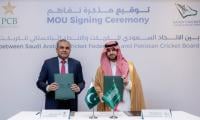
Indicatively, a Pakistan rupee equivalent of $50 million can be raised by syndicating equity from reputable Pakistani business and investment houses. An additional $150 million in capital can be raised from a consortium of multilateral and bilateral development finance institutions.
Together, they form the sponsors group that retains board control and its full independence to appoint, compensate and oversee senior management and investment operations. The sponsors group appoints a credible management team or fund manager with an established emerging market investment track record - essential for success, including managing related party matters.
Hundreds of millions in hard currency gifted by bilateral donors to Pakistan for access to finance over the last decade were channelled to nonprofits without the expertise, commercial mandate or discipline to manage capital. While much of it is sunk in malinvestment, the finance minister should redirect available funds to help capitalise the development fund. Along with capital from state-owned banks and joint ventures, an additional $100 million in capital can be mobilised.
An amount of $300 million in ‘equity’ capital is a good beginning. This risk capital can be leveraged 2.5x in long-term debt at the fund or on a non-recourse basis at the portfolio company level to create up to $1.0 billion in balance sheet capacity for capital investment. The fund must have a pool of concessionary capital to de-risk and crowd-in commercial and multilateral financing (credit enhancement to provide viable, fixed-rate term loans). The State Bank may have undrawn guarantees that can be redirected to the fund, or new grants can be secured from international donors.
Early success will enable access to deeper capital pools of friendly sovereign wealth funds. Joint ventures in commercial agriculture will be of particular interest to Gulf sovereigns. The Chinese would welcome a professional investment conduit in Pakistan to optimise the Belt and Road Initiative.
The value of the ‘halo effect’ (political protection) of a national development fund with government and international sponsorship cannot be overstated. Such an entity can manage risk in a challenging and often predatory local operating environment far better than private local or foreign investors alone.
We have witnessed a dramatic sea-change in Pakistan’s global standing starting with the ‘100-hour’ air war with India, when the world stood up and took notice of Pakistan’s military effectiveness and prudence. Then, Pakistan’s exceptional diplomacy in mediating the US-Iran conflict, which, for now, has prevented a global catastrophe. So, if there was one ask Pakistan makes of the world, what should it be? My vote is to solicit support to capitalise a sizable patient capital fund to invest in economic modernisation, growth and jobs.
‘Stabilisation then growth’ is akin to an oath for Pakistani finance ministers at the start of office. Then typically follows a period of pain treating symptoms. A mirage of stability is achieved by cutting into growth – the only means available in the short term to cover liabilities – then the perennial ‘good news’ of sustained growth is broadcast. Then tolls the bell, out goes an incumbent, in the next – and the master class repeats.
Ironically, the incumbent finance minister is the one man in the country and the cabinet with the competence and credibility with markets and multilaterals to champion just this.
Concluded
The writer has over 25 years of experience in international development, private equityand development finance. He holds an MBA from Harvard Business School.