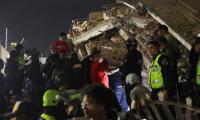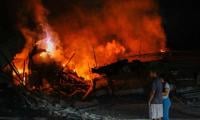
The world today is in turmoil. From the genocide in Palestine to wars in Ukraine, Sudan, Yemen, Congo and Myanmar, humanity appears trapped in a politics without conscience. According to the Uppsala Conflict Data Program and Peace Research Institute Oslo, 2024 witnessed 61 active state-based armed conflicts – the highest number since the Second World War.
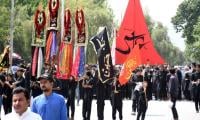
The main theme in all this is the question of power. Power determines who is protected and who is abandoned, whose suffering is recognised and whose pain is ignored. It is in this wounded world that Muharram and Ashura return every year not as ritual alone, but as remembrance, renewal and warning. Karbala is not a closed chapter of seventh-century history. It issues abiding moral lessons if not summons. About 1,346 years ago, on 10 Muharram 61 AH, Imam Hussain ibn Ali, the beloved grandson of Prophet Muhammad (pbuh), was martyred on the plains of Karbala. He was the son of Hazrat Ali and Bibi Fatima, raised in the house of the Prophet (pbuh) and spiritually nourished by the ethics of the Quran, the living example of the Prophet (pbuh) and the knowledge of Ali.
At Karbala, Imam Hussain’s stand was not a contest for personal power. It was a refusal to legitimise a brand of power that had departed from the moral and spiritual foundations of Islam. Yazid, the Umayyad ruler, demanded allegiance. Imam Hussain refused allegiance, which would have meant giving moral and religious legitimacy to a model of authority he saw as unjust, exploitative and contrary to the Prophet’s (pbuh) legacy.
The people of Kufa had written to Imam Hussain, inviting him to lead them against Yazid’s rule. But before he reached them, Yazid’s governor, Ubayd Allah ibn Ziyad, tightened control over Kufa through fear and intimidation. Those who had pledged support were silenced, imprisoned or scattered. Imam Hussain’s convoy was intercepted and forced towards the barren plains of Karbala. There, he stood with a small group of family members and loyal companions, while the ruling army was vastly larger. Historical accounts vary on details and numbers, but Karbala’s memory has preserved the figure of around 72 martyrs from Imam Hussain’s side, while women and children of the Prophet’s (pbuh) family witnessed the tragedy.
Among those martyred were his beloved son Ali Akbar; his young nephew Qasim; his loyal brother Hazrat Abbas, the standard-bearer of courage and loyalty; Imam Hussain’s four-year-old daughter Bibi Sakina and the six-month-old infant son Ali Asghar were also martyred. All these martyrs remain among Karbala’s most heart-wrenching symbols. Water was denied. Children cried of thirst. Yet Imam Hussain did not bend before illegitimate power. One by one, his companions and family members were martyred. Finally, Imam Hussain himself was also martyred on Ashura.
Clearly, at Karbala, no ordinary battle was being fought. It was not an equal contest between two equal armies but a moral confrontation between armed power and principled resistance; between coercion and conscience; between the state’s violence and the souls that refused to surrender. Karbala established that the sword does not always capture victory. Yazid’s army held the battlefield, but Imam Hussain captured history’s moral horizon.
After the martyrdom of Imam Husain, the surviving members of the Prophet’s (pbuh) family, including Bibi Zainab, were taken captive to the court of Yazid in Damascus. Yet captivity could not defeat the spirit of Karbala. Bibi Zainab transformed grief into testimony, speaking with extraordinary courage in the court of a ruler who believed he had crushed all resistance. She exposed the hollowness of tyranny and demonstrated that while bodies can be chained, the moral voice cannot be silenced. Through Bibi Zainab and Imam Zain-ul-Abideen, Imam Husain’s message of truth, justice and resistance endured.
Karbala is therefore not only a Shia memory but an Islamic and human one. It speaks to all who have suffered oppression, injustice and the denial of dignity. Its message is timeless: do not legitimise oppression, do not surrender conscience, and do not remain silent when truth is under attack.
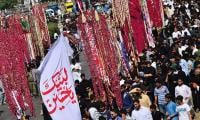
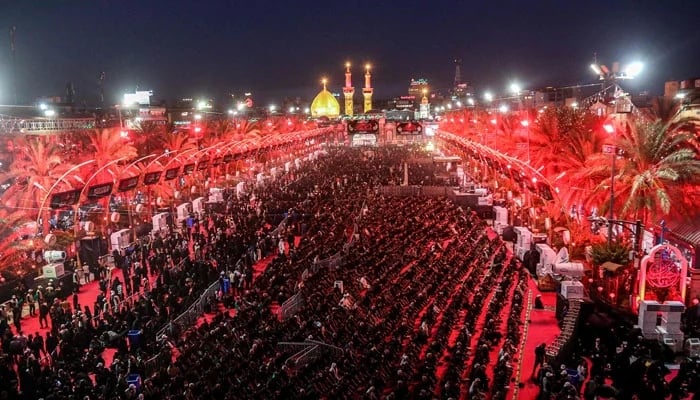
The enduring power of Karbala lies in its moral lesson: true nobility comes not from power or status, but from courage, sacrifice, integrity and steadfastness in the face of injustice. This is why the remembrance of Muharram is so important. The majlis, marsiya, noha, tears, gatherings, recall of the tragedy, teachings of the Quran, legacies of the Prophet (pbuh), sermons of Hazrat Ali and lives of the Ahl al-Bayt are not merely acts of mourning. They nourish the human spirit and replenish the moral fibre. Remembrance establishes that grief can educate, memory can discipline and love can become resistance. The tragedy of Karbala softens the heart but also strengthens the spine.
As AI, military technology and surveillance systems expand with unprecedented speed, Karbala becomes even more relevant. Technology without moral character can amplify injustice. Intelligence without compassion can become machinery for control. Power without restraint can turn science into a weapon against the weak. The question is not only what we can build, but what kind of human beings we are becoming. Karbala insists that knowledge, resources, politics and technology must serve justice, not domination.
The observance of Karbala refreshes the human spirit by reconnecting us with a higher purpose. It pushes us beyond the narrow prison of self-interest. It teaches us to see the pain of others as our own responsibility. It prepares us to stand with the weak, the excluded, the hungry, the occupied and the silenced. It reminds us that the best people are not those closest to power, but those closest to truth, compassion and service. Today, when Palestinians are being killed, starved and displaced; when children across conflict zones grow up under drones, bombs and blockades; when language is manipulated to hide oppression, Karbala speaks with renewed force.
Ashura is ultimately a day of moral awakening. We remember the martyred Imam because his martyrdom asks each generation, every year: where do you stand when power becomes unjust? Where do you stand when truth is isolated? Where do you stand when the weak call for help and the world looks away?
Karbala’s answer is clear. Stand with the truth. Stand with the oppressed. Stand with dignity. Stand with Allah’s command to serve humanity. Stand even when the numbers are against you. Stand even when the cost is high. For the life worth living is not the life spent only in protecting oneself. It is the life lived also in the service of Allah’s weak and underprivileged.
This is Karbala’s message for humanity: power must bow before conscience; politics must return to morality; grief must translate into responsibility; and the human spirit must be nourished by justice, compassion and courage. The martyred Imam’s message – resisting tyranny, protecting the weak, and speaking truth to power – lives on in every observance of Ashura.
The writer is a foreign policy & international security expert. She tweets/posts @nasimzehra and can be reached at: [email protected]