For decades, relations between the US and Iran have been defined more by confrontation than communication. Diplomatic engagement has often been sporadic, crisis-driven and vulnerable to collapse whenever tensions escalated.
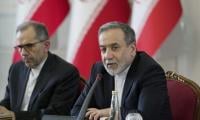
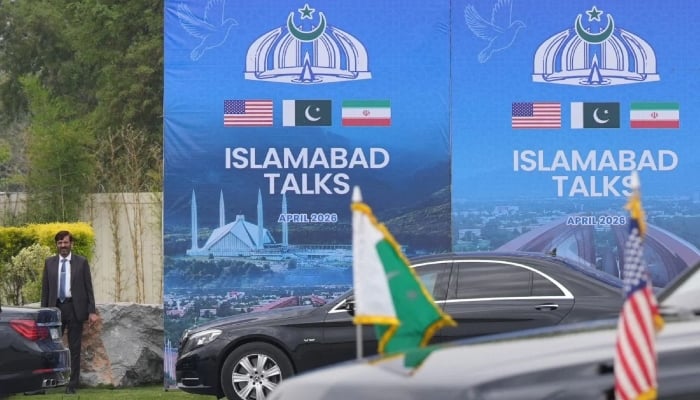
Against that backdrop, the conclusion of the first round of talks in Switzerland not only marks the most meaningful structured progress in US-Iran diplomacy in many years, but also highlights the emergence of a new diplomatic mechanism in which Pakistan and Qatar have assumed central facilitation roles.
The meeting, held under the framework of the Islamabad Memorandum of Understanding, appears to be the beginning of a more comprehensive process designed to transform a history of intermittent engagement into a sustained and institutionalised dialogue. Whether this effort ultimately succeeds remains to be seen, but the architecture established at Lake Lucerne provides a stronger foundation than many previous initiatives.
The most notable achievement of the summit has been the creation of a structured system through which disagreements can be managed, technical issues can be addressed and negotiations can continue even when political obstacles arise.
This distinction is important. Many diplomatic initiatives fail because they rely too heavily on the personal chemistry of political leaders or on temporary alignments of interest. Once circumstances change, dialogue breaks down and progress disappears. The framework established in Switzerland seeks to avoid that problem by embedding negotiations within permanent mechanisms rather than leaving them dependent on ad-hoc political engagement.
At the centre of this process is a High-Level Committee responsible for strategic oversight. Supporting it are specialised working groups focusing on some of the most difficult issues dividing the two sides, including nuclear matters, sanctions relief, compliance arrangements, verification procedures and implementation mechanisms. Together, these institutions are intended to ensure continuity and create momentum towards a broader agreement.
The significance of this development extends beyond the technical details. For the first time in many years, the parties have committed themselves to a process that combines political dialogue with practical implementation structures. This increases the likelihood that discussions will continue even when disagreements inevitably emerge. Another important outcome of the summit is the creation of direct communication channels between the US and Iran. In a region where misunderstandings have frequently triggered dangerous escalations, reliable lines of communication can be as important as formal agreements themselves.
This is particularly relevant in the Strait of Hormuz, one of the world’s most strategically important waterways. Any incident in the area carries implications not only for regional security but also for global energy markets and international trade. The establishment of dedicated maritime communication channels, therefore, represents a practical step towards greater stability.
Similarly significant is the decision to establish a Lebanon de-confliction mechanism. Lebanon has long served as a theatre where broader regional rivalries intersect, making it particularly vulnerable to instability. By creating a framework through which tensions can be managed and communication maintained, negotiators have introduced an additional safeguard against escalation.
For Islamabad, the summit represents the culmination of a broader diplomatic evolution that has become increasingly visible in recent years. Rather than limiting itself to traditional diplomatic functions, Pakistan has successfully positioned itself as a facilitator capable of helping bridge differences between competing actors.
From oversight arrangements to communication mechanisms and implementation structures, Islamabad has played a meaningful part in constructing the architecture designed to sustain dialogue over the coming months. This is a noteworthy development because successful diplomacy often depends as much on process as on substance. By helping establish those mechanisms, Pakistan has become a stakeholder in the success of the process itself.
Pakistan’s growing diplomatic profile also reflects wider changes in international politics. The era when major global powers monopolised conflict resolution is gradually giving way to a more diverse landscape in which middle powers play increasingly influential roles. Countries with credibility across multiple political and regional constituencies are often well-positioned to facilitate dialogue where traditional channels have become ineffective.
For Washington, participation in a framework facilitated by Pakistan and Qatar reflects a recognition that regional intermediaries can sometimes achieve progress where direct engagement alone proves insufficient. For Tehran, the involvement of countries with regional credibility helps provide reassurance that negotiations are not being conducted exclusively through the lens of great-power politics.
The next phase of the process may prove even more challenging. The summit concluded with a 60-day roadmap to produce a more comprehensive agreement. During this period, technical working groups will be expected to translate broad political understandings into detailed proposals that can withstand scrutiny by policymakers on both sides.
Maintaining momentum throughout this phase will require sustained diplomatic engagement. Here again, Pakistan’s role is likely to remain important. Facilitating communication between different negotiating tracks, helping bridge procedural disagreements, and ensuring continuity between political and technical discussions will all be essential to keeping the process on course.
For Pakistan, the significance is particularly noteworthy. The summit illustrates how Islamabad’s diplomatic role is evolving from a participant in regional affairs to a facilitator capable of influencing broader international outcomes. By helping create and sustain a process that could reshape relations between the US and Iran, it has greatly strengthened its credentials as a constructive diplomatic actor and a net security provider for the region.
The writer is a journalist based in Karachi. He tweets/posts @omar_quraishi and can be reached at: [email protected]