With NFC Award negotiations stalled and speculation swirling about a possible 28th Amendment, the provinces agreed to a voluntary transfer to the federation under Article 164.
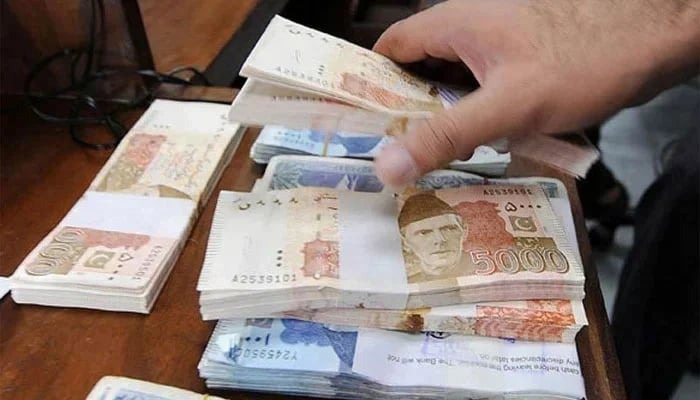
Accordingly, the federal budget for 2026-27 records Rs1.035 trillion as grants or receipts from provinces: Rs555.7 billion from Punjab, Rs263.7 billion from Sindh, Rs157.0 billion from Khyber Pakhtunkhwa and Rs58.6 billion from Balochistan.
Pakistan has valid defence financing needs. Defence affairs and services have risen from Rs2.558 trillion in the 2025-26 budget estimate to Rs3.011 trillion in 2026-27. The increase is about Rs453 billion, or roughly $1.6 billion. I have never argued for military adventurism. However, India’s 2026-27 defence allocation of roughly $85.6 billion, including an increase of about $11 billion, places Pakistan’s own increase – and the rationale for provincial contributions – in a broader strategic context.
The fiscal issue starts after the defence increase is separated from the total Article 164 entry. The Rs1.035 trillion provincial grant is Rs582 billion higher than the Rs453 billion increase in defence affairs and services. Punjab and Sindh together are booked at Rs819.4 billion, or about 1.8 times the defence increase.
A cursory look at the provincial budgets reveals that the provinces have cut their Annual Development Plans (ADPs), and/or are aiming to increase their own-source revenue.
For instance, Punjab’s ADP falls from the outgoing fiscal year’s Rs1.24 trillion to Rs752 billion, a cut of Rs488 billion. This cut equals about 88 per cent of Punjab’s Article 164 grant to the federation. A closer look shows that school education development falls from Rs100 billion in 2025-26 to Rs25.3 billion. Specialised healthcare and medical education falls from Rs95 billion to Rs 43.1 billion. Health and population fall from Rs86 billion to Rs33.2 billion. Agriculture falls from Rs80 billion to Rs60 billion. Roads and public infrastructure also lose space with a cut in ADP. The only exception is ‘environment and climate’ where the budget is increased from Rs15 billion to Rs38.8 billion.
Punjab has raised its provincial tax target by Rs224 billion, from Rs524.7 billion to Rs748.7 billion. The additional target is about 40 per cent of the Article 164 amount.
Sindh has referred to about Rs260 billion as a constitutional grant to the federation for national defence in its provincial budget. Its development spending falls from Rs1.018 trillion in the outgoing fiscal year to Rs720 billion for 2026-27. The cut is about Rs298 billion, Rs38 billion higher than what it plans to grant to the federal government.
Sindh’s district programme falls from Rs55 billion to Rs15 billion. Education affairs and services fall from Rs100.7 billion to Rs52.5 billion. Health falls from Rs45.4 billion to Rs38.9 billion. Environmental protection falls from Rs1.018 billion to Rs541 million. Economic affairs fall from Rs280 billion to Rs182.3 billion.
Sindh’s Finance Bill uses a narrower revenue strategy than Punjab’s. It broadens selected services taxation and tightens point-of-sale-based incentives in parts of the services economy. It also provides developers and promoters with fixed-charge treatment in construction and real estate. The province is using development restraint more than broad new taxation to accommodate the grant.
Khyber Pakhtunkhwa is booked at Rs157 billion under Article 164 in federal documents. The KP government has said it did not agree to provide funds to the federation without political consultation and has questioned any unilateral federal deduction.
Its overall ADP rises from Rs500.78 billion in the outgoing fiscal year to Rs519.10 billion in 2026-27. Inside that total, roads fall from Rs104.89 billion to Rs94.15 billion and water falls from Rs35.12 billion to Rs23.98 billion. Elementary and secondary education rises from Rs18.81 billion to Rs21.94 billion. Higher education rises from Rs6.27 billion to Rs6.97 billion. Health stays almost flat at Rs47 billion. Agriculture rises from Rs12.86 billion to Rs13.89 billion – whereas urban development more than doubles, from Rs28.36 billion to Rs57.74 billion.
KP’s Finance Bill and budget proposals rely on revenue administration. The provincial revenue target rises from Rs129 billion to Rs182.41 billion, an increase of 41.4 per cent. The Finance Bill proposes amendments in property tax, motor vehicle tax, sales tax on services, infrastructure development cess and public finance management laws. It also introduces e-invoicing and sales tax enforcement rules under KPRA.
Its ADP would have to be revised, especially education and urban development may take a cut if the Rs157 billion federal entry is later settled through cash payment, adjustment or deduction.
Balochistan is shown to contribute Rs58.6 billion in the federal budget. Against a total development expenditure of Rs336.58 billion and the provincial PSDP at Rs249.45 billion in 2025-26, its provincial PSDP is cut by Rs42.84 billion to Rs206.61 billion and total development envelope is reduced by about Rs45.03 billion to Rs291.55 billion for the FY2026-27. The Article 164 entry is larger than both the reductions and the province’s projected surplus by about Rs13 billion.
Its sectoral cuts are visible in the development side. Communication and Works development falls from Rs54.71 billion in 2025-26 to Rs27 billion. Irrigation falls from Rs32.33 billion to Rs12.8 billion. School and higher education development fall from Rs19.27 billion to Rs12 billion for school education and roughly Rs2-3 billion for higher education. Health development falls from Rs16.15 billion to Rs6 billion, whereas agriculture falls from Rs10.17 billion to Rs4.4 billion.
Article 164 has thus produced four provincial responses: Punjab cuts ADP by Rs488 billion and seeks Rs224 billion more in provincial taxes. Sindh sets aside about Rs260 billion for the federation and reduces development by about Rs298 billion. KP contests the federal claim and raises provincial receipts to Rs182.4 billion. Balochistan, without mentioning any payment under Article 164, reduces total development spending by about Rs45 billion and presents a tax-free budget with a surplus of Rs45.66 billion.
Let us pause here to bring a non-fiscal angle into the discussion. I often argue that there are four interconnected, mutually non-exclusive layers of security: global, regional, national and individual or human. Weaken any one of them and the other three are eventually weakened as well. Pakistan’s effective role in the US-Iran peace talks has positioned it as a key player for global and regional stability and security. Operation Bunyanum Marsoos showed Pakistan’s capability to defend its national security during the May 2025 crisis.
However, human security remains Pakistan’s weakest security layer. Pakistan ranks 168th out of 193 countries in UNDP’s Human Development Report 2025. The 2025 Global Hunger Index ranks Pakistan 106th out of 123 countries. The 2025 Global Gender Gap Index places Pakistan 148th out of 148 countries. These rankings are shaped by the amount and outcomes of ADP spending on human security enablers such as education, health, nutrition, drinking water, sanitation, and women’s economic participation. The cut in ADP by three provinces to meet the Article 164 transfer could undermine human development.
To protect human development while honouring defence needs, the Finance Division should share the Article 164 statement before the first budget review with parliament, the four provincial assemblies and the Council of Common Interest (CCI).
That statement should separate the Rs1.035 trillion entry into three heads: defence financing, Gulf conflict buffer and protected provincial releases on human security enablers. The defence head should be mapped to the Rs453 billion increase in defence affairs and services. The remaining Rs582 billion should not disappear into a general federal cash line. It should be matched with protected provincial releases and adjusted accordingly.
Article 164 will strengthen national security only if the amount collected beyond the defence increment does not weaken the provincial services that sustain human security.
The writer heads SDPI, chairs the board of the National Disaster Risk Management Fund, and serves on the ADBI’s Advisory Board. He posts on LinkedIn @Abidsuleri