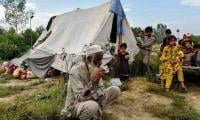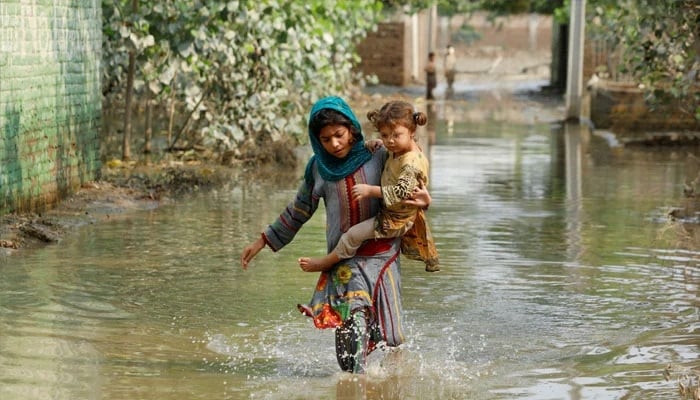
While Pakistan’s climate vulnerabilities and risks are mounting, its spending on this problem appears to be going in the opposite direction. In the aftermath of the latest federal budget, both officials and experts have pointed to this gap with alarm. The chairperson of the Senate Standing Committee on Climate Change and Environmental Coordination has warned that Pakistan is entering a period of heightened climate vulnerability, marked by intensifying heatwaves, accelerating glacier melt, erratic rainfall, growing water insecurity, and deteriorating urban environmental conditions. Meanwhile, the climate ministry’s total allocation had fallen to Rs2.478 billion in the PSDP, down from Rs3.5 billion in the previous fiscal year. This is also a sharp decline from the Rs6.4 billion allocated five years ago. Since then, Pakistan has seen the 2022 and 2025 monsoon disasters, repeated winter smog crises and summers that seem to become more and more unbearable by the year. Concerns have also been raised about the Climate Authority, with officials questioning what it does that the climate ministry already does not. On Monday, parliamentary and policy experts reportedly urged the government to integrate climate strategies into national budgetary planning and also warned that climate-related allocations had fallen by around 70 per cent in the latest budget, compared to the previous year, while acknowledging that IMF-supported reforms had encouraged greater allocations for disaster risk reduction, water conservation and renewable energy projects, as per reports.
The lopsided nature of climate revenues vs actual spending on climate issues has also been highlighted, with experts claiming that the ‘Budget in Brief 2026-27’ projects roughly Rs2 trillion from climate- and green-linked levies next year while tagging just Rs214 billion for direct climate spending, excluding subsidies. As per this analysis, the state is collecting roughly Rs10 for every rupee it actually spends on climate. Is climate now just another tool for fiscal consolidation? Reports and experts also say that adaptation and mitigation funds have fallen while disaster spending has risen, giving the country more money to clean up after a natural disaster rather than prevent one in the first place. This appears to be the exact opposite of what is needed. History has shown that even the wealthiest countries struggle to cope with the aftermath of major natural disasters, especially when they occur with increasing frequency. One can argue that no amount of post-disaster spending can remedy the damage caused by events like the 2022 floods. What is needed is to stop them from happening in the first place.
Pakistan finds itself in the odd position of being one of the most climate-vulnerable and yet also cash-strapped countries in the world. The strictures and incentives set by the IMF do not exactly encourage higher spending on anything, including climate, even when revenue collections are going up. While this is a gap that could – and indeed should – be filled by the rich countries of the world, the ones primarily responsible for the climate problem, that has not happened thus far and the likelihood of it ever happening only seems to be diminishing. However, this does not totally justify the current approach. Using climate to collect revenue while limiting adaptation and mitigation outlays is futile when one considers how much revenue will be lost due to repeated natural disasters. Greater spending on preventing these disasters, the infrastructure needed to cope with them and renewable energy should be seen as generating future savings. They may well be the best investment the country can make right now.