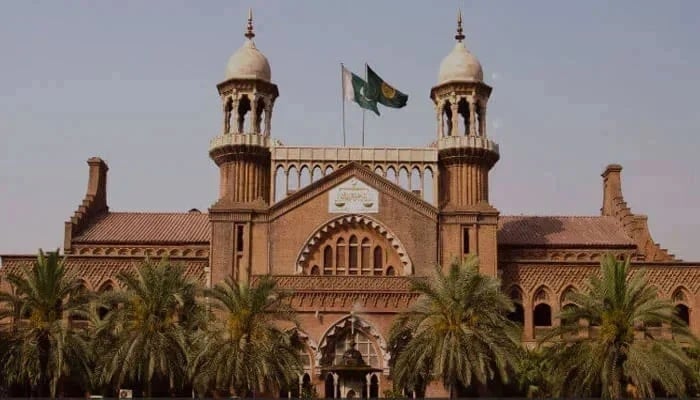
LAHORE: The Lahore High Court (LHC) Rawalpindi Bench on Wednesday held that a woman does not lose her right to dower (Haq Mehr) merely because the marriage was never consummated or the spouses did not live together.
In a nine-page written judgment, Justice Mirza Viqas Rauf allowed a petition filed by Azka Afreen and elaborated the legal principle governing the payment and return of dower in cases involving khula.
According to the judgment, the petitioner had signed Nikah with a man on August 3, 2014, but the marriage was not consummated as the parties lost their trust in each other.
However, when the nikah was signed, the dower was mentioned in the Nikahnama as 15 tola of gold, of which five tola was paid and it was mentioned that the rest of the dower was to be paid on demand. The document also mentioned land measuring one canal along with a constructed house in one of the columns related to dower.
The high court maintained that where the Nikahnama did not specify the time for payment of the dower, the entire amount was rendered immediately payable on demand. The LHC further ruled that if the terms relating to dower were not clearly defined, the entire dower shall be treated as prompt (Mu’ajjal) and payable whenever demanded by the wife.
Referring to the Nikahnama, the LHC observed that the stipulated dower comprising 10 tolas of gold, a one-kanal plot of land and a house constituted prompt dower and was also immediately payable. According to the judgment, in cases where a marriage was dissolved through khula at the instance of the wife, she was required to return only 25 per cent of the dower to her husband.
As per the LHC, the dissolution of marriage through khula would take effect immediately upon the woman returning the 25 per cent. Setting aside findings of the subordinate courts, the LHC accepted Afreen’s petition.