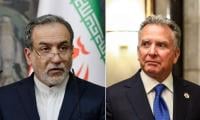
Is the war between the US and Iran really over? On the face of it, there ought to be no doubt about it because the very first point of the 14-point Memorandum of Understanding, duly signed by US President Donald Trump and President Masoud Pezeshkian, declared “immediate and permanent termination of military operations on all fronts, including in Lebanon…”
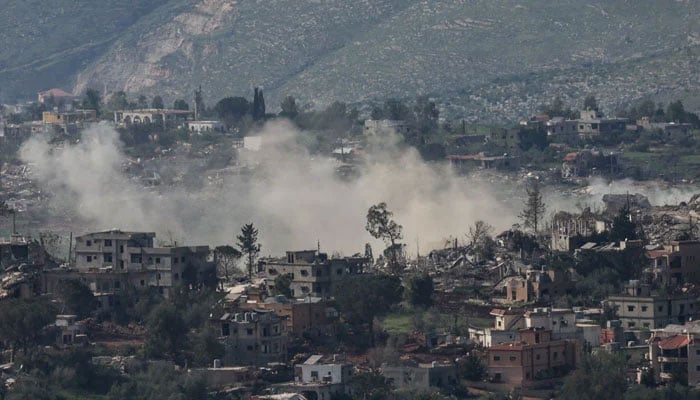
But one could be sure that Prime Minister Netanyahu of Israel would play foul to subvert the landmark agreement that had been painstakingly hammered out over weeks of hard negotiations, with Pakistan as the principal mediator. And Israel obliged with deadly strikes on Lebanon late on Thursday.
That is how a new round of direct talks between the US and Iran to be held in Switzerland on Friday was postponed after US Vice President JD Vance delayed his planned visit to the venue. Thankfully, a ceasefire was announced between Israel and Hezbollah, which came into effect on Friday afternoon. This should allow the process to go forward.
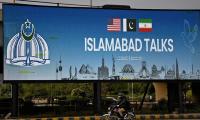
As an aside, the peace deal is certainly a moment of glory for Pakistan. From the outset, when Islamabad hosted the American and Iranian delegations for their first direct encounter during an uneasy ceasefire, Pakistan has played a role that will figure in the diplomatic history of our times.
Indeed, this preliminary agreement between the US and Iran is formally named the Islamabad Memorandum of Understanding. Pakistan would have presided over the initial meeting of the two delegations in Switzerland on Friday. It was Prime Minister Shehbaz Sharif who delivered the good news to the world by announcing the peace deal.
When President Trump signed the document in the historic Versailles Palace in France on Thursday and President Pezeshkian did so in Tehran, Prime Minister Sharif also signed the text of the MoU in Islamabad. One projection of Pakistan’s exceptional contribution to the making and the acceptance of the peace deal is the number of times Trump has praised COAS-CDF Field Marshal Asim Munir and Shehbaz Sharif. In equal measure, Iran’s leadership has warmly appreciated Pakistan’s tireless efforts at mediation.
We should now expect the postponed talks to be resumed soon. When announcing the delay in JD Vance’s departure for Switzerland, the White House said the logistics had not been straightforward or predictable. It was also reported that the delay was demanded by Iran after Israel’s air attacks on Lebanon. Israel claimed that its attacks were in response to the killing of four Israeli soldiers in southern Lebanon by Hezbollah.
When the MoU deal was announced by Shehbaz Sharif, one could sense a resounding sigh of relief across the world. World leaders and major countries applauded this development because a prolonged conflict between Iran and the United States would pose a threat to the world’s economy.
Meanwhile, the agreement has raised many serious questions, and an intense debate on its possible implications has started, particularly in the US, Israel and Iran. We may not have sufficient information about the situation in Iran, for obvious reasons. But our access to the American media has revealed to us a storm that is primarily raging against Trump for what is seen as Iran’s victory.
In the first place, the real loser in this deal is Netanyahu. Members of the Israeli cabinet who belong to the far right have been in a state of panic. They were reprimanded by Vance in a press conference he held to defend the deal. He accused Israel of a lack of trust in its strongest ally.
There are reports that opposition to the US-Iran agreement was beginning to surface in Iran. A news agency linked to Iran’s Revolutionary Guards Corps issued an editorial that the Strait of Hormuz should remain closed and that further negotiations should be cancelled until Israel withdraws fully from Lebanon.
More significantly, Iran’s Supreme Leader Mojtaba Khamenei said he had approved the deal with the US despite a “different view”, claiming that Trump had “out of desperation used all kinds of leverage” to bring it about.
Trump and his supporters are defending the agreement as necessary to avoid an economic crisis. Trump may have been concerned about the midterm elections that will be held in November. At the same time, Trump has noted that the agreement is only an MoU and “if they don’t behave, we’ll go right back to dropping bombs”. This means that resumption of hostilities cannot be ruled out.
For that matter, concerns about what may come next are quite valid. There is a growing impression in the global media that Trump has handed Iran a clear victory. The Economist, for instance, has said this week that “the peace deal is all carrot and no stick”. It also states that “there are many reasons to think that this gamble will fail”.
One question that is likely to emerge in every conversation on this issue is: who really won: Iran or the US / Israel? There may be different interpretations of how gains and losses are assessed in such military confrontations. As Trump is fond of saying again and again, Iran’s military and infrastructure have suffered great damage. Iran’s human casualties would also be huge. But how would you define Iran’s defeat or America’s victory?
The Editorial Board of The New York Times put it succinctly on Tuesday: “The president lost this war”. An opinion column the same day by Michelle Goldberg had this heading: “A garish spectacle of American decline”. One more headline: “We just learned the limits of American power”.
Let me quote from a column by Bret Stephens: “War is a contest of wills. And in that contest, the hardmen of Tehran appear to have scored a decisive victory over the vain man of Washington”.
And to conclude, let me repeat the question I posed at the beginning. Is the war between the US and Iran really over? Sadly, the answer that readily comes to mind is: no.
The writer is a senior journalist. He can be reached at: [email protected]