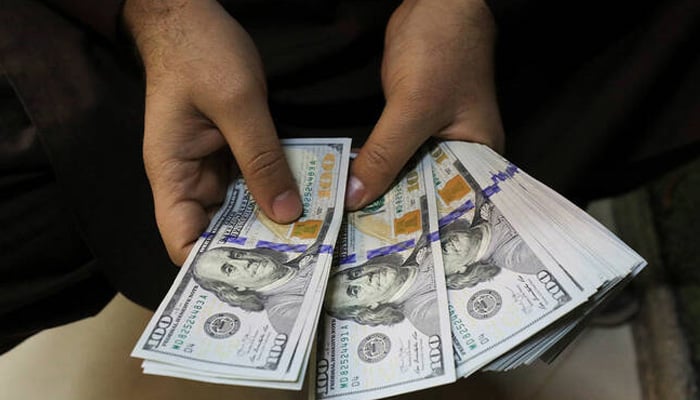
Pakistan’s policymakers routinely celebrate foreign direct investment (FDI) as proof of investor confidence. But for a country that repeatedly runs out of foreign exchange, the real issue is not the volume of FDI – it is why we fail to attract investment that earns or saves dollars.
This distinction explains why Vietnam has transformed its economy while Pakistan continues to struggle. Vietnam did not merely attract more FDI; it attracted investment designed to serve global markets. Foreign-invested enterprises now account for the majority of Vietnam’s merchandise exports, with multinationals such as Samsung using the country as a manufacturing and export platform.
Pakistan’s experience stands in stark contrast. FDI has historically flowed into telecommunications, power, financial services, consumer goods and real estate-linked sectors. While these areas support domestic activity, they do little to build globally competitive export industries. Pakistan receives FDI, but not the kind that shifts its export trajectory.
Although no global dataset formally classifies FDI as export-oriented or domestic-market-oriented, the evidence is clear: Vietnam attracts significantly more export-focused investment. The strongest indicator is the dominant share of foreign-invested firms in its exports.
This gap is not accidental. Export-oriented investors evaluate countries against a predictable set of criteria – and Pakistan consistently falls short.
Labour costs matter, but productivity matters more. Investors compare wages with workforce skills, quality standards, technical competence, supervisory capability and delivery reliability. Vietnam has spent decades aligning education and vocational training with industrial needs. Pakistan, despite its large workforce, has underinvested in skills – limiting productivity and competitiveness.
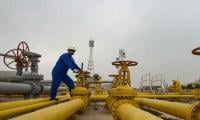
Energy is another decisive factor. Export-oriented investors require certainty in both cost and availability. Pakistan’s manufacturers have endured fluctuating tariffs, gas shortages, cross-subsidies and abrupt policy shifts. Unsurprisingly, investors gravitate towards countries that offer predictable and competitive industrial energy pricing.
Taxation also shapes investment decisions. Investors look beyond headline corporate tax rates to examine withholding taxes, minimum taxes, super taxes, refund mechanisms, customs processes and compliance costs. Pakistan’s repeated reliance on taxing the already documented formal sector – while leaving large parts of the economy undertaxed – creates uncertainty about future policy direction. Investors also fear that today’s incentives may become tomorrow’s revenue targets.
Market access is equally critical. Vietnam has built an extensive network of trade agreements through ASEAN, the CPTPP, the RCEP and bilateral deals with major economies, including the EU and UK. These agreements give investors confidence that products manufactured in Vietnam can enter key markets on favourable terms.
By contrast, Pakistan’s exporters remain heavily dependent on GSP+ preferences in the EU and lack a comparable network of modern trade agreements – an important disadvantage for investors establishing export platforms.
The ability to repatriate profits and royalties is another critical consideration. Investors may accept commercial risk, but they are far less tolerant of foreign exchange risk. Pakistan’s recurring balance-of-payments crises and periodic currency restrictions have inevitably shaped investor perceptions – and even temporary restrictions leave lasting impressions.
Security and political stability also matter. Vietnam benefits from policy continuity and a stable investment environment. Pakistan, despite its strategic location, continues to face political uncertainty, security concerns and policy reversals that weigh on investor confidence.
Pakistan must also become more selective about the FDI it seeks. Much attention is currently devoted to attracting capital into highways, urban infrastructure, and real estate. While these projects may generate short-term activity, they raise a fundamental question: where will the foreign exchange come from to service future profit repatriation? Unlike export-oriented sectors such as manufacturing, agribusiness, tourism, mining, and IT, these investments do not generate foreign currency and instead create future external obligations.
This does not imply that infrastructure investment should be discouraged. Roads, ports, railways, and logistics networks are essential – but they must serve as enablers of export competitiveness, not substitutes for it.
Pakistan does not lack potential. It has a large workforce, a strong textile base, agricultural capacity, growing IT capabilities, mineral resources and a strategic location linking key regions. What it lacks is alignment. Trade policy, tax policy, energy pricing, skills development, infrastructure planning and investment promotion continue to operate in silos. Vietnam aligned these around a single objective: becoming a globally competitive export platform.
Pakistan should adopt similar discipline. Instead of celebrating gross FDI figures, policymakers should evaluate investment based on the exports it generates, the technology it transfers, the supply chains it develops, the skills it builds and the foreign exchange it earns. The goal must be to maximise FDI that strengthens the external account, not merely increase headline numbers.
Foreign investors compare countries, not promises. Vietnam attracts export-oriented FDI because it offers a credible platform to serve global markets. Pakistan will attract similar investment only when export competitiveness becomes the organising principle of economic policy.
Until then, Pakistan will continue to welcome investment that earns rupees while wondering why it still struggles to earn dollars. This is a mindless pursuit with a hopeless outcome.
The writer is a former CEO of Unilever Pakistan and of the Pakistan Business Council.