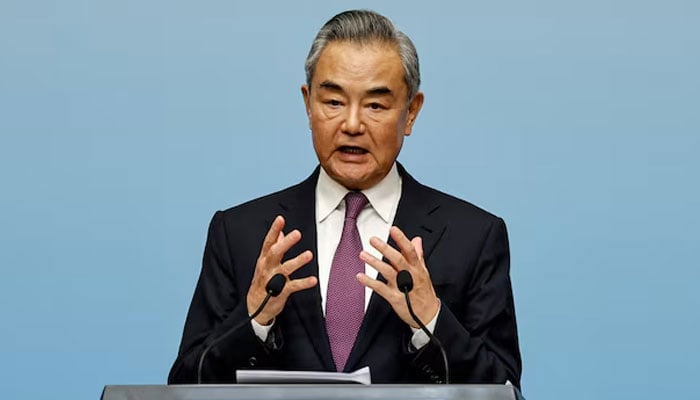
The international system is facing a profound crisis of legitimacy, having been exposed as a global order that was designed in a different era and for a different balance of power. Against this backdrop, Chinese Foreign Minister Wang Yi’s call for a more just and equitable system of global governance deserves serious consideration. His warning that the "ship of civilisation has entered dangerous waters" reflects a growing sentiment across much of the developing world: the institutions responsible for managing global affairs are no longer adequately serving the interests of all nations. Wang’s remarks came during a press briefing regarding the release of China’s State Council Information Office’s white paper titled ‘More Just and Equitable Global Governance: China’s Principles, Proposals and Actions’. China has argued for a fairer system of international governance rooted in multilateralism, cooperation and greater representation for developing countries. Beijing’s proposals raise concerns that are difficult to dismiss. It is a fact that emerging economies and countries of the Global South remain underrepresented in decision-making forums despite accounting for a large share of the world’s population.
The UN, despite its shortcomings, remains the most representative international institution available. It has been heavily criticised for its inability to stop Israel’s devastating assault on Gaza and for its failure to prevent the widening conflict involving Iran. These failures have understandably fuelled frustration with the existing international order. Yet abandoning the UN or attempting to replace it with alternative structures would likely create more instability rather than less. Meanwhile, the selective application of international law has also eroded confidence in the global system. The world has witnessed repeated instances in which powerful states and their allies appear insulated from accountability, while weaker nations face sanctions, pressure and punishment. Climate justice offers another example of this imbalance. Countries that have contributed least to global emissions often bear the heaviest consequences of climate change. Pakistan’s catastrophic floods of 2022 showed this painful reality. Millions were affected by a disaster linked to a global environmental crisis that Pakistan did little to create. Yet international assistance fell far short of what was required.
The international landscape is also undergoing a broader shift. The era of uncontested American dominance is increasingly being challenged by the rise of new centres of power and the emergence of a more multipolar world appears increasingly likely. The question is whether this transition can be managed through cooperation and institutional reform or whether it will unfold through confrontation and conflict. For many countries in the Global South, a multipolar order offers the possibility of greater strategic autonomy and a stronger voice in global affairs. Regional and middle powers, including China, Russia, Saudi Arabia, Turkiye, Qatar and Pakistan, have opportunities to deepen cooperation in trade, investment, technology and security. The lessons of recent conflicts are clear. The world can ill afford another major geopolitical misadventure. Escalating wars, growing economic uncertainty and mounting climate challenges require collective solutions, not unilateral actions. Reforming global governance within the UN framework, while ensuring meaningful representation for developing nations, may be the most realistic path towards a more stable and equitable future.