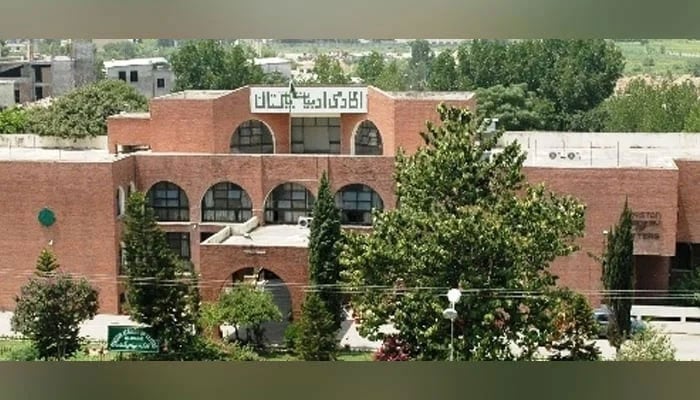
This year marks the 50th anniversary of the establishment of the Pakistan Academy of Letters (PAL) in July 1976. The Academy was part of a larger cultural vision of president and later prime minister Zulfikar Ali Bhutto. Besides the PAL, several other institutions, such as the Pakistan National Council of the Arts (PNCA), the National Film Development Corporation (NAFDEC), Lok Virsa, the Quaid-e-Azam Academy, the National Book Foundation and other bodies devoted to books, languages, scholarship and cultural preservation, were created by him. Together, they laid the foundations of Pakistan’s modern cultural infrastructure.
A commemorative stamp was issued this month to celebrate the PAL’s golden jubilee. It was formally unveiled at a modest but dignified event held recently at the PAL office in Islamabad. The event, however, did not receive much attention in the mainstream media due to preoccupation with national, regional and geopolitical issues that dominated the national discourse.
Attended by no more than a few dozen literati from the twin cities, it was not a grandiose event typically marked by the sound of sirens and bugles, ribbon cuttings or the familiar choreography of official power. Yet, it was rich in symbolism.
The event was held in the hall named after Sindhi poet, educationist, intellectual rebel and peacenik Shaikh Ayaz. For his Urdu couplet during the 1965 war, rejecting violence against Hindu compatriots, he faced imprisonment by the regime. Sheikh Ayaz stood for and gave voice to the yearnings of multitudes for peace in the region.
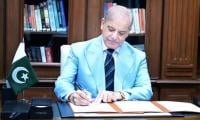
The chief guest at the event was the amiable and unassuming federal minister for culture and national heritage, Aurangzeb Khan Kichi. It was a departure from the usual weight-throwing chief guests accompanied by musical bands but bereft of intellectual worth. Kichi first attracted huge admiration when, at a languages conference early this year, he declared that every language spoken in the country was the national language.
Kichi disarmed the literati by announcing to fill over one hundred vacant posts in the Academy, even at the risk of facing an NAB probe. Suggesting that the bureaucracy had not submitted a summary, he inoffensively asked it to prepare a summary for filling the vacant posts.
A commemorative stamp was also issued in 2003 to mark the PAL’s 25th anniversary, but few, even among the Academy’s life members like me, remember it. The commemorative stamp this year, with the Academy headed for the first time ever by a woman, lent the event special significance. Najiba Arif drew spontaneous applause for initiatives like digital literary meetings and regular weekly face-to-face discussions on books in all languages spoken in the country. It prompted former chairman Dr Inamul Haq Javed to question the notion held by some men that women cannot accomplish what men can.
Najiba had invited all former chairmen still alive – Mr Iftikhar Arif, Dr Inamul Haq Javed, Dr Qasim Bughio and Mr Abdul Hameed – to the event, honoured them and Asghar Nadeem Syed with a seat on the podium, and gave each the floor to speak. Those, like Fakhar Zaman, who could not come were warmly acknowledged in the opening speech. It was a profound gesture full of symbolism. It was an unwritten declaration that institutions are built brick by brick by all and not by any one individual. For once, the practice of demonising everyone and glorifying one or a few individuals was not witnessed. There were lessons in it for everyone – politicians, bureaucrats, scientists and academia.
Najiba Arif made the pitch by detailing the PAL’s achievements. All the former chairpersons spoke nostalgically about their time and what each had done or not done.
From an outsider’s perspective, the greatest achievement of the Academy, apart from its work in translation, literary awards and support for all languages of the country, is the platform it offers to talk and hear new perspectives, keeping intellectual conversation alive and even allowing it to occasionally morph into politics and human rights despite structural constraints on free expression.
It is no small mercy that local writers, academics and activists and those who have been ignored for decades have space to speak freely. It is equally significant that the Academy continues to foster a culture of dialogue at a time when political parties have abandoned it.
The writer, a life member of PAL and an author, is also a former senator.