_updates.jpg)
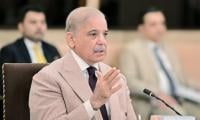
Prime Minister Shehbaz Sharif has announced that the government plans to reduce petrol prices significantly following a decline in global oil rates after the United States and Iran signed the "Islamabad Memorandum of Understanding" aimed at easing tensions and improving energy market stability.
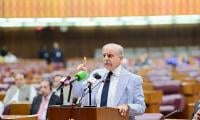
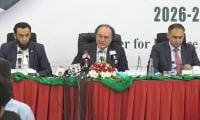
“We had promised that we would bring the price of petroleum products down and repay each penny to the people,” he said during his address to the National Assembly in Islamabad on Friday.
“So today, after our weekly review, we will announce a significant reduction [in the price of petroleum products],” the prime minister said, praising his ministers for managing the oil crisis.
In the previous weekly review, the federal government slashed the prices of petrol and diesel by Rs4 and Rs2 per litre, respectively, for the week ending June 19.
Oil prices fell further on Friday as prospects for more supply brightened after oil tankers began moving through the reopened Strait of Hormuz following the peace deal, for which Pakistan was the main mediator.
The government, which would review the price of petroleum products on a fortnightly basis, has been reviewing petroleum prices on a weekly basis since the US-Israeli conflict with Iran on February 28.
The price of petrol was Rs258.17 per litre when the war began and jumped to as high as Rs458.41 per litre, before coming a little above Rs370 per litre, just a few days back. Meanwhile, diesel was at Rs275.7 per litre and jumped to as high as Rs520.35 per litre.
The conflict had triggered a global fuel crunch after the closure of the Strait of Hormuz, a key route through which around one-fifth of the world's oil and gas supplies pass during peacetime. It also led to a rise in inflation not only in Pakistan but across the globe.
Petrol is mainly used by commuters in small vehicles, rickshaws and two-wheelers. Higher fuel prices significantly impact the budgets of middle and lower-middle-class households, who rely on petrol for daily travel.
On the other hand, a significant portion of the transport sector relies on high-speed diesel. Its price is considered inflationary since it is predominantly used in heavy goods transport vehicles, trucks, buses, trains, and agricultural machinery such as tractors, tube wells, and threshers.
Meanwhile, the House unanimously adopted a resolution welcoming the cessation of hostilities and the signing of a framework agreement for peace and stability between the United States and Iran, while praising Pakistan's role in facilitating the diplomatic breakthrough.
Moved by Federal Minister for Law and Justice Azam Nazeer Tarar, the resolution noted with "immense satisfaction and pride" the landmark agreement between the two countries. It also highlighted the adverse impact of the conflict on regional peace and stability, as well as on global economic stability and energy security.
The House placed on record its profound appreciation for Prime Minister Shehbaz Sharif, Deputy Prime Minister and Foreign Minister Ishaq Dar, Interior Minister Mohsin Naqvi, Field Marshal Asim Munir and the entire negotiating team for their efforts in advancing the peace process. The resolution stated that their sincere and tireless efforts helped position Pakistan as a trusted neutral mediator on the global stage. It also congratulated the leaders of Iran and the United States on the successful conclusion and signing of the historic peace deal.
The National Assembly praised PM Shehbaz, Chief of Defence Forces Syed Asim Munir, Deputy Prime Minister Ishaq Dar and others for playing key roles in the peace deal.
The House also congratulated and appreciates the leader of the Islamic Republic of Iran and the United States of America for successful completion and signing of this historic peace deal.”
The resolution reads: "Whereas the National Assembly of Pakistan notes with immense satisfaction and pride the landmark diplomatic breakthrough in form of cession of hostilities, and signing of an agreement on a framework for peace and stability between the United States of America and the Islamic Republic of Iran."
"Whereas the House recognises the negative fallout of the conflict for the regional peace and stability as well as for the economic stability and energy security of the countries across the globe. The House places on record its profound appreciation for the Prime Minister of Pakistan Muhammad Shehbaz Sharif, Deputy Prime Minister Senator Muhammad Ishaq Dar, Interior Minister Syed Mohsin Naqvi and Field Marshal Syed Asim Munir and the entire team engaged in process of negotiations. Their sincere and tireless efforts positioned Pakistan as a trusted neutral mediator on global stage."