Fyodor Dostoevsky once wrote that “Russia is not only in Europe but also in Asia”.
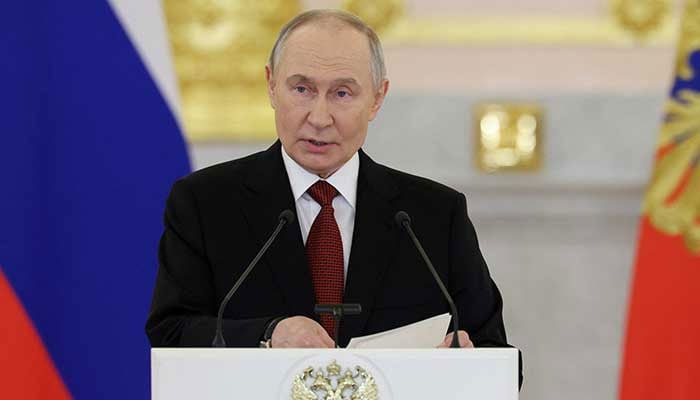
More than a century later, President Vladimir Putin has been advancing the doctrine of a ‘Greater Eurasian Partnership’ aimed at creating a common space for cooperation, peace and prosperity across the two continents.
Borrowing from Halford Mackinder’s theory, Zbigniew Brzezinski argued that Eurasia remains the centre of global power. This is a powerful idea, suggesting that Eurasia is not merely an extended geographical neighbourhood but a strategic community whose stability will shape the future of the twenty-first century.
Today, the post-World War II international order is under severe strain. The institutions that once sustained it, including the UN and the WTO, are increasingly marginalised, while their principal architects appear to be dismantling the very system they created. The so-called rules-based order is weakening, regional organisations are fragmenting, and power politics are resurging. Trade, technology and capital have become instruments of national security and geopolitical competition rather than engines of shared prosperity. As a result, middle powers and the Global South are seeking greater strategic autonomy.
Eurasia occupies a central place in this changing landscape. Covering 36 per cent of the world’s landmass – about 22 million square kilometres – it is home to nearly 70 per cent of the global population, or 5.6 billion people. Russia alone spans 17 million square kilometres, while China and India together account for almost three billion people. Pakistan, with 250 million people, and the five Central Asian states, with a combined population of 82 million, further reinforce Eurasia’s demographic significance. Collectively, Eurasia generates approximately $65 trillion in output, representing about 71 per cent of global nominal GDP.
Strategically located at the intersection of South Asia, Central Asia, China and the Middle East, Eurasia connects major markets, energy resources and transportation corridors. China’s expanding connectivity initiatives and the presence of multiple nuclear powers underscore the region’s geopolitical importance.
Strategic stability in Eurasia requires trust, economic resilience, secure trade routes, energy security, technological cooperation, conflict prevention and coordinated efforts against terrorism and transnational crime. Achieving these goals demands more than rhetoric; it requires a durable and inclusive security architecture.
Russia, as a major Eurasian power, remains pivotal to regional security, energy networks, transport corridors and diplomacy. Its influence in Central Asia and partnership with China make it an indispensable stakeholder in shaping the future regional order. Pakistan stands ready to contribute constructively to this effort, advancing regional stability, connectivity, and cooperation.
Pakistan’s first priority is to put an end to the US-Israel-Iran war, which is upending regional and international security, as well as global markets and supply chains. Pakistan is grateful for Russia’s endorsement of its mediation efforts.
There should be a new strategic equilibrium and paradigm in Europe, one that does not hark back to the Second World War and its aftermath, or even to the disintegration of the Soviet Union.
In the recent past, and after arduous effort, Pakistan and Russia have moved from calibrated rapprochement to entente and to a functional relationship. This turnaround in our relations has been reassuring. We would welcome Russia’s full-fledged return to Pakistan’s industry, agriculture, technology, defence production and arms supplies. Pakistan-Russia trade, at $1.3 billion, is paltry and must be boosted. Pakistan should become Russia’s gateway to the Arabian Sea. Besides, it has political clout with the Gulf nations and the wider Muslim world, which could work to Russia’s advantage.
In the coming decades, Pakistan will become one of the most consequential nations in West Asia in terms of population, GDP, human capital cohorts and the penetration of new technologies. The time is ripe for Russia’s scaled-up entry into its markets.
Russia has a distinct tilt towards India. I remember President Putin once saying that, since India was a major buyer of Russian arms and armaments, Russia could not jeopardise that relationship by selling a smaller quantity to Pakistan. This calculus must change because of altered circumstances. For us, India is an outlier in the international system because it seeks exceptionalism and continues to impose aggression and proxy wars on Pakistan. Russia could help bring the two countries back to diplomacy, as Soviet leaders did in the 1960s. It is imperative that these countries maintain a semblance of engagement to avert wars over Kashmir that could escalate into a nuclear catastrophe.
China and Russia may choose to sit at the Eurasian diplomatic top tables to help repair the crumbling world order. Russia, as an observer at the Organisation of Islamic Cooperation, should exponentially enhance its outreach.
In West and Central Asia, Afghanistan is key to the Central Asian states’ access to warm waters through Pakistan. Recently, Russia has developed an understanding with the Afghan Taliban. This is an astute move, but one fraught with challenges, including terrorism emanating from Afghan soil and striking Pakistan, as well as illicit arms and narcotics trafficking moving northwards to Central Asia and Russia. Russia should impress upon the Afghan Taliban the need to curb these threats and to open their territory to cross-regional infrastructure development and energy corridors, thereby facilitating the completion of CASA-1000, the Turkmenistan-Pakistan gas pipeline, and Russian oil and gas supplies.
The Belt and Road Initiative is transcontinental, extending across Eurasia, including Pakistan and Russia. Two recent offshoots of the China-Pakistan Economic Corridor (CPEC) are the embryonic Gwadar-Iran corridor in the wake of the Iran war and a Pakistan-Xinjiang-Kyrgyzstan corridor that bypasses Afghanistan. Both corridors can be extended to Russia through Central Asia.
For Eurasian security, we need a bold vision for a brave new world. Russia’s proposals, such as the Greater Eurasian Partnership and a New Security Architecture, buttressed by the Shanghai Cooperation Organisation and China’s Global Security Initiative, can become vehicles for advancing this objective.
If Russia, Pakistan and the five Central Asian Republics deepen economic integration, they could form a contiguous strategic space stretching from the Baltic and Arctic regions to the Arabian Sea.
The writer is Pakistan’s former ambassador to the US, the UN (both in New York and Geneva) and China.