Since the dawn of the 21st century, the global order has faced one challenge after another. The world entered the 21st century amid the war on terror, which has shaken global peace and security. The world was grappling with the war on terror when the global financial crisis struck. The financial crisis proved to be a fatal blow to Western economic dominance and kick-started the shift of global economic power to Asia. However, the Iran-USA war fast-tracked global changes, accelerating the decline of the Western-led global order.
These events, along with others, have kick-started irreversible and significant changes. A new superpower (China) began to emerge, while the existing superpower (the USA) began its decline. However, the most interesting aspect of these changes was that a fallen superpower (Russia) initiated its resurgence. This is a notable event, as in known history no fallen superpower has done so. Russia is making steady progress and exerting considerable influence. However, since President Putin’s rise to power, Russia has achieved many milestones.
First, the economy underwent a deep transformation. Under President Putin’s leadership, Russia rebounded from a struggling economy to become the world’s 9th-largest economy. When Putin came to power in 2000, Russia’s GDP was about US$260 billion. By 2025, GDP had reached US$2.54 trillion, marking a complete turnaround. He reformed the trade sector, and trade rose to US$1 trillion in 2021, with a record trade surplus of US$289 billion in 2022. Unfortunately, trade volume and surplus began to decline after the Russia-Ukraine war and sanctions imposed by the USA and Western countries, but Russia still maintains a decent trade volume and surplus. In 2025, the trade volume was about US$697.3 billion, and the trade surplus was US$139 billion.
President Putin paid special attention to reducing dependence on export-led growth and diversifying the economy. Over the years, the trade-to-GDP ratio fell from 60% in the 2000s to 30% in 2025. Russia also prioritized development indicators and people’s welfare. Per capita GDP rose from US$1,772 to US$17,446. Per capita health spending increased from US$140 in 2000 to US$950 in 2025. Literacy reached 100%, and unemployment fell from more than 13.04% in 2000 to 2% in 2025. As a result, poverty declined sharply from 45% to almost 11%.
Second, Russia is highly active on the diplomatic and global governance fronts. Russia is working hand in hand with China to pursue reforms in the global system. Alongside China, it has emerged as a strong voice for the Global South and is helping to strengthen major organizations, such as the Shanghai Cooperation Organization.
Third, President Putin has emerged as a devoted proponent of a multipolar world to restore peace and fairness in the global order. He is convinced that, against the backdrop of the weakening or breakdown of old alliances and the emergence of new powerhouses and alliances, the world has an opportunity to become multipolar. Rather, it has become a necessity of the hour. Russia also believes in and advocates a strong role for the Global South in a multipolar world, especially in global decision-making and the implementation of decisions.
Fourth, Russia is also active in creating new economic avenues of global relevance, such as BRICS. With the expansion of BRICS, it has become a major economic organization with the potential to lead global growth. Moreover, Russia is promoting the use of alternative currencies to the US dollar for trade, national reserves, and international payments.
The above discussion clearly indicates that Russia is resurgent and returning to its pre-fall status. Russia, once considered a lost cause, has begun consolidating its presence on the global chessboard of power. Accordingly, Russia is diversifying its relationships, forming new partnerships, and strengthening old ones. Fortunately, Pakistan foresaw this situation many years ago and assessed that Russia has re-emerged as a major global player. It helped Pakistan and Russia pursue rapprochement. Moreover, the SCO provided a valuable platform for interaction, and China also helped both countries strengthen strategic communication and rebuild their relationship. Lastly, Russia and Pakistan realized they should not look through the lens of India.
The rapprochement was a timely initiative, as both countries are vital actors in the region and global order and prominent members of the Global South.
After the rapprochement, neither country sat idle nor left the relationship to time. The leadership of both countries has taken multiple steps to strengthen their relationship across security, the economy, trade, and finance, among other areas. A few prominent examples include joint military exercises, access to Gwadar, the signing of an agreement for the Pakistan Stream Gas Pipeline, the Karachi-to-Kausar pipeline, and a trade agreement to enhance bilateral trade.
Besides, the top leadership continued to engage and take action to strengthen the relationship. For example, President Zardari visited Russia in 2011. Second, President Putin declared Pakistan one of the region’s primary partners. Third, in 2024, the Deputy Prime Minister of Russia led a delegation of officials from Russian ministries, agencies, state corporations, and major private companies to Pakistan. The delegation held in-depth discussions with Pakistani counterparts. Both countries signed the MoU on Trade, Connectivity, and Other Areas of Mutual Cooperation between the Islamic Republic of Pakistan and the Russian Federation, as well as the MoU between the St. Petersburg International Mercantile Exchange (SPIMEX) and the Pakistan Mercantile Exchange (PMEX). Fourth, the Russian Prime Minister visited Pakistan in 2024 for the SCO conference. Fifth, Pakistani Prime Minister Imran Khan visited Russia in 2021.
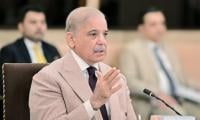
Most recently, the interior ministers of Pakistan and Russia signed agreements to prevent illegal migration and drug trafficking on the sidelines of the SCO meeting. Russia had also shown interest in linking Gwadar to the INSTC. Prime Minister Shahbaz Sharif also had to visit Russia, but due to the Iran-USA war, he had to postpone the visit. It is expected that Prime Minister Shahbaz will visit Russia soon.
In conclusion, the above discussion leads to two key points. First, Russia is resurgent as a global power. Second, the relationship between Pakistan and Russia is moving in the right direction.