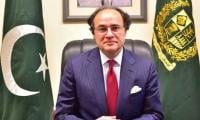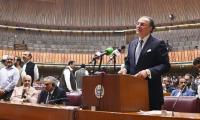
ISLAMABAD: Prime Minister Shehbaz Sharif said Friday that the final text of a US-Iran peace deal had been agreed and Pakistan is now working closely with both sides to finalise the next steps.
He said amid ongoing intense mediation efforts by Pakistan, they were fully aware of incessant misinformation campaign being waged by those who want to sabotage the peace deal. “Setting aside the noise, we can confirm that a final, agreed upon text of the peace deal has been reached and Pakistan is now working closely with both sides to finalise the next steps,” he said. “Peace has never been this close as it is now,” the prime minister maintained.
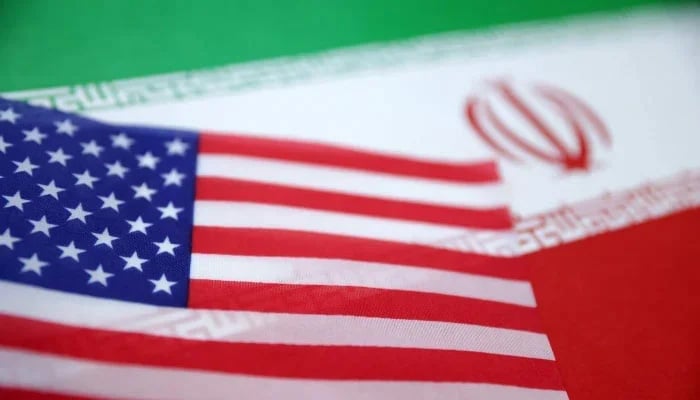
The United States and Iran on Friday appeared to have sharply different understandings of the contents of an emerging pact to end their war, though both sides signalled that an agreement was close.
Leaked terms of the proposed memorandum of understanding outlined by Western, Pakistani and Iranian sources on Friday appeared to favour Iran, drawing criticism from US President Donald Trump, who called the reports inaccurate.
While there were minor differences in the accounts, all appeared to offer Tehran much of what it has demanded so far, with Trump appearing to win little of what he has sought, beyond the reopening of the Strait of Hormuz, which Iran shut after the US and Israel launched attacks in February.
Trump said leaked comments on a deal did not represent what had been agreed to. “The terms that Iran leaked out to the Fake News have NOTHING to do with the terms that were agreed to, in writing,” Trump wrote on his Truth Social platform. “Very dishonorable people to deal with,” he said of the Iranians.
However, shortly afterwards, Trump reposted a social media post by Iranian Foreign Minister Abbas Araghchi, in which Araghchi said a memorandum to end the war had never been closer—and also warned against speculation over its contents until it was finalised.
A Western source, an Iranian source and a Gulf source said a key issue yet to be resolved was language on ceasing hostilities in Lebanon. Iran has demanded Israel end a campaign against Iran’s allies, the Hezbollah militia.
Under the terms of the text described by other sources to Reuters, the US would immediately begin providing Iran with billions of dollars in unfrozen assets, and waive sanctions on its oil exports, in return for Iran opening the strait.
Discussion of Iran’s nuclear programme would be set aside for a 60-day period of talks on a final settlement, there would be a discussion of war reparations to Tehran, and the dropping of longstanding demands for curbs on Iran’s missile programme, the sources said.
Washington has previously demanded Iran give up its stockpile of highly enriched uranium. But none of the versions of the text reviewed by Reuters includes mention of it, and the sources said the demand had been explicitly excluded for now. But a senior US official, describing the agreement, said that the uranium stockpile “will be destroyed and removed” and Iran’s nuclear programme would be dismantled. “None of their money released until they perform. Strait of Hormuz will be open. No Iran funding of terrorist groups,” the official said. “This is what they have agreed to. This is a performance-based deal.”
Vice President JD Vance said on X: “First, the Iranians are not receiving any cash, and no funds are being released for simply signing a deal or attending a meeting.” The deal ensures economic benefits would only flow to Iran if it meets its obligations under the agreement, he said.
A Western source said that if language can be agreed, the memorandum could be signed as soon as Sunday by Vance and Iran’s parliament speaker, Mohammad Baqer Ghalibaf, with Geneva for now seen as the likeliest venue.
Iranian Foreign Minister Abbas Araghchi said if the final stage of negotiations is completed, the agreement will be signed remotely by both sides and then announced.
He said that nuclear talks with the US would only take place at a later stage and would not proceed unless a proposed interim deal was implemented, state TV reported.
He said the interim deal would include reopening the Strait of Hormuz and ending conflicts on multiple fronts, adding that a memorandum of understanding had not yet been signed and could still change.
Araghchi said that management of the Strait of Hormuz would not return to the pre-war era, that sovereignty over the strait belonged to Iran and Oman, and that Iran would secure safe passage for ships through it.
He said that a draft deal with the US included ending a naval blockade of Iranian ports and arrangements on managing the strategic Strait of Hormuz.
Araghchi said that Israel was looking to derail a potential deal with the US currently being finalised.
Despite jointly launching the war with the United States, Israel has so far been excluded from the negotiations, and Prime Minister Benjamin Netanyahu said his country would not be party to the memorandum.
Netanyahu has repeatedly clashed with Trump in recent weeks over US demands that Israel curb military action in Lebanon to let Washington reach a deal with Tehran. Israel’s defence minister said Israel would not withdraw from territory in Lebanon. A senior Israeli official said Israel expects any deal to maintain the Lebanon ceasefire in its current form, with Israel maintaining freedom to act against what it deems threats in areas under its control.
Trump’s announcement of a deal prompted global shares to rally and oil prices to slip. Brent crude prices were down more than 3 per cent to their lowest in nearly two months.
Tehran’s official IRNA news agency said stripping Iran of its enriched nuclear material was not even on the table, while it would insist on managing traffic through the Strait of Hormuz.
The clash over the content of the deal comes as both sides seek to show that they have come out with the upper hand following the war that the United States and Israel launched on Iran on February 28.
Republican senator Lindsey Graham, a Trump ally and Iran hawk, said on X that he was “very glad to hear” Trump’s denial about the Iranian reports “because the deal as described by Iran would be awful.”
Trump said on Thursday that the two sides had reached a “great settlement” that would be signed in Europe as soon as this weekend. Tehran said nothing had been finalised.
Iran’s Mehr news agency, quoting a source close to Iran’s negotiating team, published what it said was the text of a draft deal being finalised. The draft, it said, would end the war on all fronts—including Lebanon, where Israel has kept up its campaign against Iran-backed Hezbollah—see the release of $24 billion in Iran’s frozen assets, and set a 60-day period for negotiations on Tehran’s nuclear programme. It also includes the suspension of sanctions on the sale of Iran’s oil, the lifting of a US naval blockade on Iranian ports and plans to make the US and its allies pay Iran reparations for damage caused by the war.
Hezbollah said on Friday that its fighters had confronted Israeli forces advancing towards a southern Lebanese town, as Israel pressed on with its strikes in Lebanon. The group also claimed other attacks on Israeli troops in southern Lebanon.
A US deportation flight headed to the Central African Republic on Friday, lawyers told AFP, carrying nationals from Iran, Afghanistan, Turkiye and Georgia. Such “third-country” deportations, including of people with legal protections, have become a staple of President Trump’s crackdown on immigration.
Israeli Prime Minister Benjamin Netanyahu said that he and US President Donald Trump were in “full agreement” to keep Iran from acquiring nuclear weapons, a day after Trump touted an imminent deal with Tehran.
”As long as I am prime minister of Israel, Iran will not have nuclear weapons. There is full agreement between me and President Trump on this issue,” Netanyahu said in a statement.
An Iran-linked hacker group claims to have breached FBI drones and has threatened to target the World Cup that kicked off this week, a monitoring group said on Friday.
Egypt urged the United States and Iran to seize what it called an “available opportunity” for a deal to end the war, after President Donald Trump withdrew his threat to carry out further strikes on Tehran.
Cairo’s foreign ministry said in a statement late Thursday it hoped “the available opportunity will be seized to reach a deal on the various outstanding issues and to prepare the atmosphere for reaching an end to the war and beginning a new phase of regional stability”.
A US judge on Thursday allowed an Iranian-born engineer Mahdi Sadeghi to be released on bail just days before his trial on charges that he conspired to illegally export technology to Iran that had potential application in military drones.
India summoned the US deputy chief of mission in Delhi on Friday to protest against US military strikes on commercial vessels off the coast of Oman, an Indian source said, the second time in three days New Delhi has expressed its displeasure.
US forces shot down two Iranian one-way attack drones as Tehran appeared to attempt to strike commercial ships transiting the Strait of Hormuz, a US official told Reuters on Thursday. “Traffic flow through the strait continues,” the official said, speaking on condition of anonymity.
The United Arab Emirates has agreed to unlock billions of dollars for Iran, four sources said, in a tactical shift after weeks of Iranian attacks on the wealthy Gulf Arab state during the US-Israeli war with the Islamic Republic.
Two regional sources told Reuters the UAE had agreed to release a total of $10 billion, more than $3 billion of which had already been delivered. Two other sources with knowledge of the arrangement put the total funds involved at $20 billion, adding that the move had been agreed in return for a halt to Iranian attacks on the UAE. One of the sources with knowledge of the arrangement also said a first tranche of $3 billion had already been made available.
The United States is “80 to 85 per cent” confident of signing a peace deal with Iran in the coming days, a senior official in President Donald Trump’s administration said Friday.
The deal would involve “significant” sanctions relief and the unfreezing of Iranian assets, in exchange for Iran agreeing to dismantle its nuclear programme and hand over its nuclear material, the official said. “I feel very good about the deal. I think the president has gotten to a very good spot,” the senior official told reporters in a call, speaking on condition of anonymity. “We’re not quite at the finish line yet, but we are very close,”
Lebanon would also be included in the deal, a key issue that has threatened to unravel the process in the past as Israel continued to strike Iran’s Hezbollah allies there. “It includes Lebanon, it includes Iran, it includes the Gulf Coast countries, and includes Israel,” the official said.
Switzerland has offered to host the possible signing of a peace agreement between the United States and Iran, the Swiss foreign ministry told AFP on Friday. “Switzerland is fully engaged. We are in close contact with the United States and Iran,” the ministry said in a brief message sent to AFP.
The US-Iran MoU President Trump claims will soon be signed calls for the Strait of Hormuz to reopen immediately without tolls and for Iran to receive sanctions relief based on compliance, according to a diplomat from one of the mediating countries and a US official, Axios reported. The MOU would extend the ceasefire for 60 days, including in Lebanon, during which time nuclear negotiations would be held. The text includes a framework for addressing Iran’s enriched uranium stockpile, though any action on Iran’s nuclear programme would depend on a second, more detailed accord.
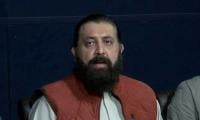
Faisal Vawda, a Pakistani senator who is close to the country’s leadership, said on Friday that Pakistan — and specifically its army chief, Field Marshal Syed Asim Munir — had been key in drafting the text of a potential agreement between Iran and the United States, New York Times reported.
Munir “handled the back-and-forth negotiations, the back-and-forth phone calls with Trump and the Iranians, and the back-and-forth visits,” the senator said, claiming, “The drafting was done entirely by him on his own personal laptop.”
Meanwhile, Deputy Prime Minister/Foreign Minister Senator Muhammad Ishaq Dar spoke Friday with EU High Representative/Vice President Kaja Kallas on recent developments regarding US–Iran understanding. “Both sides welcomed the progress achieved through sustained diplomatic engagement and expressed hope that these efforts will soon lead to a durable understanding and peaceful resolution,” a statement from the foreign ministry said. It added they reaffirmed that dialogue and diplomacy remain the only viable means to resolve conflicts and advance lasting peace and stability.
Senator Ishaq Dar also spoke Friday with Swiss Foreign Minister Ignazio Cassis. “The two leaders exchanged views on the regional situation and welcomed the encouraging progress towards an understanding between the United States and Iran.
“The Swiss foreign minister appreciated Pakistan’s leading mediating role in supporting diplomatic engagement and its efforts in helping advance progress towards peace and stability in the region and beyond. Both sides agreed to remain closely engaged on further developments.”