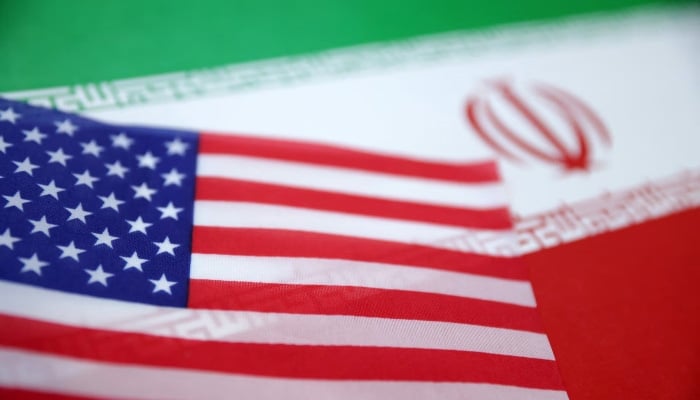
After a few weeks’ pause, the confrontation between Iran and the US has adopted a destructive course with both sides targeting their interests and infrastructure.
A tit-for-tat exchange of missiles and other lethal weapons has created uncertainty and given rise to concerns that West Asia would remain vulnerable in the near future. No doubt, Israel’s incursions into Lebanon and killing of Palestinians in Gaza with impunity provided the added trigger to flare up the situation.
How this renewed conflagration will shape the future events should be a source of concern to the entire region and beyond. However, at the heart of the crisis lies a simple reality: military pressure has failed to compel Iran to abandon its long-held position on the nuclear issue. Washington entered the confrontation believing that a combination of military force, economic sanctions and diplomatic isolation would force Tehran to accept American conditions. Yet the result indicates that Iran’s core position remains largely unchanged.
Iran continues to insist that it does not seek nuclear weapons. It maintains that its nuclear programme is intended for peaceful purposes and that it has every right under the Nuclear Non-Proliferation Treaty (NPT) to develop nuclear technology for civilian use. This is essentially the same position Tehran defended before signing the Joint Comprehensive Plan of Action (JCPOA) in 2015 and the same position it holds today.
From Tehran’s perspective, asserting Iran’s right to have access to nuclear technology is sine qua non. Iranian leaders argue that if a country can be attacked despite remaining a signatory to the NPT and despite repeated declarations that it is not pursuing nuclear weapons, then surrendering its technological resources would only increase its vulnerability. Whether one agrees with this logic or not, it explains why military action has not translated into political concessions.
The US, therefore, faces a difficult question: What exactly has been achieved? If the objective was to destroy Iran’s nuclear capabilities permanently, the aim remains elusive. If the objective was to force Iran to accept stricter conditions than those in the JCPOA, there is little evidence that Tehran is prepared to do so. How much President Trump can force Iran on the nuclear issue, especially when compared to the provisions of the JCPOA, would determine the future of dialogue on the issue.
The Strait of Hormuz is yet an additional important element shaping the post-conflict environment. The strategic waterway remains one of the world’s most important energy corridors, carrying one-fifth of global oil and liquefied natural gas exports. The latest confrontation amply demonstrated that Iran does not necessarily need to close the Strait to exert pressure. The mere possibility of disruption is enough to affect global energy markets, alongside strategic calculations in the future, thanks to Iran’s geographic position, which regional and international actors cannot ignore.
Historically, Iran exercised considerable restraint even during the eight-year Iran-Iraq War. Despite considerable political, financial and military support provided to Iraq by several Gulf states and the US, Tehran refrained from actions that would have completely shut down maritime traffic through the Strait. However, the recent conflict revealed a more sophisticated Iranian approach. Instead of attempting to block shipping routes outright, Iran relied on missiles, drones and asymmetric capabilities to demonstrate that it possesses the means to impose high costs on its adversaries whenever necessary.
This reality has important consequences for the Gulf region. Countries of the Gulf Cooperation Council (GCC) have spent years pursuing stability and economic development. Ambitious development projects in countries such as Saudi Arabia, the UAE and Qatar depend heavily on a stable regional security environment. Any prolonged confrontation involving Iran jeopardises not only energy exports but also investment flows, tourism and long-term economic planning.
Iran’s demand for $300 billion in compensation for reconstruction costs and access to $12 billion in frozen Iranian assets held abroad has put the American side in a quandary. Whether these demands are politically feasible is another matter. Washington is unlikely to accept responsibility in the manner Iran seeks. Yet from a negotiating standpoint, the demands serve a strategic purpose. They allow Iran to shift the discussion from compliance and restrictions toward accountability and compensation. In diplomatic terms, this alters the negotiating landscape and gives Tehran additional leverage in future talks.
The US may have demonstrated its military prowess, and Israel showcased its intelligence penetration and operational strength, but Iran has manifested resilience, survivability and the capacity to impose costs on its adversaries. Perhaps, each side may claim partial success, but neither has gained a clear outcome.
Therefore, the global consequences of renewed conflict would be severe; energy markets remain vulnerable to disruption in the Persian Gulf. Even brief interruptions can trigger significant increases in oil prices. Higher energy costs have already caused inflationary pressures, slower economic growth and rising unemployment worldwide. Developing economies, already struggling with debt burdens and economic challenges, would be particularly affected.
For countries such as Pakistan, the stakes are especially high. Pakistan enjoys important relationships with Iran, the Gulf states, China and the US. It has a direct interest in preventing escalation and supporting dialogue. Any major conflict in the Gulf would adversely affect Pakistan’s energy security, remittance inflows, trade and overall economic stability.
As things stand, the renewed attacks by the US and Iran do not augur well for peace. Iran remains unwilling to surrender its nuclear rights. The US remains unwilling to accept Iran’s current nuclear posture. Israel remains determined to prevent any pathway to nuclear weapons capability. The Gulf states remain anxious about regional volatility. These competing positions suggest that the crisis is not over. Rather, the region may be witnessing a temporary pause before the next chapter unfolds.
Unless diplomacy regains precedence over coercion and confrontation, the Middle East, and indeed the global economy, has headed for a second round of conflict, with even greater costs in human lives, economic stability and regional security. It is equally challenging for Pakistan’s mediatory efforts.
The world cannot afford such an outcome. Yet avoiding it will require political courage, strategic patience and a recognition that lasting solutions are rarely achieved through military means alone.
The writer is a former ambassador of Pakistan to Iran and the UAE. He is also a former special representative of Pakistan for Afghanistan and currently serves as asenior research fellow at the Islamabad Policy Research Institute (IPRI).