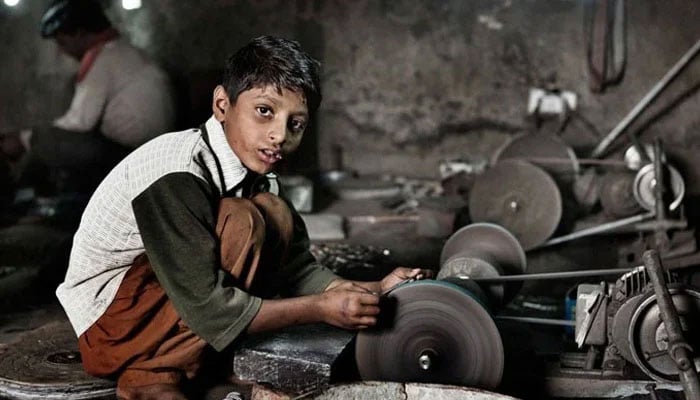
KARACHI: The Sindh government has reiterated its commitment to eliminating child labour through strengthened legal protections, expanded access to education, and targeted social protection measures aimed at addressing the root causes of child exploitation.
Marking the World Day Against Child Labour, Sindh government spokesperson Sukhdev Hemnani said that recent reports by international and national rights organisations estimate that around 8.6 million children in Pakistan are engaged in child labour, with nearly one in every ten children working in often hazardous and unregulated conditions.
He said these figures highlight the urgent need for sustained and collective efforts to ensure children’s protection and their right to education and a safe childhood.
Hemnani noted that child labour in Sindh has declined by nearly 50 percent compared to earlier baseline surveys, according to the Sindh Child Labour Survey 2022–2024 conducted with support from UNICEF. While acknowledging that the issue remains a serious challenge, he said the data reflects measurable progress due to investments in education, social protection, and child protection legislation.
He said Sindh has remained at the forefront of child protection through progressive laws, including the Sindh Prohibition of Employment of Children Act 2017, which strengthened safeguards against child labour and hazardous work. He added that the Sindh Assembly recently passed the Sindh Domestic Workers Welfare Bill 2025, which bans the employment of children under 16 in domestic work and extends legal protections to domestic workers across the province.
The spokesperson said that poverty, lack of access to education, and social vulnerability remain the primary drivers of child labour in Pakistan. To address these challenges, Sindh has become the first province to introduce a dedicated non-formal basic education curriculum for out-of-school children.
He further said the provincial government is establishing 3,000 Non-Formal Education Centres across Sindh to bring more children into the education system through academic and vocational learning opportunities.
Under the Sindh Right of Children to Free and Compulsory Education Act, every child has the right to free education up to the age of 16, he added, noting that the government is also supporting students through free textbooks, school supplies, and other assistance programmes.