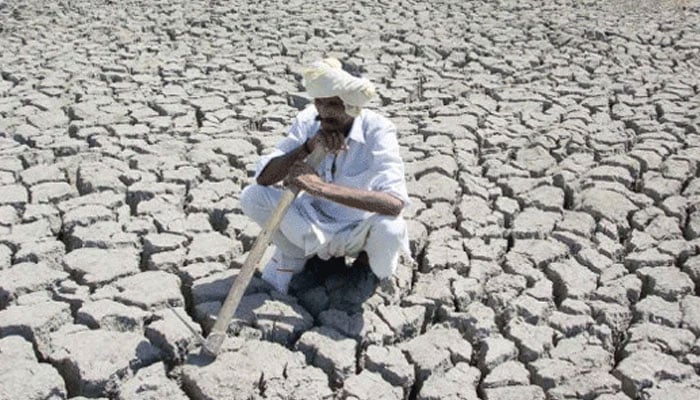
HYDERABAD: The growing water crisis in Sindh has sparked strong criticism from both the Sindh Irrigation and Drainage Authority (SIDA) and growers’ representatives, who have accused the Indus River System Authority (Irsa) of mismanagement and failure to ensure the province’s constitutional water share.
SIDA Chairman Qabool Muhammad Khatian held Irsa responsible for the severe water shortage in Sindh and demanded the removal of the Irsa chairman and other officials allegedly involved in discriminatory water distribution practices.
In a statement, Khatian said Sindh was currently facing a 45 percent water shortage due to Irsa’s flawed policies. He claimed that despite the ongoing rice cultivation season, the province was being deprived of its allocated share of water, causing serious difficulties for growers.
He said that at the beginning of the Kharif season, reservoirs contained approximately 4 million acre-feet (MAF) of water, but instead of releasing it to meet Sindh’s agricultural requirements, Irsa retained water in the dams. As a result, growers in many areas were unable to sow rice nurseries on time.
Khatian further alleged that Irsa was diverting water towards eastern river command areas through the Chashma-Jhelum and Taunsa-Panjnad link canals while Sindh was receiving 48 percent less water than its due share during the peak cultivation period.
He warned that the province’s agricultural economy was heading toward collapse and that continued water shortages could adversely affect rice production and exports worth an estimated $4.5 billion, causing significant losses to the national economy and potentially leading to food shortages.
Meanwhile, an emergency meeting of the Sindh Abadgar Ittehad was held at its central office in Hyderabad under the chairmanship of its president, Nawab Zubair Ahmed Talpur. The meeting expressed serious concern over the prevailing water shortage and criticized the current structure of Irsa, stating that the authority should remain impartial and strictly implement the 1991 Water Accord.
Growers claimed that Irsa had failed to enforce the accord effectively, resulting in persistent disputes among provinces. The participants also condemned India’s repeated threats regarding water supplies to Pakistan, stating that despite international legal support for Pakistan’s rights under the Indus Waters Treaty, India continued to use water as a political tool by either restricting flows or releasing excess water that could trigger artificial flooding.
They claimed that rice nurseries could not be planted in many areas, standing crops were withering, and tail-end water supplies had been compromised. The meeting expressed particular concern over the reported 62 percent water shortage at Kotri Barrage. Participants noted that the barrage commands approximately three million acres of agricultural land, including 900,000 acres of perennial command area and 2.1 million acres of non-perennial command area, where rice is the dominant crop.
They warned that the ongoing shortage could result in substantial agricultural losses. The Sindh Abadgar Ittehad demanded the restructuring of Irsa, full implementation of the 1991 Water Accord, immediate provision of Sindh’s rightful water share, and urgent measures to ensure water reaches tail-end areas. The growers’ body also called upon the federal government to challenge India’s alleged water-related violations at all international forums.