Pakistan has moved from crisis to recovery -- but not yet from recovery to strength.
Stability is visible -- transformation is not.
Yes, GDP growth missed the target. The government targeted 4.2 per cent growth; actual growth is 3.7 per cent. Truth: That is not a collapse. Colder truth: It is not a breakout either. Yes, Pakistan is growing, but not fast enough to create employment opportunities, reduce poverty, or carry the debt burden. Remember: Growth without investment is recovery without roots.
The reality: Services grew 4.1 per cent, the highest in four years, and make up nearly 58 per cent of GDP. This means finance, trade, telecom, transport, IT and government services are doing much of the heavy lifting. This also means that Pakistan’s economy is being pulled by services, not powered by factories or farms.
Agriculture grew by 2.9 per cent, that is despite floods, but remains extremely vulnerable. Yes, agriculture survived the floods, but it has not become climate resilient.
LSM (Large Scale Manufacturing) grew 6.1 per cent -- that’s good news. According to the minister of finance, 16 out of 22 manufacturing sectors showed growth. There should be no illusion: Pakistan needs sustained industrial expansion, not one-year rebounds.
Red alert: Pakistan’s biggest vulnerability is that a war outside Pakistan can still shake prices inside Pakistan. Yes, imported oil means imported inflation. Imported oil means pressure on reserves. Imported oil means pressure on the rupee.
Economic history has a firm lesson: Pakistan cannot stabilise permanently by importing less; it must stabilise by exporting more.
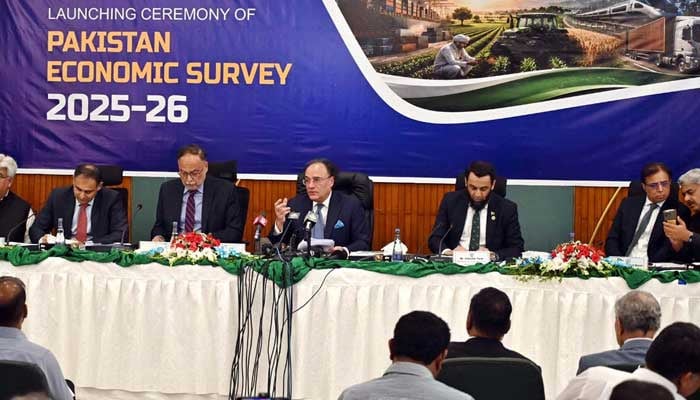
The Economic Survey reveals three Pakistans.
One: a stabilised Pakistan -- where inflation has declined, the external account has improved and the IMF programme remains on track.
Two: a fragile Pakistan -- where the growth target has been missed, agriculture remains weak and the risk of an oil shock is high.
Three: an unreformed Pakistan -- where debt servicing remains heavy, exports remain insufficient and investment remains weak.
The Economic Survey tells us Pakistan has stabilised. The budget must tell us whether Pakistan can grow.
The writer is an Islamabad-based columnist.