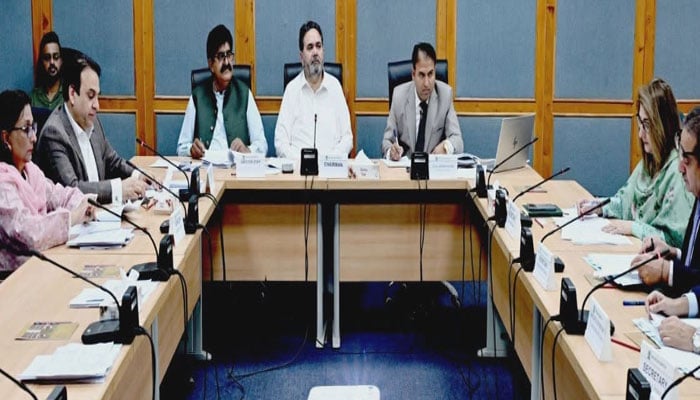
ISLAMABAD: Details of the salaries and allowances of senior officials of the Pakistan Cricket Board (PCB) were presented before the Senate Standing Committee on Cabinet Secretariat on Wednesday, shedding light on the remuneration and benefits received by key office-bearers.
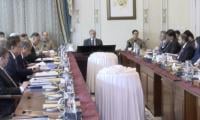
The committee met at the Parliament House with its Chairman Senator Rana Mahmood-ul-Hassan in the chair. According to documents submitted to the committee, the PCB chief operating officer received more than Rs8 million over the last three fiscal years (2023-24, 2024-25 and 2025-26) in daily allowances, accommodation and air travel expenses. The PCB chief financial officer (CFO) received more than Rs7.38 million during the same period under the heads of daily allowance, accommodation and air travel. The chief executive officer of the Pakistan Super League (PSL) received more than Rs32.5 million in daily allowances, accommodation and air travel expenses during 2023-24, 2024-25 and 2025-26.
Meanwhile, the PCB director media received more than Rs6.6 million under the same heads over the three-year period, while the director PSL received over Rs5.88 million in allowances and travel-related expenditures.
According to the documents, the PCB director coordination received more than Rs40 million in daily allowances, accommodation and air travel expenses, while the director team security received more than Rs5.2 million under the same heads.
The committee was also briefed on the financial structure of the Pakistan Super League. Officials informed members that the PCB collects revenue generated through broadcasting rights, sponsorships and gate receipts, of which 95 per cent is distributed among franchises, while the remaining 5 per cent is retained by the board. The committee was informed that expenses related to hotels, logistics and players are borne by the franchise owners.
Senator Saadia Abbasi sought details regarding the appointment process for the PCB chairman and the Board of Governors. Officials informed the committee that the board currently consists of 11 members, from among whom the chairman is elected through voting. It was disclosed that there is currently no female member on the board. The committee recommended the inclusion of at least one female member on the PCB Board of Governors and stressed that all provinces, including Gilgit-Baltistan and Azad Jammu and Kashmir, should be represented in its composition.
The committee was informed that the PCB plans to renovate the Karachi Stadium at an estimated cost of Rs4.8 billion, with tenders expected to be opened shortly.
Responding to a query from the committee chairman, officials stated that the construction cost of a modern international-standard stadium currently ranges between Rs12 billion and Rs14 billion.
The committee also took up the government bill titled the Civil Servants (Amendment) Bill, 2026. Briefing the committee, the secretary Establishment Division said that under existing rules, the prime minister and the federal cabinet are authorised to make several decisions relating to federal government employees, many of which are routine administrative matters. He said such decisions could instead be delegated to the relevant federal secretary or another competent authority to improve efficiency and reduce delays. He said concurrence from the Finance Division would continue to be required where necessary.
The secretary briefed the committee on the procedure governing international deputation of federal government employees. During the discussion, the committee recommended that such cases should be approved by two authorities — the department concerned and the prime minister.
Senator Abdul Qadir observed that referring every case to the federal cabinet unnecessarily prolongs the process and should be avoided. After detailed deliberations, the committee decided to defer consideration of the bill until its next meeting to allow incorporation of the proposed amendments.
The committee also discussed the Standard Time (Interpretation of References) (Amendment) Bill, 2026 and unanimously approved it. Officials informed members that prior to Partition, Pakistan Standard Time was considered to be five hours ahead of Greenwich Mean Time (GMT), whereas the actual difference is five hours and 30 minutes. The committee appreciated the proposed amendment, expressed concern over the prolonged delay in correcting the discrepancy, and unanimously passed the bill.