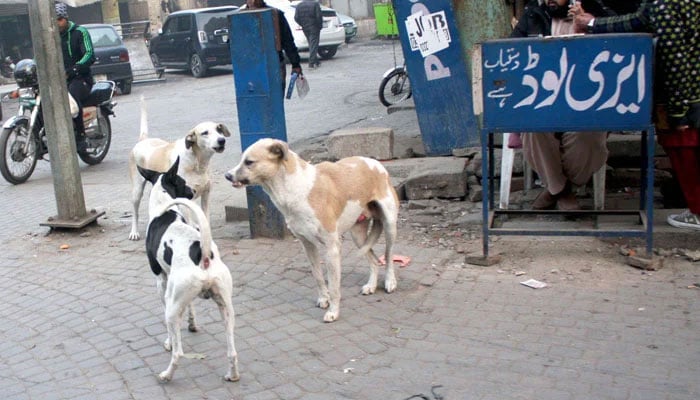
ISLAMABAD: As nearly one million people are bitten, attacked or mauled by stray dogs every year and authorities across the country struggle to contain a growing canine population amid recurring rabies deaths, a new national survey has found that a majority of Pakistanis support the government’s practice of culling stray dogs to protect public safety, although a sizeable minority considers the practice cruel and unjust.
According to a nationally representative opinion poll conducted by Gallup & Gilani Pakistan, 54 per cent of respondents said the government’s practice of killing stray dogs in large numbers was acceptable or right, while 32 per cent described the practice as very cruel or unjust. Another 13 per cent said they did not know, while one per cent did not respond.
The findings come at a time when dog bite cases continue to pose a major public health challenge across the country, particularly in Sindh, Punjab and parts of Khyber Pakhtunkhwa, where thousands of people require anti-rabies treatment every month and periodic rabies deaths continue to be reported due to delayed treatment, vaccine shortages and inadequate dog population control measures.
The survey sought public opinion on a contentious issue that has sparked debate between public health advocates demanding stronger action against stray dogs and animal welfare groups promoting humane alternatives such as mass vaccination, sterilisation and responsible population management.
Respondents were asked whether they considered the government’s practice of culling stray dogs in large numbers to protect people acceptable or whether they believed the method was cruel and unjust.
The survey revealed notable differences in attitudes across gender groups. Men were more likely to support culling, with 59 per cent describing it as acceptable, while 32 per cent considered it cruel. Among women, support stood at 50 per cent, while 33 per cent viewed the practice as cruel or unjust.
The findings suggest women tend to express slightly greater concern about animal welfare issues and are somewhat less supportive of lethal control measures compared to men.
Education emerged as one of the strongest factors influencing public opinion.
Among respondents with education up to less than intermediate (FA) level, 56 per cent supported culling, while 29 per cent opposed it. In contrast, among those with FA education or above, support dropped to 44 per cent, while opposition rose sharply to 50 per cent.
The results indicate that more educated Pakistanis are considerably more likely to question the ethical implications of large-scale dog culling and favour alternative approaches to managing stray animal populations.
Age also appeared to influence attitudes significantly.
Support for culling increased steadily with age, reaching 72 per cent among respondents aged 60 years and above. Among younger Pakistanis under the age of 30 years, support stood at 50 per cent, reflecting greater hesitation and concern about the welfare implications of lethal population control.
The findings suggest that older Pakistanis, who may be more concerned about personal safety and public health risks associated with stray dogs, are more likely to endorse aggressive control measures, while younger adults appear more divided on the issue.
Public health experts note that Pakistan faces a difficult challenge in balancing public safety with animal welfare concerns.
Stray dog populations have expanded in many urban and rural areas due to poor waste management, uncontrolled breeding and inadequate implementation of long-term animal control strategies. Municipal authorities in several cities periodically launch dog culling campaigns following reports of dog attacks, but animal rights groups argue that such operations are often ineffective and fail to provide sustainable solutions.
International public health agencies generally advocate integrated dog population management programmes combining vaccination against rabies, sterilisation campaigns, improved waste control and public awareness initiatives rather than relying solely on culling.
The Gallup & Gilani survey highlights the complexity of public attitudes towards the issue, showing that while a majority of Pakistanis prioritise human safety and support culling, significant sections of society, particularly younger and more educated citizens, are increasingly concerned about the ethical dimensions of killing stray animals.
The survey was conducted between January 15 and February 3, 2026, among 780 adult respondents from urban and rural areas across all four provinces through computer-assisted telephone interviews. Gallup & Gilani Pakistan reported a margin of error of plus or minus two to three per cent at a 95 per cent confidence level.