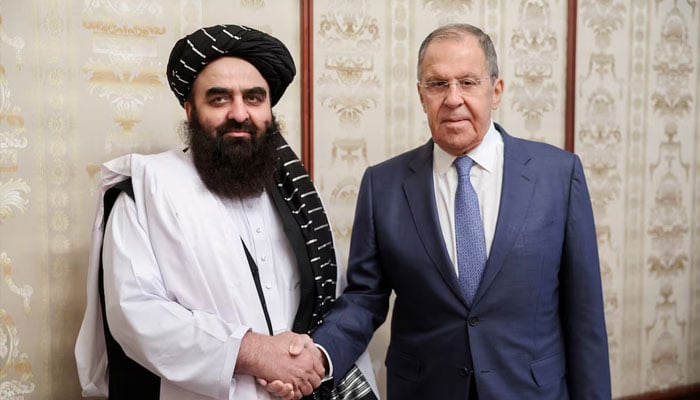
Russia’s expanding military and security engagement with Afghanistan’s Taliban government is one of the most significant geopolitical developments in Eurasia since the Taliban’s return to power in August 2021. Recent agreements signed during Taliban Defence Minister Mullah Mohammad Yaqoob’s visit to Moscow highlight growing cooperation in security, technical exchanges and political engagement.
Yet this partnership exposes a strategic contradiction. Russia’s own intelligence agencies, diplomats and security institutions continue to identify Afghanistan as a major source of terrorism, extremist recruitment, narcotics trafficking and regional instability. This raises a key question: why is Moscow deepening military ties with a regime governing territory that Russian institutions themselves describe as a major terrorist sanctuary?
Afghanistan remains one of the world’s poorest countries. With a population of nearly 42 million, more than 63 per cent under 25, it faces severe economic and governance challenges. Over 85 per cent of Afghans live below or near the poverty line, while unemployment remains widespread. Despite vast untapped mineral wealth – including lithium, copper, rare earth elements, cobalt, iron ore and gold – the country remains heavily dependent on foreign assistance and informal economic activity.
These conditions provide fertile ground for extremist recruitment and have not prevented Afghanistan from remaining home to a dense concentration of terrorist groups. Russia has repeatedly voiced concern, with President Vladimir Putin and the foreign ministry warning of terrorism and narcotics trafficking emanating from Afghan territory.
The warnings intensified further in subsequent years. On July 23, 2024, Russian Deputy Foreign Minister Sergey Vershinin stated that terrorist organisations linked to Afghanistan continued seeking expansion into neighbouring regions and were actively attempting to establish new operational footholds beyond existing conflict zones. Following the 7th Moscow Format Consultations on Afghanistan, the Russian Foreign Ministry again emphasised that Afghan territory must not be allowed to threaten neighbouring countries and called for the complete eradication of terrorist organisations operating within the country.
Russia’s most alarming assessments emerged during 2025 and 2026. According to the Russian foreign ministry’s estimates, Afghanistan currently hosts between 20,000 and 23,000 terrorists affiliated with more than twenty extremist organisations. These figures include approximately 3,000 ISIS-Khorasan (ISIS-K) militants and between 5,000 and 7,000 members of the TTP. Russian officials further estimate that more than half of these militants are foreign nationals originating from Central Asia, the Middle East, South Asia, and the Caucasus.
Sergey Shoigu, Secretary of Russia’s Security Council, described Afghanistan as one of the most significant security threats facing the region. On May 14, 2026, he warned that Afghanistan continued to host over twenty terrorist organisations and highlighted the growing influx of Uyghur, Uzbek, Tajik and other foreign fighters from Syria into Afghan territory. Shortly thereafter, Alexander Bortnikov, director of Russia’s Federal Security Service (FSB), warned that ISIS-K was actively recruiting supporters from Tajikistan, Uzbekistan, Kyrgyzstan, Kazakhstan and even Russian migrant communities while building clandestine extremist networks throughout the CIS.
These assessments do not describe a country that has successfully eliminated terrorism. Rather, they depict an environment where terrorist groups continue to enjoy sanctuary, recruitment pipelines, operational continuity, financial support mechanisms and freedom of movement.
Importantly, these concerns are not solely Russian assessments. They are reinforced by a broad range of international monitoring mechanisms.
The UNSC Analytical Support and Sanctions Monitoring Team has consistently documented the presence of more than twenty terrorist organisations inside Afghanistan. Its 35th, 36th and 37th reports highlighted the continued presence of Al-Qaeda affiliates, the strengthening capabilities of TTP, the persistent threat posed by ISIS-K and the ongoing availability of safe havens under Taliban governance.
Similarly, the 16th Report of the UN Secretary-General on the Threat Posed by ISIL (Da’esh) identified Afghanistan as one of the world’s principal centres of terrorist recruitment and extremist networking. The report noted that ISIS-K continues to attract foreign fighters from across Central Asia, South Asia, the Middle East and beyond.
The US Special Inspector General for Afghanistan Reconstruction (SIGAR) has arrived at similar conclusions. Its 66th and 68th Quarterly Reports documented continued concerns regarding terrorist safe havens, extremist operational freedom, and the proliferation risks associated with military equipment left behind following the withdrawal of US and Nato forces. SIGAR noted that significant quantities of military equipment, including armored vehicles, small arms, communications systems and night-vision devices, remain vulnerable to diversion into extremist networks.
These findings are particularly relevant given Afghanistan’s inherited military stockpiles. Following the 2021 withdrawal, military equipment valued at approximately $7 billion remained in Afghanistan. Multiple intelligence assessments and regional security reports have subsequently documented instances of weapons and equipment originally supplied to Afghan security forces appearing in the hands of militant organisations operating across the region.
Regional organisations have echoed similar concerns. The Shanghai Cooperation Organisation (SCO), particularly through its Regional Anti-Terrorist Structure (RATS), continues to identify Afghanistan as a major source of terrorism, extremism, and narcotics trafficking. The Collective Security Treaty Organisation (CSTO) has likewise warned of increasing risks to Central Asian States resulting from extremist infiltration and cross-border militant activity.
For Pakistan, these developments are especially significant. Russian foreign ministry assessments estimate that between 5,000 and 7,000 TTP militants continue operating from Afghan territory. UN Monitoring Team reports have repeatedly documented TTP recruitment, training and operational activities inside Afghanistan. Pakistani security assessments indicate that more than 600 terrorist attacks and cross-border incidents were launched from Afghan territory during 2025 alone.
The threat extends well beyond Pakistan. Tajikistan’s 1,357-kilometre border with Afghanistan remains vulnerable to infiltration. China continues to monitor concerns regarding the East Turkestan Islamic Movement (ETIM) and other extremist groups operating near the Wakhan Corridor. Central Asian governments increasingly view northern Afghanistan as a potential launchpad for regional instability.
Against this backdrop, Russia’s expanding military cooperation with the Taliban appears strategically paradoxical. Supporters of engagement argue that maintaining direct channels with Kabul provides Moscow with leverage, intelligence access and opportunities to influence Taliban behaviour. Others suggest that Russia seeks to prevent Afghanistan from falling exclusively within the sphere of influence of competing regional powers while protecting its own geopolitical interests in Central and South Asia.
However, these strategic calculations do not eliminate the underlying contradiction. Russia continues to warn the world that Afghanistan remains a hub of terrorism, extremist recruitment, narcotics trafficking and foreign fighter activity while simultaneously strengthening relations with the regime governing that environment.
This contradiction becomes even sharper when viewed through a military lens. Expanding defence cooperation with a government presiding over territory that hosts more than 20 terrorist organisations raises legitimate concerns regarding oversight, accountability and the unintended consequences of enhanced military engagement.
Russia’s relationship with the Taliban is increasingly strategic. Yet Moscow’s own intelligence assessments, the findings of the UN Monitoring Team, SIGAR reports, SCO security mechanisms, CSTO warnings and statements from senior Russian officials all point towards the same conclusion: Afghanistan remains deeply entangled with transnational terrorism.
Russia’s Taliban gamble, therefore, represents more than a foreign policy experiment. It is a test of whether geopolitical influence can be pursued without compromising counterterrorism principles. If engagement succeeds in encouraging genuine action against extremist organisations, Moscow may claim a strategic victory. If it fails, Russia risks strengthening a regime while simultaneously confronting the very threats its own institutions continue to warn about.
For Pakistan, Russia, Central Asia, China and the broader Eurasian region, the outcome of this gamble will shape regional security for years to come.
The writer is a public policy expert and leads the Country Partner Institute of the World Economic Forum in Pakistan. He tweets/posts @amirjahangir and can be reached at: [email protected]