The ongoing Iran-US-Israel crisis has produced an unexpected diplomatic outcome. While the military dimensions of the conflict are the focus of attention globally, another story has quietly unfolded in the background: Pakistan’s emergence as a credible mediator between Washington and Tehran, and India’s conspicuous absence from the scene where it might once have played a meaningful role.
This development has been disturbing for New Delhi. Indian policymakers, media commentators and strategic analysts have spent considerable energy questioning Pakistan’s motives, downplaying its diplomatic achievements, and attributing its role to temporary geopolitical circumstances. Yet such reactions may obscure a more important question: Did India, through its own strategic choices, forfeit an opportunity to play a constructive role in one of the most consequential crises of recent years? A host of factors contributed to India’s isolation. First, for decades, India enjoyed a unique position in West Asia. It maintained cordial relations with Iran, cultivated partnerships with Gulf Arab states, expressed solidarity with the Palestinian cause and steadily expanded ties with Israel. This balancing act enabled New Delhi to engage all sides without becoming overly identified with any one camp. However, as Hindutva forces gained ground in the country’s politics, its foreign policy became more tilted towards Israel.
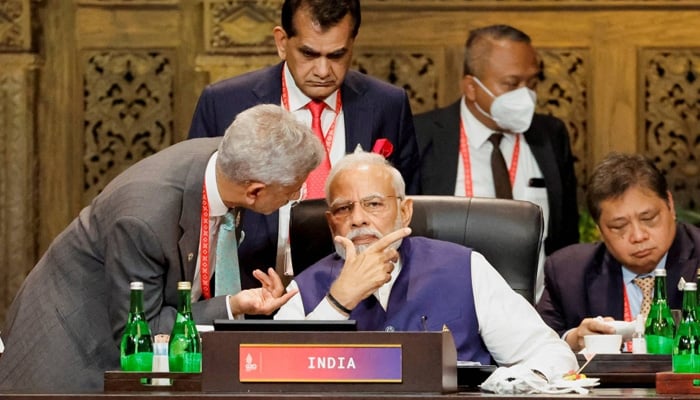
Second, under Prime Minister Narendra Modi, India’s relationship with Israel has reached the level of a strategic partnership. From India’s perspective, these ties have generated tangible benefits, although in the West Asian context, India has isolated itself with diplomatic costs. Third, India’s closeness to Israel and the US made Tehran suspicious of New Delhi’s neutrality or of its honesty as a mediator. The ‘strategic autonomy’ that India frequently invokes appeared less convincing to those directly involved in the crisis. Pakistan, by contrast, occupied a different position.
Fourth, despite past unease, Islamabad maintains a cordial relationship with Iran. It equally enjoys longstanding security cooperation with Saudi Arabia and the Gulf states. It retains close ties with China while simultaneously maintaining channels to Washington. Notably, Pakistan has not established diplomatic relations with Israel, which made Islamabad acceptable in Tehran, unlike many other regional actors. Therefore, Pakistan became the most acceptable intermediary.
Meanwhile, successful mediation is not determined by economic size or military strength alone. It depends on whether all parties believe a mediator can communicate honestly and discreetly with each side. Pakistan possessed precisely that advantage. The timing also mattered. The four-day war between Pakistan and India established Pakistan’s credentials as a formidable military power. Across the Gulf and wider Muslim world, a broader perception emerged that Pakistan demonstrated resilience, strategic discipline and the capacity to withstand pressure from a neighbour with far greater economic and demographic weight. President Trump added more spice to the narrative by mentioning Pakistan’s downing of eight Indian aircraft on 36 occasions.
Pakistan not only managed a military crisis with India but also simultaneously engaged in efforts to prevent a wider war in the Middle East. This enhanced Pakistan’s reputation in the region as a state capable of balancing hard power with diplomacy. Soon after the war with India, the Saudi-Pakistan strategic agreement reflected this reality, making Pakistan a reliable partner in the security realm.
The Indian strategic community adopted a bizarre attitude towards Pakistan’s mediatory role. Rather than welcoming efforts aimed at reducing tensions between Washington and Tehran, many influential voices in India appeared preoccupied with discrediting Pakistan’s role. Such reactions are understandable within the context of a long-standing rivalry, but they lacked strategic wisdom. Had India publicly supported de-escalation while quietly maintaining communication channels with all parties, it could have projected confidence and maturity. Instead, much of the discussion became focused on preventing Pakistan from receiving diplomatic credit.
Undoubtedly, India’s approach to malign Pakistan has botched. There is a realisation in the country that this approach needs to be revisited. RSS General Secretary Dattatreya Hosabale recently argued that India should continue responding firmly to terrorism while keeping channels of dialogue with Pakistan open. These remarks are significant because they acknowledge a reality often ignored in public discourse: permanent confrontation is not a strategy. For years, India’s foreign minister Jaishankar and many senior officials have invested considerable effort in promoting Pakistan’s international isolation. Yet the Iran crisis demonstrates the limitations of such thinking. The lesson for India should be that geography and strategic relevance cannot be isolated. A country bordering Iran, connected to the Gulf, partnered with China and maintaining relations with Washington will inevitably remain part of major regional calculations.
While Pakistan has been acknowledged as a credible mediator, enormous challenges remain, as the parties to the dispute (the US and Iran) have yet to narrow their differences. Pakistan’s mediation efforts will ultimately be judged by results. If they help reduce tensions and reopen pathways to dialogue, they will be remembered positively. If they fail, Pakistan would still be a force to be reckoned with, as it would be a failure of the interlocutors rather than the mediator.
Nevertheless, the current moment contains an important lesson. Pakistan’s emergence as a mediator was not simply the product of favourable circumstances or personal relationships. It was the result of geography, strategic positioning, diplomatic flexibility and a foreign policy that, despite its imperfections, preserved channels with competing regional actors. India, meanwhile, discovered that economic power alone does not guarantee diplomatic centrality. By aligning too visibly with Israel, it reduced its ability to engage the other side. Similarly, viewing Pakistan’s diplomatic gains through a zero-sum lens denied India the opportunity to play its role in contributing to regional stability, a fact now admitted by the Indian analysts.
Finally, the true significance of this episode lies not in Pakistan’s success or India’s disappointment. It lies in a changing geopolitical reality in which influence increasingly belongs to states capable of speaking to everyone rather than to those determined to choose sides. In that regard, Pakistan’s mediatory role in the Iran crisis may ultimately signify something larger than a temporary diplomatic achievement. It may represent the re-emergence of Pakistan as a relevant actor in regional diplomacy at a time when many had prematurely written it off. For India, the challenge is not to explain away Pakistan’s role. The challenge is to ask why a country of India’s size and ambition was not sitting at the same table.
The writer is a former ambassador of Pakistan to Iran and the UAE. He is also a former special representative of Pakistan for Afghanistan and currently serves as a senior research fellow at the Islamabad Policy Research Institute (IPRI).