Pakistan’s governance challenges extend beyond debates over fiscal arrangements and constitutional mechanisms. At their core lies a deeper problem: ineffective governance and a persistent lack of political will.
Debates often focus on whether the National Finance Commission (NFC) Award should be amended, or Provincial Finance Commissions (PFCs) should be announced. Yet the real issue is one of intent. Without a genuine commitment to reform, changes to institutional frameworks alone are unlikely to deliver meaningful results.
The absence of a strong and effective local government system further compounds the problem. Weak local governance has undermined the grassroots of democracy, limited citizen participation in decision-making and reduced opportunities to cultivate future political leadership.
These shortcomings are best understood through four interconnected areas: fiscal management, institutional coordination, legislative performance and administrative effectiveness. Weaknesses in one area often reinforce failures in the others.
Fiscal governance remains a major challenge. The Federal Board of Revenue (FBR) has struggled to broaden the tax base, improve revenue collection and implement lasting reforms. Efforts to document the economy and expand the taxpayer base have yielded limited results, contributing to persistent fiscal pressures and an overreliance on a narrow pool of already burdened salaried and documented taxpayers.
Institutional mechanisms designed to improve coordination have also underperformed. Constitutional and intergovernmental forums, particularly the Council of Common Interests (CCI), remain underutilised, limiting opportunities for collaborative policymaking. These bodies were created to foster cooperation between the federation and the provinces and to facilitate the nationwide sharing of successful policies.
Yet CCI meetings have often been irregular, while recurring disputes over water, energy, and NFC implementation highlight the need for more consistent engagement and follow-through. Legislative institutions face similar challenges. Concerns persist in the performance of both the National Assembly and the provincial assemblies. Too often, they fall short in lawmaking, policy scrutiny, and executive oversight, thereby weakening democratic accountability.
Administrative weaknesses further deepen these problems. Even if progress were achieved elsewhere, an inefficient and often overly compliant bureaucracy continues to hinder public service delivery, reform efforts and citizen relief initiatives. These shortcomings have repeatedly undermined outcomes and eroded public confidence in state institutions.
Together, these issues form a governance conundrum. Their interconnected nature makes reform difficult, as weak institutions, poor accountability, inadequate service delivery and limited coordination reinforce one another.
Yet periods of regional and global economic disruption often create opportunities for countries willing to act decisively. Pakistan faces such a moment today. Amid geopolitical shifts, changing trade patterns, and growing regional competition, the country has an opportunity to position Karachi as a credible alternative to established hubs such as Dubai and other Gulf ports.
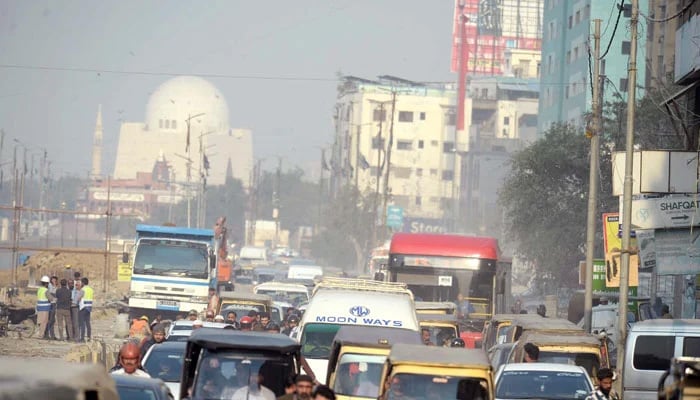
Karachi, once South Asia’s leading gateway city and among its fastest-growing commercial centres, still retains many of its core advantages. It possesses deep-sea ports linked to major shipping routes, a large consumer market and a strategic location connecting South Asia, Central Asia and the Middle East.
Historically, Karachi attracted significant tourism, commerce, industry and foreign investment. Over time, however, governance failures, infrastructure gaps, security concerns and policy uncertainty diverted investment and maritime activity to competing Gulf destinations. While rivals benefited from long-term planning and sustained investment, Karachi steadily lost much of its competitive edge.
Reclaiming that position will require more than rhetoric. To become a credible investment and logistics hub, Karachi needs targeted reforms, including modernised port and logistics infrastructure, upgraded airports and highways, improved municipal services, effective urban planning and, above all, a secure environment supported by professional and accountable policing.
These reforms are not merely local priorities; they are national economic imperatives. Karachi remains Pakistan’s principal commercial engine, generating a substantial share of national revenue, trade and economic activity. Improvements in the city would yield benefits across the country.
As Pakistan faces mounting economic and social pressures, addressing its governance crisis will require more than incremental changes or periodic policy announcements. Meaningful progress depends on a coordinated reform agenda that strengthens local governments through regular elections and fiscal autonomy, broadens the tax base through better enforcement and fewer exemptions, ensures regular meetings of the CCI and other intergovernmental forums, enhances parliamentary oversight and introduces merit-based civil service reforms tied to performance and service delivery.
The central challenge is not the absence of institutions but the failure to implement and enforce them consistently. Unless political and administrative leaders uphold constitutional provisions, empower representative institutions, and hold public officials accountable for results, Pakistan’s governance crisis will continue to undermine economic stability, democratic development and public trust.
Yet within this challenge lies an opportunity. History shows that cities and nations often achieve their greatest transformations during periods of disruption. With strategic vision, institutional reform and sustained investment, Karachi can once again become a gateway city, attracting capital, facilitating trade, connecting markets and serving as a powerful engine of Pakistan’s long-term economic growth.
The writer is a former IT minister for Sindh. He can be reached at: [email protected]