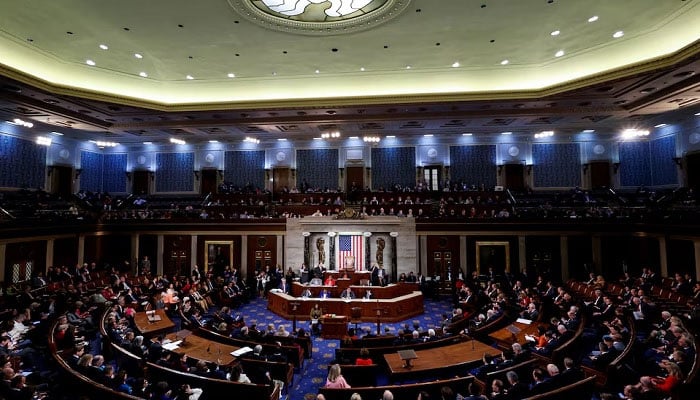
The passage of a measure in the US House of Representatives seeking to limit US President Donald Trump’s ability to take further military action against Iran is a rare public display of dissent within the American political establishment. With four Republicans joining Democrats in support of the resolution, the vote reflects growing unease over a conflict that has already inflicted enormous costs on regional stability, the global economy and ordinary people across the Middle East. Predictably, President Trump dismissed the move as a "meaningless vote" and branded its supporters "unpatriotic", while the White House described it as an unconstitutional attempt to restrict presidential authority. Whether the measure carries meaningful legal consequences is debatable. What is not in doubt is that it serves as a public acknowledgement that opposition to the war is no longer confined to activists, academics or foreign governments. Even within Washington, questions are being asked about the wisdom of a conflict that has failed to achieve its stated objectives while exposing the world to the dangers of a wider regional war. Yet many observers are justified in asking whether this opposition has come far too late. For months, much of the American political class either actively supported or remained silent about Israel’s devastating military campaigns in the region. The genocide in Gaza, the expansion of the conflict and now the confrontation with Iran did not emerge in a vacuum. They were enabled by years of unconditional diplomatic, military and political support from Western capitals, particularly Washington.
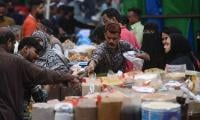
What makes the current disconnect even more striking is the growing gap between public opinion and political decision-making in the US. Recent polling by the Pew Research Center indicates that a clear majority of Americans now hold unfavourable views of Israel, with negative perceptions rising significantly over the past few years. Yet this change in public sentiment has not been matched by a corresponding shift among many policymakers, who continue to adhere to longstanding strategic assumptions. Meanwhile, the consequences of the conflict continue to spread far beyond the battlefield. The World Food Programme has warned that instability in the Middle East is driving up fuel and transportation costs, increasing food prices and pushing millions closer to hunger. Aid agencies already struggling with funding shortages are finding it even harder to meet growing humanitarian needs. Once again, it is ordinary people – not politicians or military planners – who bear the greatest burden of war. The military campaign against Iran has also failed to produce the dramatic outcomes predicted by its advocates. The prospect of a prolonged confrontation serves no one’s interests. It threatens global economic recovery, destabilises an already volatile region and risks drawing more countries into a conflict whose costs are impossible to predict.
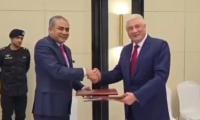
Against this backdrop, diplomatic efforts deserve support. Pakistan’s continued engagement with both Tehran and Washington is part of an understanding that dialogue, however difficult, remains preferable to escalation. The visit of Interior Minister Mohsin Naqvi to Tehran and efforts to facilitate understanding between Iran and the US are welcome steps in that direction. The lesson from the past several months should be clear. Military adventurism has brought uncertainty, economic hardship and immense human suffering. If American lawmakers are now beginning to recognise this reality, their change of heart is welcome. But recognition alone is not enough. The world does not need symbolic votes after the damage has been done. It needs decisive action to end the conflict before the costs become even greater.