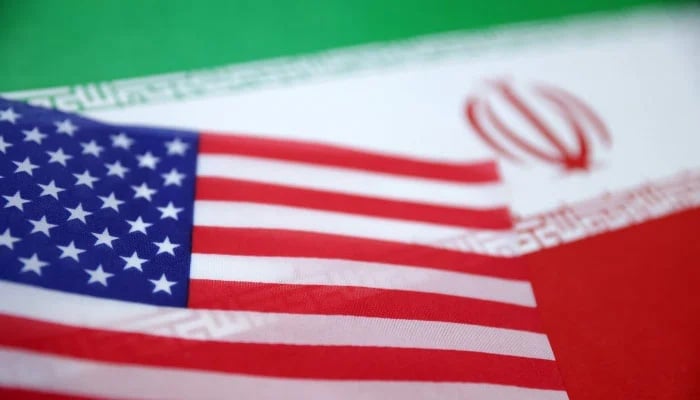
TEHRAN/WASHINGTON: A potential agreement between Washington and Tehran hinges on US President Donald Trump’s administration agreeing to release $24 billion in frozen Iranian assets, CNN quoted Mohsen Rezaei, an adviser to Iran’s supreme leader, as saying on Friday.
“The negotiations are at a deadlock and (US President Donald) Trump must break this deadlock,” Mohsen Rezaei, military adviser to Supreme Leader Ayatollah Mojtaba Khamenei, told CNN in an exclusive interview in Tehran. “The ball is in Trump’s court.” He warned that the US would “enter into a dark corridor” should it resume fighting.
Iran’s military said on Friday it had fired “warning missiles” at two US destroyers in the Gulf of Oman, forcing the vessels to leave the area, according to state media.
It said the two destroyers left the Gulf of Oman “following the firing of warning missiles” by Iranian forces, according to a statement carried by state news agency IRNA.
The operation was in response to “maritime misconduct and harassment, as well as the hijacking of commercial vessels and oil tankers by the terrorist naval forces of the United States,” the military said.
The US military’s Central Command was quick to deny that the incident had taken place.
In Oman, an alleged drone attack forced the suspension of oil loading at the Mina al Fahal terminal after an explosion, sources said, before normal operations resumed.
The Iranian ambassador to Russia, Kazem Jalali, said the future of the key Gulf waterway will be decided by Tehran and Muscat. “This strait will be opened, but under new conditions,” Jalali told Russian newspaper Izvestia. And these new conditions will be determined by the Iranian and Omani authorities,” the envoy said.
Meanwhile, US President Donald Trump’s special envoy Steve Witkoff and son-in-law Jared Kushner traveled to the Oak Ridge National Laboratory in Tennessee on Thursday to consult with experts that could play a role in nuclear negotiations with Iran, Axios reported on Friday.
Iranian parliament deputy speaker Hamid-Reza Haji Babaei said on Friday that uranium enrichment was Iran’s right, and that Trump had failed to understand that Iran’s “most powerful atomic bomb” was the Strait of Hormuz.
Iranian Foreign Minister Abbas Araghchi has dismissed the idea of his country’s supreme leader meeting Donald Trump, after the US president floated the prospect.
On Wednesday, Trump told the New York Post: “Yeah, I’d like to meet him,” when he was asked about a possible encounter, adding that “we probably will meet at some point, depending on how it all works out”. Iran’s top diplomat however played down the chances in an interview with Lebanese media aired on Thursday night, suggesting it was not realistic.
Ayatollah Mojtaba Khamenei was appointed Iran’s supreme leader in March after the death of his father and predecessor Ali Khamenei in US-Israeli strikes on February 28.
Araghchi said in the interview that during the attacks that killed Ali Khamenei he had been inside the leader’s office where he died, but in another wing of the building so was unharmed. Araghchi also said the new supreme leader has a “completely close and effective presence in the country’s affairs and has full control”.
He said Mojtaba Khamenei’s absence from public view since his appointment was “due to security considerations” surrounding the war, which has been paused since April 8 by a fragile ceasefire.
The head of the International Atomic Energy Agency (IAEA) said Friday that last month’s drone attack on the UAE’s Barakah nuclear plant was a “serious compromise of nuclear safety, adding any such attack “is unacceptable, a no-go, taboo.”
The United Arab Emirates blamed pro-Iran militants in Iraq for the incident, which followed weeks of attacks by Iranian drones and missiles during the Middle East war.
The May 17 attack hit an electricity facility at the plant, risking potentially shutting it down, and IAEA chief Rafael Grossi warned that “attacks on nuclear facilities devoted to peaceful purposes are unacceptable”.
“The strike caused a fire in an electrical generator located outside the inner site perimeter of the NPP (nuclear power plant), prompting the need for emergency generators to provide power,” Grossi told an IAEA board meeting in Vienna.
The meeting was held at the request of Egypt, Jordan, Morocco and Saudi Arabia.
The United States on Friday imposed sanctions on a network allegedly exporting Liquefied Petroleum Gas (LPG) from Iran to South and Eastern Asia by falsely flagging it as originating in Oman, the Treasury said.
US forces boarded an oil tanker in the Indian Ocean overnight that was sanctioned by Washington for transporting Iranian crude, the US military said on Friday. “US forces carried out a maritime interdiction and right-of-visit boarding of the sanctioned stateless vessel MT DAVINA located in the Indian Ocean,” the US Indo-Pacific Command said in a post on X.
Oil prices slipped and stock markets were mixed Friday as traders reacted to Mideast war developments and concerns over the AI sector. The dollar retreated against main rivals ahead of key US jobs data later in the day.
European stock markets gained after losses in Asia and on Wall Street caused by weakness among some technology companies.
President Vladimir Putin said Russia wants oil prices on global markets to be balanced and stable amid the US war against Iran,
Speaking at Russia’s annual economic forum, Putin said that the reduction in oil supplies was causing concern in the market, but that Russia was participating in OPEC+ in order to balance the market.
US Energy Secretary Chris Wright said in an interview on Fox Business that the United States will add 40 million barrels to its strategic petroleum reserve after the conflict in Iran is over. The United States imposed new Iran-related sanctions on Friday, the US Treasury Department’s website showed.
The United States is preparing a draft resolution condemning Iran ahead of next week’s meeting of the UN nuclear watchdog’s Board of Governors, diplomats said, a step that could complicate wider talks between the US and Iran.
Iran’s former prime minister Mir Hossein Mousavi, who was the focus of a 2009 mass protest movement and has spent the last 15 years under house arrest, has been hospitalised after his health deteriorated, an advisor said on Friday.
Last week, “he suffered a health crisis and was transferred to a hospital,” his advisor Ardeshir Amir Arjomand, who is based outside Iran, told BBC Persian.
Mousavi, 84, and his wife Zahra Rahnavard, 80, also under house arrest since 2011, had been living on Pasteur Street close to Khamenei’s offices.
The German foreign ministry warned against travel to Bahrain and Kuwait.
It especially discouraged travel to Bahrain, it said in a statement, citing a still “highly volatile” security situation in the region.
Lebanese parliament speaker and Hezbollah ally Nabih Berri said that the Iran-backed group would withdraw from the area south of Lebanon’s Litani River if Israel pulls out and a comprehensive ceasefire is reached.
Iran has reaffirmed support for its Lebanese ally Hezbollah and demanded that Israel withdraw from southern Lebanon. “This war will end only when it ends in Lebanon as well,” Iranian Foreign Minister Abbas Araghchi told Lebanese TV station Al Mayadeen late on Thursday. “The end of the war on Lebanon must be accompanied by the withdrawal of Israeli forces from the territories they have occupied,” he said.
Mohsen Rezaei, an adviser to Iran’s supreme leader, said Hezbollah had “made great sacrifices in the recent war and it is our ally. Therefore, we support Hezbollah and remain firmly committed to our obligations toward it.”
Two Romanians were convicted on Friday over the stabbing of an Iranian journalist outside his home in London in a 2024 attack that prosecutors linked to Tehran. Nandito Badea, 21, and George Stana, 25, were found guilty of wounding with intent over the stabbing of Pouria Zeraati, a news presenter for Persian-language outlet Iran International.
An Iranian-American journalist sentenced to 10 years in a notorious Tehran prison called on Washington to provide medical help for him and other US detainees, CBS News reported Friday.
Reza Valizadeh, who holds both Iranian and US citizenship and worked for US-funded Persian-language Radio Farda, is in prison on charges of collaborating with a hostile government, according to his lawyer.
Meanwhile, commercial traffic through the Strait of Hormuz was limited to just a few ships over the past 24 hours as peace talks between the US and Iran show little sign of advancing. No commercial transits were observed on Friday morning, with three passages in each direction seen on Thursday, according to ship-tracking data compiled by Bloomberg.