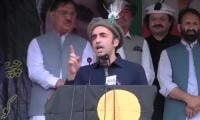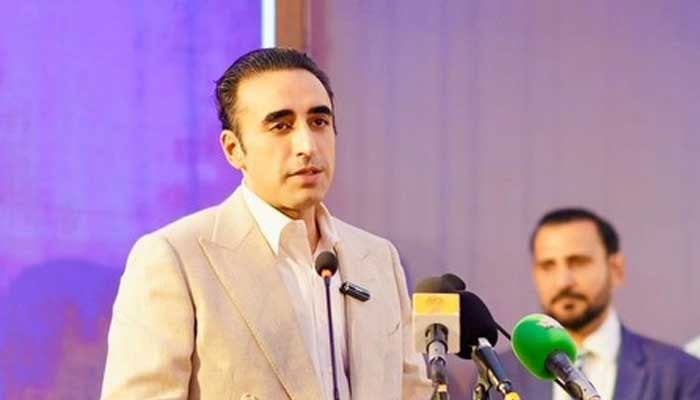
ISLAMABAD: Pakistan Peoples Party (PPP) Chairman Bilawal Bhutto Zardari on Thursday called on the people of Gilgit-Baltistan (GB) to give his party a strong mandate in the upcoming elections, saying it was essential to secure the region’s ownership rights and ensure its voice in national decision-making.
Bilawal Bhutto Zardari said that Punjab benefited most from the 18th Constitutional Amendment. Addressing an election rally in Gahkuch, Ghizer, Bilawal pledged to hand over 28,000 square kilometres of GB land to its people and reiterated the need for a Jiyala chief minister and PPP government to implement ownership rights legislation. “We need a majority to ensure effective implementation of the law. If the PPP does not come to power, we cannot legislate for Gilgit-Baltistan,” he said.
Bilawal highlighted the PPP’s historical contributions, noting that Zulfikar Ali Bhutto’s wheat subsidy remains operational and President Asif Ali Zardari established the offices of governor and chief minister in GB. He promised a housing scheme modelled after Sindh’s Peoples Housing Initiative and pledged merit-based employment for local youth, expanded healthcare, tourism-driven economic growth, modern infrastructure and improved public services.
He criticised the PTI government for allegedly harming the tourism sector, resulting in unemployment, and assured that allocations for the Benazir Income Support Programme (BISP) would increase in the upcoming federal budget. Bilawal added that modern technology, including AI-driven employment tests piloted in Balochistan, could be introduced in GB to ensure merit-based hiring.
First Lady Aseefa Bhutto Zardari, speaking in Nagar, described the PPP as a movement that always stands by the people. She said Bilawal prioritised welfare, youth employment, education, and economic growth in GB, and urged the region’s youth to build a secure and prosperous future.
PPP leaders alleged that federal and provincial authorities were attempting to influence the electoral process through development announcements and use of state machinery. Senator Palwasha Khan, Senator Shahadat Awan and MNA Sehar Kamran criticised the deployment of Punjab Police in GB and involvement of ministers in electioneering. They claimed these actions amounted to pre-poll rigging and urged the Election Commission to ensure enforcement of the code of conduct. The PPP leaders emphasised the party’s historical role in advancing GB’s political identity, including abolishing the Frontier Crimes Regulation (FCR), promoting women’s rights, youth representation and democratic institutions. They also highlighted ongoing development projects and public support, particularly the enthusiastic reception of Aseefa Bhutto Zardari during the campaign.
Meanwhile, PTI Chairman Barrister Gohar Ali Khan warned against forcing PTI to leave the system, calling restrictions on PTI campaigns in GB “pre-poll rigging”. Speaking at a corner meeting, he alleged discrimination against the PTI candidates, including controlled movement, NOC denials and profiling of party leaders, while claiming that only PMLN, PPP and a few others enjoy full freedom to campaign. PTI Information Secretary Sheikh Waqas Akram said the party had fielded candidates on nearly all GB assembly seats despite the alleged bias and would not boycott the elections. He alleged only PMLN, PPP besides some others were enjoying total freedom and support to run their poll campaigns.
Pakistan Muslim League-Nawaz (PMLN) leaders Khurram Dastgir, Abid Sher Ali and Saad Rafique also campaigned actively. Speaking in Hunza, Dastgir urged voters to choose development over neglect, asking whether they wanted Hunza to resemble Karachi or Lahore. Sher Ali stressed that GB needed Nawaz Sharif for regional development. Rafique highlighted past attacks on GB’s development projects and called for coordinated efforts to secure the region’s constitutional rights, noting that well-planned infrastructure could make GB “like Switzerland”.
According to the GB Election Commission, 403 candidates are contesting 24 constituencies, including 272 independents and 131 candidates representing political parties. The PPP has fielded 23 candidates, PMLN 22 while PTI candidates are contesting as independents due to pending intra-party election cases.
The campaign has been marked by competing narratives: the PPP focuses on welfare, ownership rights and infrastructure development; PTI alleges discrimination and pre-poll rigging; and PML-N emphasises past development and promises to continue infrastructure projects. All parties are seeking the support of GB voters ahead of elections on June 7.