DUBAI/BEIRUT: The current draft of the MoU being negotiated to end the war between Iran and the United States has ambiguities that have to be clarified, Mohsen Rezaei, Adviser to Iran’s Supreme Leader said in an interview with State TV on Thursday.
Rezaei said Trump wants to pressure Iran to accept his conditions and keep Tehran’s conditions in a vague state.
While the Hezbollah movement rejected a new ceasefire in Lebanon on Thursday and Israel said it would not withdraw troops from the country, undermining US President Donald Trump’s efforts to halt fighting there to forge peace with Tehran.
Iran has made a ceasefire in Lebanon a condition for any peace deal with Washington, and has suggested in recent days that it could intervene directly in support of Hezbollah if Israel keeps up or escalates attacks there.
Lebanese President Joseph Aoun said the ceasefire would come into force within 24 hours of all concerned parties approving it. However, Hezbollah leader Naim Qassem rejected the Washington declaration, insisting “resistance will continue”.
Hezbollah is not a party to the US-brokered agreement reached between Israel and the Lebanese government on Wednesday, but would be required to halt attacks.
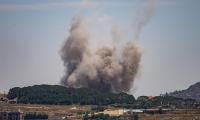
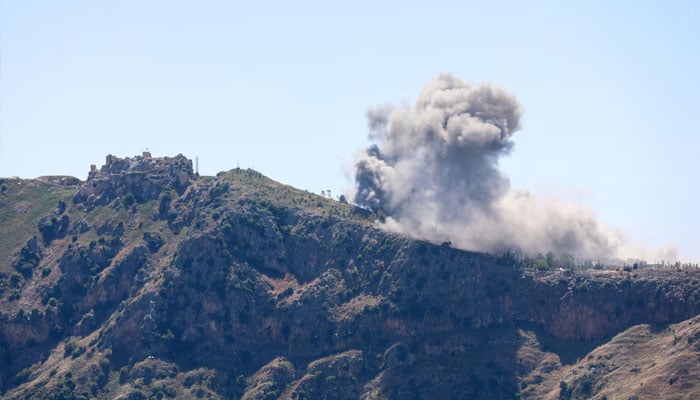
Israel kept up strikes in southern Lebanon on Thursday and Defence Minister Israel Katz said Israeli forces would not be withdrawing from the area or halting operations in the country.
The commander of Iran’s Revolutionary Guards Quds Force said “the minimum demand of the resistance” was Israel’s withdrawal to positions it held before the war began. Israel must stop its attacks in Lebanon, evacuate the areas it occupies and retreat behind international borders, said the statement, carried by state media.
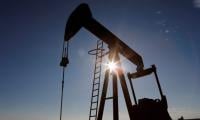
Oil prices fell by about 3 per cent on Thursday on hopes that a Lebanon ceasefire could help Washington and Iran find a diplomatic off-ramp from their war.
Trump, under pressure at home to end the war and bring down fuel prices, suggested there could be progress in negotiations with Iran soon. “If it happens, it could happen over the weekend,” Trump told reporters in the White House’s Oval Office on Wednesday, without elaborating on what he expected to happen within that timeframe. He said that parties were working to separate the issue of reopening the strait from the conflict in Lebanon.
President Trump told aides privately that he would consider ending the ceasefire with Iran if Tehran kills American troops, the Wall Street Journal reported on Wednesday, citing US officials. Reuters could not immediately verify the report.
Iran’s Supreme Leader Ayatollah Mojtaba Khamenei said on Thursday that Iran’s enemies had already been defeated on the battlefield and were now seeking to sow internal divisions.
Mojtaba Khamenei’s message, read out by a prayer leader at a ceremony marking the anniversary of the death of the Islamic republic’s founder, came after the US House of Representatives passed a resolution seeking to halt American military action in Iran.
In his message, Khamenei said his country’s enemies, after “facing a decisive blow”, were now “experiencing a deeply meaningful and profound humiliation”.
President Trump on Thursday slammed a vote in the US House seeking to order the withdrawal of American troops from the Iran war, suggesting the “unpatriotic” move disrupted negotiations with Tehran.
The largely symbolic vote came “right in the middle of my final negotiations to end the War with the Islamic Republic of Iran,” Trump said in a post on his Truth Social platform. “Who would do such an unpatriotic thing. They know where the negotiations stand.”
In a notable rebuke of Trump, four members of his majority Republicans joined Democrats on Wednesday in backing the measure, which passed 215-208 and now heads to the Senate.
The measure, which will ultimately face a presidential veto, marked the first time the Republican-controlled House approved a measure seeking to force Trump to wind down military operations against Tehran since the war began three months ago.
Democrats accuse Trump of violating the constitution by launching strikes on Iran alongside Israel in late February without congressional authorization.
Meanwhile, the UN’s nuclear agency said in a confidential report seen by AFP on Thursday that a lack of access to verify nuclear material in Iran posed a “proliferation concern”, calling on the Islamic republic to “engage the agency constructively”.
The International Atomic Energy Agency (IAEA) has not seen any activity at key nuclear sites, judging from satellite images, since the start of the Middle East war, a diplomatic source said. But the IAEA has not had access to some key nuclear facilities in Iran since Israel, joined by the United States, launched a 12-day conflict in June 2025 that included strikes on nuclear sites. Nuclear facilities have also been hit in the war that erupted on February 28. The IAEA has repeatedly urged access.
Israel and Lebanon agreed on Wednesday to implement a new conditional ceasefire after two days of direct talks in Washington, but Hezbollah’s leader rejected the truce just hours later.
The agreement called for a “complete cessation” of fire by Hezbollah, and for “pilot zones” in which the Lebanese armed forces “will take exclusive control of the territory to the exclusion of all non-state actors”.
Iran’s powerful Revolutionary Guards said in a statement that the “initial condition for accepting a ceasefire in the regional war has been a ceasefire on all fronts, including Lebanon”, demanding Israel withdraw. A previous truce was meant to have taken hold in Lebanon on April 17 but has never been observed, with the violence only escalating since.
Earlier Thursday, the Israeli military said air raid sirens sounded in northern Israel due to an incident involving a “suspicious aerial target”, while Hezbollah claimed several attacks on Israeli troops who have invaded south Lebanon.
Lebanon’s state-run National News Agency (NNA) reported strikes in more than 20 locations in Lebanon’s south and east.
Four Iranian-flagged oil tankers passed through the Strait of Hormuz on Monday, a first since April 15 and the US blockade of Iranian ports, according to maritime tracking firm Kpler.
In data published on Thursday, the firm detected the passage of the Hilda I, the Amber, the Silvia 1, and the Happiness I, which were carrying a total of seven million barrels of oil.
They all loaded their cargo in mid-April on Kharg Island, the country’s main oil terminal, through which 90 percent of the Islamic Republic’s crude oil normally transits.
The ships crossed the strait on Monday with their AIS transponders turned off.
Kpler relies primarily on satellite imagery to track ships transporting raw materials.
The four oil tankers typically transport Iranian crude to an offshore area off the coasts of Malaysia and Singapore, where they transfer the cargo at sea to other tankers (ship-to-ship) tasked with delivering it to the final customer, often in China. Tehran adopted this practice to circumvent international sanctions.
Three other oil tankers linked to Iran had already defied the blockade on April 15, according to Kpler. None had attempted to do so since then.
The International Monetary Fund on Thursday announced it was stepping up financial support for at least four African countries to help them manage the economic fallout of the US-Israel war on Iran.
IMF chief spokesperson Julie Kozack told reporters in Washington that the multilateral lender would provide increased or accelerated access to funds to Ethiopia, The Gambia and Burkina Faso. The Fund was also in “accelerated” talks with Malawi on a new IMF financial assistance programme.
Oil prices and the dollar retreated Thursday as traders tracked conflicting developments in the Middle East war, while equity markets mostly rose despite a disappointing outlook from US chipmaker Broadcom weighing upon AI stocks.
The dollar fell against main rivals after recent gains thanks to its safe-haven status and expectations that the Fed could raise US interest rates to combat higher inflation.
Bitcoin flirted with its lowest levels since October 2024, just before the election of Donald Trump, which helped propel the world’s leading cryptocurrency to fresh record highs. Bitcoin fell under $64,000 in Thursday trading. It has not fallen under $60,000 since October 2024. Brent North Sea Crude: DOWN 2.9 percent at $94.99 a barrel; West Texas Intermediate: DOWN 3.3 percent at $92.82 a barrel.
The European Union signed off Thursday on a new 100-million-euro ($116 million) support package for the Lebanese army, as it seeks to bolster the military amid a fragile ceasefire in the country. “The latest ceasefire between Israel and Lebanon offers a chance to prevent a return to full-scale hostilities,” President Emmanuel Macron said that France backs the ceasefire in Lebanon after the announcement of an agreement in Washington.
A Serbian UN peacekeeper in Lebanon died on Thursday from wounds sustained when mortar shells hit his position near Marjayoun in southeastern Lebanon late the previous night, the seventh peacekeeper killed in the country since March. The UN said two other peacekeepers serving with the United Nations Interim Force in Lebanon (UNIFIL) were wounded in the incident, one from El Salvador and the other from Spain.
UN Secretary-General Antonio Guterres condemned the killing of a Serbian peacekeeper in southern Lebanon, his spokesman said Thursday, demanding that those responsible be brought to justice.
Meanwhile, Israeli Prime Minister Benjamin Netanyahu faces plunging support in the electorally vital north where Hezbollah rocket fire has been heaviest, a new poll has shown, putting pressure on him to take a more hawkish stance as elections loom.
The May poll by Agam Labs at Israel’s Hebrew University, shared exclusively with Reuters, showed residents in the north abandoning Netanyahu’s Likud more quickly than voters elsewhere and faulting him more harshly over the war in Lebanon.
With Iran demanding an end to Israel’s military campaign as part of any peace deal it agrees with the United States, the poll shows how Netanyahu is increasingly caught between domestic electoral considerations and the diplomatic efforts of his allies in Washington. The general election due by October could tip Netanyahu’s governing coalition from power, risking his long record as Israel’s arch political survivor.
Israel’s far-right National Security Minister Itamar Ben Gvir criticised on Thursday a ceasefire deal with Lebanon brokered by Washington, calling it a “serious mistake”.
US Secretary of State Marco Rubio on Thursday condemned Iran’s “outrageous” attack this week on a Kuwait airport that killed one person and wounded dozens.
Meeting Kuwaiti Foreign Minister Jarrah Jaber Al-Ahmad Al-Sabah in Washington, Rubio “condemned Iran’s outrageous and unacceptable attacks targeting Kuwait International Airport and other parts of the country and expressed condolences for those killed and injured in that attack,” according to a State Department readout.
Meanwhile, Russian President Vladimir Putin said on Thursday that Russia has a trusting relationship with Iran and so could help resolve the Iranian crisis. “Let’s hope that sides of Iranian conflict are able to find solution,” he added.
Iranians held a rare moment of celebration amid the Middle East war on Thursday, flocking to the streets of Tehran to enjoy a military brass band and parading scooters as they marked the Shia holiday of Eid al-Ghadir.
The streets of Tehran, festooned with brightly coloured balloons and flags of the Islamic republic and full of revellers stretching kilometres into the distance, offered a stark contrast to the tense diplomatic sphere.
US President Donald Trump on Thursday said that Washington did not need a deal with Iran to get enriched uranium from the country.
“We could get it right now. I don’t think they could stop us if we wanted, but there’s no reason to. It’s entombed,” he told reporters in the Oval Office.
Trump also said that he did not want to meet with Iran’s Supreme Leader Mojtaba Khamenei. But he added that if Washington and Tehran reached a deal, it was possible that the two would meet and added: “If it happened ... I’d be respectful”.
Trump said he believed progress was being made between Israel and Lebanon and that Lebanon deserved to have peace.
Trump told reporters that he had spoken to Israeli Prime Minister Benjamin Netanyahu and “I actually spoke to Hezbollah about it.” He continued: “And I think progress is made. It’s been going on for a long time, you know,” he said.