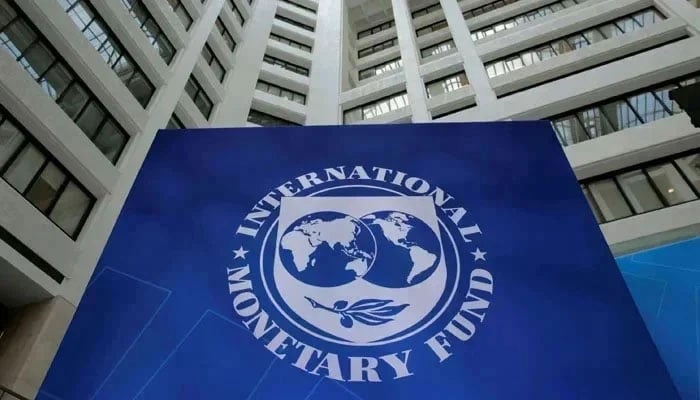
In December 1958, barely two months after General Ayub Khan installed military rule, Pakistan signed its first arrangement with the IMF – a $25 million Standby Arrangement to function as a line of credit. Then it did something revealing. It drew none of the money.
This line of credit was conditional on certain commitments. The Ayub regime did not want the credit as much as it did something else: a government three weeks into a coup, with thin reserves and uncertain international recognition, needed to tell creditors, people and itself that its financial viability was assured. The arrangement was a certificate of credibility that was meant to strengthen the junta far more than the economy.
This distinction between the IMF programme as a ‘certificate’ and as a ‘compact’ to reform runs through Pakistan’s entire fiscal history. A compact is what a state enters when it genuinely intends to repair something broken: a tax system that doesn’t collect, a budget that doesn’t add up, whereas a certificate is obtained to manage perceptions without doing the painful internal work. From the first encounter, Pakistan jumped for the certificate for a reason that has never gone away – the state was, and remains, the instrument of a narrow elite. A genuine compact would require that elite to tax itself.
Certainly, the structural adjustment programming of the 1980s and 1990s was indifferent to the poor as it drove for fiscal contraction, devaluation and subsidy removal on the assumption that growth would trickle down. But even here the deeper failure was domestic. The IMF’s own Independent Evaluation Office found revenue targets in these programmes ‘unrealistic ex ante,’ reflecting the political economy of our budgetary process. The governments negotiated targets they never meant to meet, took the financing and let the burden fall on the easiest payers because the state would not pursue the hard ones.
Nevertheless, by the 2013 Extended Fund Facility, and emphatically in 2019 and 2024, the IMF conditionality became explicitly progressive; no longer a ‘contract and hope’ but ‘tax the rich, protect the poor’. The 2024 programme mandates bringing the historically untaxed elite sectors of agriculture, property, retailers into the tax net, and requires the Benazir Income Support Programme to expand by 27 per cent precisely to cushion the poorest households.
Sadly, the ruling elite subverted it; not by rejecting it outright, which would invite scrutiny, but with an excuse always ready. For instance, agriculture is ~24 per cent of the economy but continues to contribute a paltry 0.1 per cent of the taxes. In 2024-25, all four provinces combined collected about Rs8 billion in agricultural income tax against a World Bank estimated potential of Rs1.22 trillion. Provincial governments, manned by the landowning class that would pay, legislated with utmost lethargy and left enforcement deliberately weak, pleading federalism, capacity issues, and the cropping cycle.
Similarly, when the Shehbaz Sharif government in March 2023 proposed charging affluent fuel consumers more to subsidize fuel for the poor. The Fund objected, on fair technical grounds, citing no costed plan and an announcement made without prior consultation, and within weeks the government committed to drop the scheme. The instructive contrast is not with the Fund but with what the same government has not dropped under equal or greater pressure: the agricultural income tax exemption, the sugar protections, the real estate concessions. The progressive measure fell in six weeks. The regressive ones have survived 40 years.
Another interesting story in class interest is that of all over two dozen IMF programmes Pakistan had, around 20 were abandoned or collapsed before completion the moment their cost would land on a constituency the government cannot afford to alienate. And that constituency is never the poor.
Behind every abandoned programme lies the same untreated disease – bailing out the elite. Pakistan’s tax-to-GDP ratio has been stuck around 9-10 per cent for decades, against a South Asian average above 19 per cent. The IMF’s 2025 diagnostic uses the term ‘state capture’ where corruption isn’t a deviation from governance but as the primary mode of governance. A 2021 UNDP report estimated elite privilege in subsidies, tax breaks, cheap state land, preferential contracts flowing to politicians, the military, landowners and big business at 6.0 per cent of Pakistan’s GDP. The deepest root is land as 5.0 per cent of large landholders possess 64 per cent of farmland.
This is what economic historian Mancur Olson called the ‘stationary bandit’ – the elite doesn’t loot and flee; it settles into the state, captures the rule-making machinery and extracts indefinitely. While it taxes the salaried and the masses because they are powerless, it exempts itself because it writes the rules. A recurring IMF programme is nothing except a periodic external receivership, such as a captured state requires, because the elite won’t tax itself.
The form has grown more elaborate since the undrawn certificate of 1958; the underlying transaction has not. The IMF asks Pakistan to build the basic architecture of a functioning state, including progressive taxes, a credible budget and a social floor. The Pakistani government takes the financing and builds the opposite and calls it a necessity. This is not to say default would be kinder; it would fall hardest of all on the poor. But the Fund is a recurring symptom-manager for a disease our captured state isn’t interested in treating. Consequently, the cost of each programme has been paid, reliably, at the expense of the reduced living standards of people who had no role in incurring it.
The 2024 programme holds today only because the supervision has not been withdrawn yet. The real test is what happens in the interval after it ends. On the evidence of every interval since 1958, the state will again choose its elite – unless the people make themselves as impossible to ignore as the landlords and the mill owners have always been.
The writer is a sociologist with extensive work in social policy and development. He can be reached at: [email protected]