Every construction site is a promise. It tells us something new is coming. We measure that promise in kilometres, megawatts, square feet and cost. We celebrate what rises from the ground but rarely ask what falls to the side.
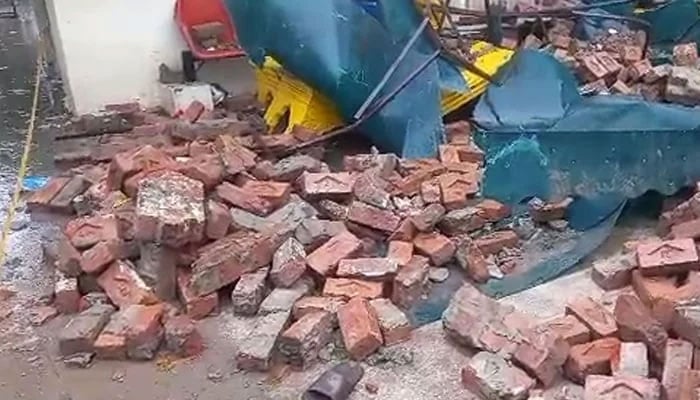
At the edge of every construction site lies an unfinished story. Broken bricks, cut steel, tiles, concrete cylinders, fixtures and pipes and unused timber. Material that once had a value, and often still does, is quietly tagged as waste.
But Pakistan today cannot afford to keep treating this leftover material as waste. In Pakistan, construction and demolition waste is among the largest and least managed waste streams. Estimates suggest that it makes up 25 to 30 per cent of the total solid waste of the country, with annual generation around 6 to 8 million tons. Much of it can be salvaged. Yet, in the absence of a formal regulatory system, this material is often dumped, burned, mixed with municipal waste, or disposed of at landfills.
The dilemma is not just an environmental failure but a development failure. The contradiction is quite simple. Pakistan has communities that lack basic infrastructure, whereas construction sites generate material that could meet some of those needs. Underserved schools could benefit from furniture, boundary walls, flooring, pathways and a safe learning space. Clinics, shelters, and community centres require low-cost improvements. On the other side of the same city, recoverable construction material finds itself lost in waste streams or the informal economy, with no second life.
That is the problem the idea behind TameerSeTaraqi aims to resolve: construction waste should not be treated as debris but rather as a recoverable resource for development. Before material is discarded, it should be measured, segregated, documented and assessed for reuse. Where technically appropriate and safe, it should be redirected to public welfare, local infrastructure and community development.
A small private sector pilot in Islamabad showed how practical the idea can be. With the support of a leading real estate group, leftover wood and construction material were redirected for social use. More than 100 furniture items were produced from wood waste, and underserved schools were supported through renovation. The pilot proved that reuse does not always require large budgets. Sometimes it requires a system, a willing construction partner and a clear social destination.
The larger policy question is whether Pakistan can move from isolated goodwill into institutional design. At present, construction waste is addressed in environmental documents primarily as a disposal issue. Environmental Impact Assessments (EIAs) may mention bins, scrap yards, recycling contractors and reuse ‘where possible’. But such language does not create accountability. It does not set targets. It does not require proof of what was reused, recycled or dumped. It specifically does not specify any construction waste management rules and regulations.
Meanwhile, globally, the direction is already established. The EU introduced a 70 per cent recovery target for non-hazardous construction and demolition waste. The US Environmental Protection Agency has highlighted that recycling construction and demolition materials created 175,000 jobs in 2012 and promotes the donation of recovered materials to qualified charities.
China’s solid waste law emphasises the comprehensive utilisation of construction waste. India has also notified the Environment (Construction and Demolition) Waste Management Rules, 2025, effective from April 1, 2026, introducing extended producer responsibility, online compliance monitoring, mandatory waste management plans, and phased utilisation targets for processed C&D waste in construction and road projects. Then why must Pakistan lag behind?
Pakistan now needs two parallel avenues to bring its construction sector to par with global standards.
The first is reform. Every major construction project should include a Construction and Demolition Waste Management Plan in its EIA. That plan should estimate waste quantities, identify segregation areas, list recycling and reuse options, provide vendor or donation pathways and set measurable diversion targets. Compliance should not end when a project receives approval. A post-completion verification should confirm whether the project fulfilled its commitments.
The second avenue is demonstration. Public and private projects can begin with structured pilots. Construction companies can segregate reusable material, prepare waste inventories, and redirect recoverable items through social enterprises, donation centres, or public welfare partnerships.
This is where CPEC, as one of the largest public infrastructure projects, becomes relevant. CPEC Phase I was heavily infrastructure-driven. Official Planning Ministry accounts confirm it added over 8,000MW of energy capacity and 888 kilometres of modern highways, alongside key projects including the Havelian–Thakot motorway, M5, Hakla–D I Khan Motorway and the Orange Line. CPEC 2.0 is now being framed around a wider vocabulary: green development, livelihood, innovation, regional connectivity and people-centred growth.
That shift makes the reuse of construction waste directly relevant. If CPEC is moving beyond hard infrastructure towards sustainable and community-focused development, then redirecting construction waste fits naturally within that vision. It can form part of corporate social responsibility commitments for construction partners. It can support visible community projects around industrial zones, road corridors and energy sites. It can generate local employment through sorting, processing, carpentry and recycling. It can turn the physical footprint of development into social value.
This is the closed-loop thinking Pakistan needs. The next generation of development must recover, reuse, document and redirect. Sometimes, one per cent of a major project’s leftover material can become 100 per cent of what a small school, clinic or community space needs.
The future of development will not be judged only by how much we build. It will also be judged by how intelligently we use what the building leaves behind.
The writer works on development policy, sustainable infrastructure and corporate social responsibility. The views expressed are personal.