When the ceasefire came into effect on the evening of May 10 last year, ending Marka-e-Haq, the headlines that followed were among the most favourable the country had seen in a decade.
Within weeks, defence analysts in Washington and London were rewriting their assessments of South Asian airpower. By January this year, the US-China Economic and Security Review Commission had concluded in print what Pakistanis already knew: that the four days in May had ended differently than Delhi’s press releases suggested, and that Pakistani aircraft and Chinese-origin systems had performed considerably better than the international consensus had predicted.
Tactical gaps, once identified, can be closed by discipline, training and competent procurement. Pakistan has shown over the past twelve months that it can do all three. The harder gaps, the ones that decide whether a country is taken seriously over a longer horizon than the news cycle, sit elsewhere. They will not close on their own; they will not close because the international press is presently kind; they will not close because the rupee has briefly stopped sliding; and they will not close because diplomatic counterparts are now returning calls that went unanswered two summers ago.
The window in which favourable perception translates into a durable advantage is short. The countries that have made the most of their good moments converted them quickly into structural gains: trade agreements signed, investment commitments banked, market access negotiated before the global attention span moved elsewhere. Those that did not convert spent the next decade explaining why the moment had not lasted.
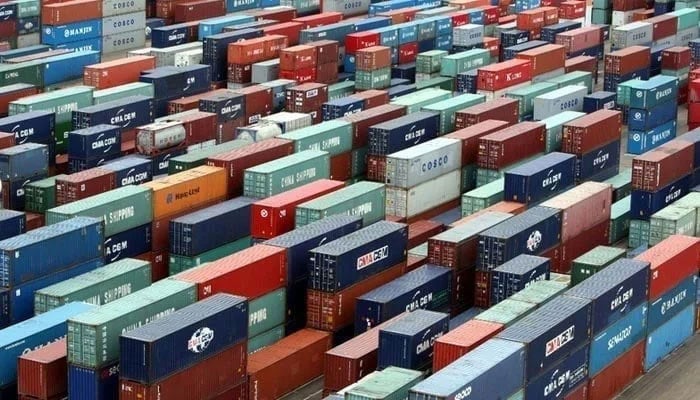
The debate now underway in Islamabad about how to use this opening has predictably settled on imports. The proposal with the most momentum is a wholesale ban on fast-moving consumer goods, a single move to compress the trade deficit in one stroke. The instinct towards import discipline is not wrong, and restraining non-essential imports while the rupee is under sustained pressure has a place. But Pakistan tried a version of the blanket ban in 2022, and the consequences were familiar: inflationary pass-through, smuggling, and revenue displacement from formal channels to informal ones, with nothing on the other side to absorb the redirected demand. A ban can stop money from leaving, but it cannot make the country earn.
What the debate leaves out is the apparatus that is supposed to make the country earn. Pakistan currently operates nearly 90 embassies and more than 70 consulates, with over 90 per cent of the Ministry of Foreign Affairs’ Rs27 billion annual budget paid out in foreign currency to overseas missions. That allocation made sense in an era when diplomatic presence was an end in itself. It does not make sense now. Every Pakistani mission abroad should be measured against a single, unambiguous test: does this post produce countable trade or investment revenue for Pakistan? Does it move goods, services, or capital into the Pakistani economy in amounts the Ministry of Finance can verify on a balance sheet?
Missions that pass the test should be reinforced; the Gulf posts already meet this bar. Remittances of $31.2 billion in the first ten months of FY2024-25 flowed through the missions in Riyadh, Abu Dhabi and Dubai, and those posts should be staffed and resourced as the operational anchors they have become. Washington, after the rare-earth shipment and the tariff reductions of last August, sits on similar potential and should be treated as a commercial node rather than a protocol office. So should London, Beijing, Ankara and Brussels. Additional trade officers, modernised commercial sections, real budgets to court diaspora capital and pursue export deals; these are the investments that pay back.
Missions that fail the test should be shut down. The savings from a single underperforming European or African post, a building lease in a capital where Pakistani exports have no realistic market, would fund a fully-staffed trade office in Lagos, Nairobi, Hanoi or Jakarta, all geographies where Pakistani textiles, IT services and surgical instruments have measurable upside and where our diplomatic footprint is presently thin to the point of invisibility.
This will be resisted by the foreign service, and the objection is long-standing and not without dignity: diplomacy is a category of activity distinct from commerce, and to treat embassies as trade outposts is to reduce a profession to its lowest function. That view also has a cost, and that cost is paid every month by a household that watches the price of imported edible oil rise because the country borrowing dollars to pay for it has not, in twenty years, built the export base that would let it pay in its own currency. An embassy that cannot demonstrate its contribution to closing that gap is not neutral overhead. It is a transfer payment from those households to a particular conception of the foreign service’s purpose.
The deeper point is one of sequence. There is a tempting view, especially when international perception has turned favourable, that diplomatic relationship-building should come first and economic gains will follow. The historical record does not support this. Countries that matter economically are listened to diplomatically; countries that matter only diplomatically are managed.
Whatever goodwill Pakistan has accrued in the past twelve months is an asset only if it is converted into trade flows, investment commitments and market access while it still holds value. Two years from now, when some other crisis has reset the global attention span, no one will offer favourable terms because of how the armed forces performed last May.
The military has shown the country what closing a gap looks like: honest diagnosis, disciplined execution and the readiness to name what is not working. That same template, applied first to the foreign missions and then to the wider economic apparatus, is the difference between a moment and a turning point. The battlefield has been answered. The ledger has not.
The writer is a non-resident fellow at the Consortium for Asia Pacific & Eurasian Studies. He tweets/posts @umarwrites