FAISALABAD: Patron-in-Chief of the Pakistan Textile Exporters Association (PTEA) Khurram Mukhtar has said Pakistan’s export sector and the entire textile value chain are under severe pressure due to policies that are penalising documented and compliant businesses despite their vital contribution to foreign exchange earnings, employment, and economic stability.
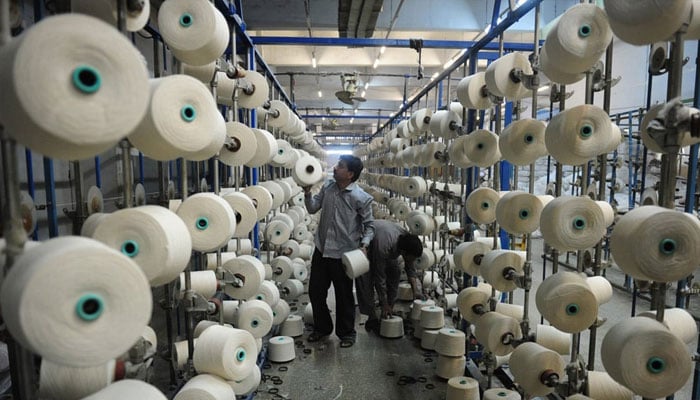
In a statement, he said exporters are the driving force behind the entire textile chain, including cotton growers, ginners, spinners, weavers, knitters, processors, garment manufacturers, and home textile exporters. He warned that any slowdown in exports directly impacts millions of livelihoods connected to the textile sector.
Mukhtar said that, according to documented government figures, the shift from the Final Tax Regime (FTR) to the Normal Tax Regime (NTR) has resulted in additional revenue extraction of nearly Rs90 billion, while exporters have paid around Rs200 billion in excess advance income tax during FY25 and FY26. He said the entire textile chain had jointly proposed that exporters should either remain under the FTR or voluntarily opt for the NTR, terming it a balanced recommendation developed through consensus among all stakeholders. However, he regretted that the proposal was not being given serious consideration.
He further said exporters’ liquidity remained trapped in the refund regime, forcing them to finance legitimate refunds through expensive bank borrowing, thereby increasing financial costs by hundreds of billions of rupees. He added that while cash circulation in the undocumented economy continued to rise, compliant businesses were facing increasing taxation, regulatory burdens, and liquidity stress.
Mukhtar termed the Export Facilitation Scheme (EFS) one of the best reforms introduced in recent years due to its digitalisation and transparency, but said the exclusion of domestic commerce and cotton from the scheme had disrupted the integrated textile value chain and increased pressure on exporters. He said Pakistan’s domestic cotton production was insufficient to meet the annual requirements of the textile industry, yet policy decisions were being taken in isolation instead of viewing the textile chain as a single integrated ecosystem.
He stressed that the export sector had repeatedly proposed evidence-based reforms, including the phased abolition of super tax, Minimum Turnover Tax (MTR), and taxation on inter-company dividends and bonus shares. He also proposed a progressive GST framework under which raw materials could be taxed at 5 percent, fabrics at 10 percent, and finished products at the standard GST rate to improve liquidity, documentation, and competitiveness.
Mukhtar said exports were a federal subject, but provincial governments were further burdening the sector through additional levies and duties, while no meaningful roadmap existed for reducing industrial energy costs to regionally competitive levels. He maintained that Pakistan’s textile sector possessed surplus industrial capacity, entrepreneurial strength, and established global market access, and had the potential to increase exports by an additional $4 billion to $5 billion within a short period if a supportive ecosystem was provided.
He said such export growth could create millions of direct and indirect jobs, improve industrial utilisation, increase tax revenues, and strengthen Pakistan’s external account. He warned that Pakistan risked missing a historic opportunity due to policy inertia, adhocism, and failure to understand the integrated nature of the textile ecosystem. “The time to act is now. What is needed is vision, courage, and seriousness to put Pakistan on the path of sustainable export-led growth,” he added.