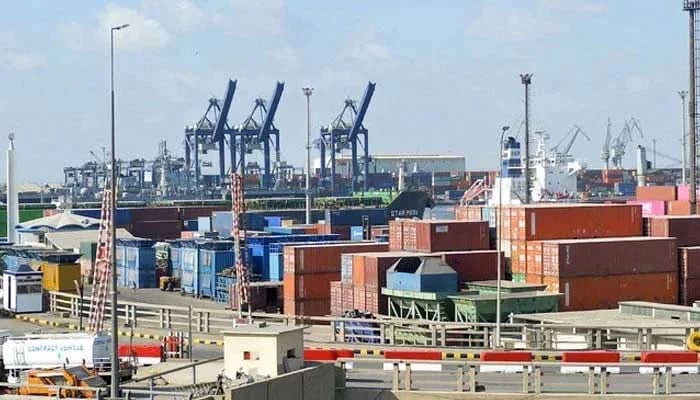
TEHRAN: Ehsan Malekzadeh, Chairman of the Board of Directors of the International Transport Companies Association of Iran, has reported a large accumulation of imported goods at regional ports. Speaking to Mehr News Agency, he said that around 20,000 containers bound for Iran are currently stranded at Pakistani ports.
He also said that a stable, low-cost route for their onward transport has yet to be established. Malekzadeh explained that following the recent war, some cargo destined for Iran was diverted and offloaded at the nearest safe transit ports in line with international maritime regulations. As a result, Iranian shipments are now stranded at ports including Karachi, Jebel Ali, Khor Fakkan, Jeddah, and several ports in India.
He added that in Pakistan’s case, domestic regulations and international restrictions have so far prevented the establishment of a secure and direct transit corridor for this volume of containers. He noted that while a significant portion of cargo in the UAE was offloaded at Jebel Ali Port, high costs and restrictions have prevented its direct transfer to Iran, with only limited shipments reaching the country via Oman and Iraq.
The trade official warned that if the situation continues, many shipments risk being declared “abandoned cargo,” particularly in Pakistan, where a strict 60-day warehousing limit applies. He also highlighted rising demurrage charges, storage costs, and “war risk” premiums, which are increasing pressure on importers and ultimately consumers.
Malekzadeh said the International Transport Companies Association of Iran is in talks with domestic agencies, neighboring countries, and embassies to establish stable transit routes. He also pointed to structural weaknesses in Iran’s transport fleet. These include restrictions on fleet modernization, difficulties in obtaining visas for Iranian drivers, and the inability of some domestically produced or assembled trucks to meet international standards.
He noted that while Iran has around 500,000 trucks in operation, a large portion of the fleet is outdated. As a result, many vehicles are not suitable for European routes. Malekzadeh concluded that without restructuring the transport fleet and resolving international transit barriers, Iran’s foreign trade costs will continue to rise.