The silence between India and Pakistan has long resembled a hardened wall-built through wars, fortified by distrust, and sustained by unresolved grievances. Yet history teaches that even the position develops the cracks from within. The pressing question today is not whether dialogue between the two nuclear neighbours is necessary, but who will take the politically difficult first step toward breaking the stony silence so we must share cations optimism.
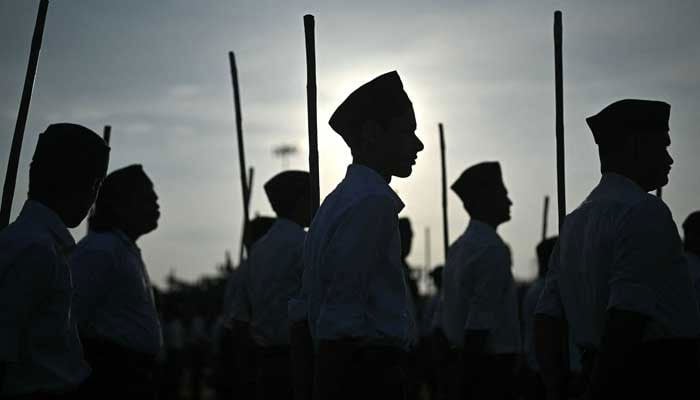
Recent signals emerging from sections of the Rashtriya Swayamsevak Sangh (RSS), India’s influential ideological organization, have generated cautious optimism among strategic observers. For years, many believed that any meaningful opening toward Pakistan would likely emerge from India’s hyper-nationalist circles themselves. The logic was straightforward: those who command nationalist legitimacy possess greater political space to soften positions without immediately being branded weak. If hostility was intensified by hardliners, perhaps reconciliation too may begin from within them.
Whether such signals represent a genuine shift in India or political strategy remains uncertain. In diplomacy, however, intentions matter less than actions. What matters is whether a meaningful diplomatic window is beginning to emerge.
Since the constitutional changes of August 2019, when India revoked the special status of Jammu and Kashmir through the abrogation of Articles 370 and 35A, relations entered one of their coldest phases. For Pakistan, the move deepened an already massive trust deficit and transformed the dispute into a sharper point of confrontation. Yet history repeatedly demonstrates one uncomfortable truth: the prolonged, multidimensional confrontation between India and Pakistan-wars, coercion, militarization, and diplomatic hostility-has yielded little beyond suffering and strategic exhaustion.
From the wars of 1947, 1965, and 1971 to the tensions of Siachen and Kargil, every cycle of confrontation has reinforced the same reality: the core dispute remained unresolved while its consequences multiplied. Policymakers on both sides often concentrated on managing the effects of conflict-security crises, militarization, political rhetoric-while avoiding the cause. The Kashmir question was repeatedly deferred, not addressed.
The late 1987s and the disputed elections in Jammu and Kashmir marked another missed opportunity. Later, one of the most promising moments emerged under Atal Bihari Vajpayee and Pervez Musharraf. Vajpayee’s language of Insaniyat (humanity), Jamhooriyat (democracy), and Kashmiriyat offered a moral vocabulary for reconciliation, while Musharraf displayed unusual diplomatic flexibility. Yet, once again, hawkish politics in India overshadowed possibilities.
Still, history is not only a record of failure; it is also a teacher. Conflicts produce gains, losses, or learning. If South Asia has learned anything, it is that geography ultimately imposes realism upon politics. Vajpayee’s timeless observation remains relevant: friends may change, but neighbours cannot.