_akhbar.jpg)
As the world awaits what now appears to be an imminent Iran-US memorandum of understanding, perhaps even framed as a ‘memorandum of peace’, the immediate issue is not only what the document will contain, but what political and strategic context has produced it. The expected agreement is not emerging from goodwill but from pressure, fatigue, risk and the recognition that military escalation has not produced a decisive outcome.
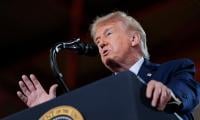
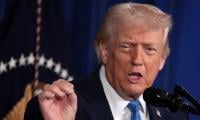
The US entered this confrontation alongside Israel with overwhelming technological superiority, military reach and political confidence. Yet the war did not secure Iran’s strategic submission. Instead, it produced a battered regional landscape, global economic anxiety, disrupted energy flows and a growing recognition across capitals that another open-ended Middle Eastern war would be disastrous. Iran, despite four decades of sanctions, the targeting of senior military and political figures, and severe internal and external pressure, has not collapsed. Its state and society have absorbed a heavy blow but have also projected comprehensive endurance. At home, Trump faces political sharks out to get him for downgrading the US’s global power status.
This is the context in which Washington and Tehran now move towards a limited understanding. The immediate outcome appears to be built around three linked issues: reopening the Strait of Hormuz, easing some sanctions and financial restrictions for Iran and establishing a framework for longer-term nuclear negotiations. Any understanding that restores maritime traffic will be welcomed by energy markets and by countries dependent on Gulf oil flows.
For Iran, however, reopening Hormuz cannot simply mean returning to the status quo while the US and Israel retain freedom to strike again. Tehran’s position is shaped by mistrust. It believes negotiations were previously used as cover for military pressure. Therefore, the question is, Hormuz reopening, but under what assurances? Iran requires guarantees that reopening the strait does not become a one-sided concession followed by fresh US-Israeli attacks.
Sanctions and frozen assets are the second major issue. There are reports of discussions about the partial unfreezing of Iranian funds and limited sanctions relief, though the complete unfreezing of Iranian assets, reportedly worth $1 trillion, will not be immediately forthcoming. Partial amounts and phased relief are likely. Iran has also demanded war damages and reparations. Financially and politically, the demand matters: Tehran wants the settlement to convey that aggression carries a cost.
The nuclear issue is the most complex and cannot be settled in hurried negotiations. US Secretary of State Marco Rubio’s remark that a nuclear deal cannot be written “on the back of a napkin” is correct because it reflects the technical realities involved. The JCPOA provides a precedent for what a technical framework can look like, but today’s political environment is far more hostile. Iran will not easily accept the total dismantling of its enrichment capacity, while Washington will insist that Iran must never acquire a nuclear weapon.
Iran’s public posture has also been carefully framed. Its leadership has repeatedly said it is prepared to reassure the world that it is not seeking nuclear weapons. That leaves space for negotiation, but not surrender. The likely path, therefore, is not an immediate nuclear settlement, but an interim political understanding followed by technical talks on enrichment, monitoring, stockpiles and timelines.
A third and equally sensitive question is Israel. This war cannot be understood primarily in the context of US-China containment or great-power rivalry, as many strategic thinkers erroneously suggest. Israel’s campaign against Iran has deep roots. For decades, Israeli strategic thinking has treated Iran as the central regional threat, especially after Iraq, Syria and Libya were weakened or destroyed jointly by US actions and Israel’s planning. Israel today is not only a state that falsely claims to be threatened, but one whose military actions have repeatedly threatened every neighbour across the region.
This is why any Iran-US understanding will be fragile unless Washington defines how it will manage and contain Israel’s illegal demands. The key question is whether President Trump is willing to restrain Israel, or whether the agreement will become another pause that allows Israel to retain the option of escalation. Israeli Prime Minister Netanyahu has made clear that Israel actually wants freedom of aggression, especially in Lebanon and against Iran-linked forces. That could become the fault line of the entire arrangement.
Lebanon also matters. Hezbollah’s current leader, Naim Qassem, has welcomed moves towards de-escalation while insisting that Lebanon cannot be left outside any regional settlement. Israel’s continuing military aggression in Lebanon and Hezbollah’s defensive actions to protect its people’s armed role make the Lebanese front one of the most dangerous triggers for renewed escalation. Any serious regional understanding must include mechanisms to prevent Lebanon from becoming the battlefield through which the Iran-US settlement is sabotaged.
The Abraham Accords dimension is also important. Reports by Barak Ravid suggest that Trump raised the idea of expanding recognition of Israel with regional countries that do not have formal diplomatic relations with Israel. This is an unlikely and deeply sensitive ask. Recognition of Israel cannot be treated as a tactical add-on to an Iran deal. For Pakistan, Saudi Arabia and others, the Palestinian question remains central.
Ultimately, the likely memorandum may deliver a tactical pause: reopening Hormuz, reducing the risk of immediate military escalation, allowing limited sanctions relief, and creating a path for nuclear talks. But whether it becomes a strategic turn depends on harder questions. Can the US separate its own interests from Israel’s aggressive, illegal, genocidal agenda? Can Iran accept verifiable nuclear limits without appearing to capitulate? Can Lebanon be protected from renewed war? And can any regional normalisation process be grounded in the UN charter and justice?
At this initial stage, the US and Iran appear to be over the hump heading towards some initial settlement – but the stumbling block can still be Israel.
The writer is a foreign policy & international security expert. She tweets/posts @nasimzehra and can be reached at: [email protected]