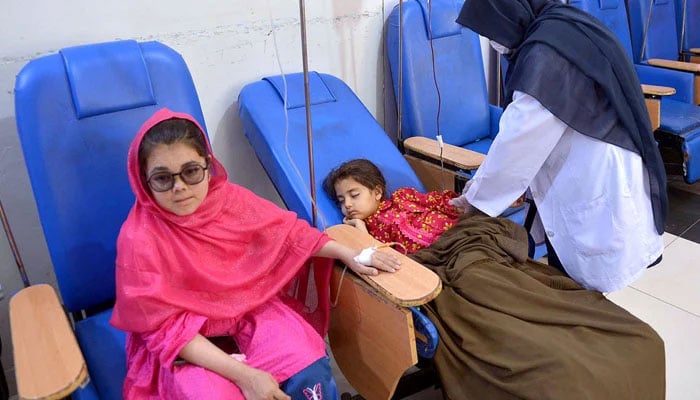
Thalassemia is an inherited blood disorder that is currently affecting 1.31 million people, with roughly five per cent of the world’s population acting as carriers.
The associated genetic mutation causes abnormal or reduced haemoglobin production. Thalassemia impairs the body’s ability to transport oxygen and compromises the immune system. Its most significant form is beta thalassemia, which exhibits two types: thalassemia minor (one faulty gene) and thalassemia major (both genes are faulty).
Thalassemia major is a concerning condition that exhibits symptoms such as chronic anaemia, jaundice, growth retardation and fatigue. This condition heavily affects the quality of life, requiring individuals to be dependent on regular blood transfusions, advanced medical treatments such as iron chelation therapies, and putting a huge burden on healthcare costs for middle-income families.
An estimated 6,000 to 8,000 children with thalassemia major are born in Pakistan every year, and the estimated carrier rate is 5-7 per cent, with 9.8 million carriers (thalassemia minor) in the total population. Fortunately, thalassemia minor patients do not require blood transfusions or other medical treatments, but the marriage of two such carriers can lead to an offspring with thalassemia major.
One of the major reasons identified in Pakistan for thalassemia major is cousin marriages. Between 60 and 70 per cent of marriages in Pakistan are consanguineous (between first or second cousins), and this can give rise to numerous genetic abnormalities. Cousins share the same bloodline, and if thalassemia minor is prevalent among their ancestors, the probability of two cousins being thalassemia major carriers is extremely high. In this case, there is a 25 per cent chance with each pregnancy that their child will inherit two defective genes and have thalassemia major.
However, our society is still insistent on marrying their children within the family to strengthen family bonds. There have even been instances where either families often object to or get upset when asked to undergo a blood check-up before marriage, linking it with social stigma.
There are also potential gaps in legislation, service delivery and local awareness. Most importantly, the local population lacks awareness about the nature of this disease, its potential risks and implications, and how to get it diagnosed at an early stage. The Thalassemia Act of 2018 (aimed at mandating pre-marital screening for spouses) faces weak implementation, with limited access to diagnostic and counselling facilities in rural areas. This, coupled with the asymptomatic nature of thalassemia minor, often leads to late diagnosis and eventually this trait is passed down to future generations. Following the 18th Amendment, fragmented healthcare systems with limited coordination among provinces have also created significant gaps in maintaining a robust thalassemia registry and in screening efforts.
Fortunately, Thalassemia is preventable. In countries like Cyprus and Turkey, where carrier rates were very high and 18 per cent of the population carried different genes of haemoglobin abnormalities, the birth of new thalassemic children was halted through a comprehensive national prevention program. In Iran, compulsory pre-marriage blood tests and genetic counselling have resulted in a very high success rate.
Notable organisations in Pakistan have also been actively working to strengthen efforts to prevent thalassemia. The Pakistan Thalassemia Welfare Society and Fatimid Foundation provide screening services for thalassemia carriers, extended family screening, prenatal diagnosis and even offer genetic counselling about potential risks to couples who are thalassemia carriers. At the provincial level, the Sindh Blood Transfusion Authority collaborated with the National Database and Registration Authority to establish a thalassemia desk to facilitate early screening, while the Punjab Information Technology Board introduced the Punjab Thalassemia Prevention System, which focuses on data management and tracking.
However, the most significant milestone has been policy-level mediation. The National Assembly passed a bill in March 2026 to officially mandate the premarital screening of grooms and brides, as well as their blood relatives, to reduce the life-threatening impact of this condition. At the same time, all centres dealing with thalassemia were advised to ensure that 10 per cent of their budget is spent on developing facilities for prenatal diagnosis of thalassemia.
This bill also highlights the involvement of Nikah registrars, who shall obtain test reports from premarital screening of the bride and the bridegroom and maintain these reports for at least two years from the marriage date. If marriage is solemnised in contravention of the law, the licence of such a registrar would be cancelled and the registrar fined Rs100,000. But perhaps the most significant move has been the recent proposal at the National Thalassemia Conference, organised by the Omair Sana Foundation, to formally incorporate mandatory pre-marital screening into the Nikah Nama. Health practitioners, policymakers, and researchers highlighted that this initiative, coupled with increased awareness, regular blood donations and wider access to testing, could help reduce the number of children born with thalassemia.
It is very enlightening to see that national efforts for pre-marital counselling and screening are now officially recognised at the policy level and incorporated into the legal marriage contract. This move, if implemented in a timely and effective manner, will highlight the seriousness of the situation and help inform the public, even the most educated strata, about the importance of premarital screening and timely prevention.
Preventing thalassemia is no longer a scientific challenge. If complemented by institutional structures, societal awareness campaigns, governance reforms and strengthened service delivery, this proposal can prove pivotal in safeguarding our future generations from this life-threatening condition.
The writer can be reached at: [email protected] and www.linkedin.com/in/khadija-hasan-75852b30b