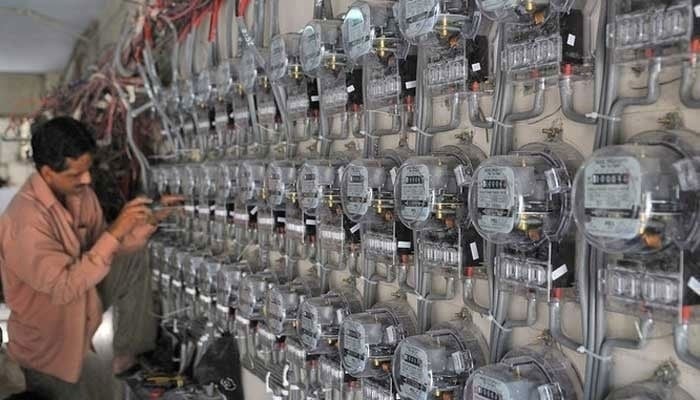
Governments globally either directly provide, or tightly regulate, the provision of electricity but not the provision of other important commodities such as flour, milk or soap.
The logic for this is that the cost of electricity distribution, as opposed to most commodities, including those mentioned above, drastically decreases as more and more consumers are added to the network; societies want to make sure that the benefit of these decreasing costs is passed on to consumers and not retained by profit-maximising private firms. Hence nations either opt for government ownership or regulatory control of prices.
Say you move into a neighbourhood and can buy electricity from one of two companies. One company supplies to your entire neighbourhood and the other has a distribution network miles away. The cost for the first company to bring power to your house is just the cost of 50 feet of cable from your neighbour’s gate to your gate.
But the cost to the other company would be huge, as it would have to bring a transmission system many miles to your home. So, obviously, the first company will be cheaper, and you will opt for it. But this company, knowing that you have no choice but to buy from it, would act as a monopolist and charge you an extractive price.
Thus, to ensure that consumers get a fair and competitive price and aren’t left at the mercy of a monopolist, societies opt for government ownership or regulatory control. The irony in Pakistan is that we have both government control and regulatory control, and yet our consumers end up paying exorbitant prices for electricity. That’s because our government-owned power sector behaves as a monopolist and the regulator is completely captured by it.
Today, electricity in Pakistan is more expensive than in any other country in South Asia. Whereas we can produce solar power at home for Rs18 per unit, our government charges middle-class Pakistani homes between Rs42 and Rs55 per unit (including sales tax). On top of these rates, your bill also includes ‘income tax’, ‘further tax’, ‘extra tax’, ‘provincial levy’, an ‘FC Surcharge’ (of Rs3.23 per unit), ‘fuel price adjustment’ and ‘fix charges’. For high-usage homes, the average unit costs more than Rs70 per unit. Under this government’s policy, Pakistanis pay more for electricity than consumers in much richer countries such as Vietnam, Thailand and Indonesia.
Now that home solar power with battery storage is available for under Rs25 per unit, the logic of government ownership of power distribution doesn’t really hold. Power distribution companies are no longer true monopolists and thus the sooner that power distribution companies are privatised, the better.
The logic of government control of power generation never really existed, but for the fact that in a single buyer model, no one will set up generation except with the government’s guarantee. So the government got into contracting for power generation – what we call IPPs.
But when your own money is not at stake and taxpayers’ money is involved, most politicians make decisions based on politics and not economic efficiency. That’s why in Pakistan, we have always had IPPs set up without bidding (except for the brief time when Shahid Khaqan Abbasi was prime minister) and also ended up setting too much power generation, and that too without undertaking an external viability study. So today we have to pay nearly Rs1800 billion in fixed capacity charges per year for capacity we use no more than 60 per cent of.
With our current capacity, Pakistan’s grid can easily generate over 200 billion units of electricity (excluding units from furnace oil plants). And yet last year we generated only about 137 billion units, and after losing 24 billion units in transmission, distribution and theft, we were able to sell 113 billion units. And we collected bills for 109 billion units. And middle-class bill-paying and tax-paying consumers paid for the capacity of over 200 billion units, paid for the generation of all 137 billion units, paid for theft and distribution losses, paid for the free units given to some people (eg, judges) and paid for others who didn’t pay their bills. Plus, they subsidised electricity for low-income consumers.
Note that the fuel cost of producing an average unit is only Rs8 per unit, the cost of running distribution companies is Rs4 per unit and another Rs6 is the cost per unit of distribution losses and theft. Even with all the inefficiencies, the government can still sell you a unit for Rs36 if it sells 110 billion units and balances its books. If it sells 200 billion units, it can sell power to you at Rs27 per unit. But it has decided to sell power for much more and therefore consumers are buying less and less from the grid. This April, for instance, electricity sales were lower than in April of 2018, even though we have added 35 million citizens to our ranks.
Given the system’s expansive overcapacity, transmission bottlenecks, bill collection failures and other issues, the government has decided that reforming the system is too difficult. So it just charges the consumers and taxpayers for all its inefficiencies, theft, etc and sells you the most expensive electricity in the region.
Because it sells power so expensively, people use less electricity than in neighbouring countries. Our per capita grid power consumption is about half that of India, for instance. Second, consumers install solar panels and generate their own electricity during the day to reduce their electricity bills. Soon, batteries will become cheaper, and people will be buying less power even after dark.
In this backdrop, where our grid monopoly now has competition from solar energy, a better pricing strategy is needed.
The issue of selling a product with high capacity cost and decreasing incremental cost is not unique to Pakistan. In such situations, economists suggest a two-part tariff, whereby capacity charges are recovered through fixed charges and a lower unit price of electricity reflects the variable cost.
The government of Pakistan has already decided, as part of its IMF agreement, to charge the same price for power to even the poorest consumers. The subsidy it will administer in the future will be only a ‘targeted subsidy’. But even if we keep variable charges the same for all users, including for industrial and commercial ones, we can still set different fixed charges for various consumers, depending on their ability to pay. And this can be determined based on their historical usage.
We can balance the books of the current system with sales and recovery for 100 billion units if we use a two-part tariff with a rate of Rs18 per unit and average fixed charges of around Rs3000 per consumer. When we sell more power, as people will consume more electricity at this variable rate, we can reduce the fixed charges further.
Before you think Rs3000 is too high, please note that this is the average across all consumers, including those in the industry, hotels, department stores, marriage halls and shops. You can easily devise a system where homes that consume 100 units or less pay only a Rs250 fixed charge; those consuming less than 200 units pay Rs500; and large industries or luxury hotels pay up to a crore a month.
This two-part tariff will allow the government to sell a lot more units and the burden of the capacity costs will be divided over more units. More importantly, this will give a tremendous boost to employment, industry and exports.
The writer is a former finance minister and secretary of Awaam Pakistan.