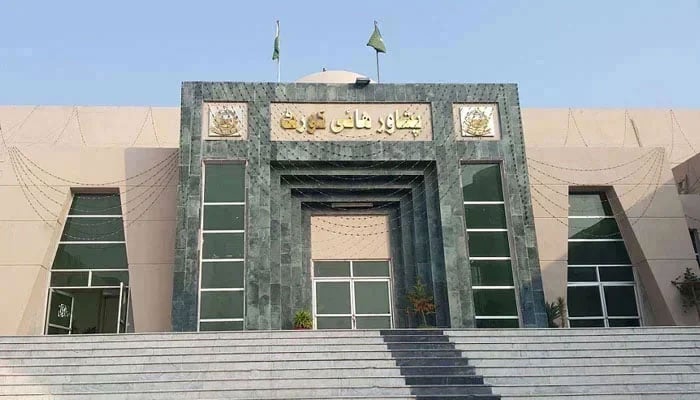
PESHAWAR: A two-member bench of the Peshawar High Court (PHC) court has issued notices to the Advocate General of Khyber Pakhtunkhwa, seeking comments on a writ petition challenging amendments to the MTI Tribunal Act through which the provincial government appointed the Health secretary as chairman of the tribunal.
The bench heard the petition filed by advocate Hafiz Zain Rasheed.
During the proceedings, the petitioner’s counsel argued that the provincial government had amended the MTI Tribunal Act and reconstituted the tribunal by appointing the Health secretary as its chairman, while two government officials were made members of the tribunal.
The counsel informed the court that previously, a retired judge of the High Court served as chairman of the MTI Tribunal, whose appointment required the approval of the chief justice of the PHC.
He added that two retired session judges also served as members of the tribunal and judicial officers decided matters related to the tribunal.
The petitioner argued that when decisions started coming against the government and the MTI Tribunal began granting stay orders in various cases involving the board, the issue was discussed during a board policy meeting held on July 28, chaired by Dr Nowsheran Burki. The Health secretary was present in the meeting.
According to the counsel, Dr Burki told participants that the tribunal was issuing stay orders against government decisions, which was affecting the functioning of the board, and therefore the MTI Tribunal needed to be reconstituted. The Health secretary allegedly assured participants that work was already underway to restructure the tribunal.
The petitioner contended that the government’s move was mala fide and aimed at obtaining favorable decisions from the tribunal.
He argued that the Constitution clearly provides that judicial matters must be handled by judicial officers, and only judicial officers are authorized to decide such cases.