The trajectory of print media in Pakistan over the last hundred years reflects a broader transformation in the production, distribution, and consumption of information.
What once revolved around powerful publishing houses has steadily evolved with the emergence of electronic media—particularly radio and television—which redefined how news is presented and how audiences engage with it. In the current era, however, the most formidable pressure comes from digital and social platforms, where immediacy frequently outweighs verification, compelling print journalism to grapple with a serious crisis of credibility.
Following Pakistan’s emergence as an independent state, newspapers such as Dawn and Jang assumed a central role in shaping public opinion. These publications became key voices of the new nation, promoting ideas of independence and a distinct national identity. During this formative period—often regarded as a golden era—print media expanded rapidly, with a surge of newspapers and magazines across major urban centres. Journalists held considerable influence in public discourse, while print advertising emerged as an effective means for businesses to connect with their audiences.
In the 20th century, print media experienced significant consolidation, leading to the emergence of large publishing houses with substantial political and cultural influence. Newspapers and magazines became the primary gatekeepers of information, shaping public discourse and acting as watchdogs over power.
According to the Pakistan Institute of Development Economics (PIDE), advertising expenditure in the country’s media industry increased at an annual rate of 23 percent between FY2002 and FY2011. It rose from Rs. 32 billion in FY2011 to a peak of Rs. 87.7 billion in FY2017, before declining steadily to Rs. 58.6 billion in FY2020. The share of TV channels in total media advertising revenues fell from 58 percent (Rs. 18.6 billion) in FY2011 to 44.4 percent (Rs. 26 billion) in FY2020, with the rest going to digital formats, print, radio, and out-of-home advertising.
However, the rise of broadcast media—particularly television in the early 2000s—started gradually eroding print’s dominance by introducing faster and more accessible formats of news dissemination. Many print outlets operating before 2002 expanded into TV news platforms. While this dented print media somewhat, the major challenge arrived with the rapid expansion of the internet. Easy access to online media through mobile phones somewhat moved eyeballs from print. Digital platforms enabled instant, global distribution—something print could not match—effectively dismantling traditional barriers to entry in journalism. Social media platforms such as Facebook, X (formerly Twitter), and YouTube have significantly disrupted traditional media, reshaping how news is produced, shared, and consumed.
Audiences increasingly prefer real-time updates, personalised feeds, and multimedia content over static printed pages. Research highlights that traditional print media outlets experienced a decline in their role as primary distributors of news as audiences migrated to digital platforms. This shift has caused audience fragmentation.
Media viewership in Pakistan is highly concentrated, with newspapers, TV, radio, and news websites together accounting for just four percent of the market, while a few large owners dominate. Meanwhile, eighty percent of smaller market players struggle to survive in tough conditions.
The convenience and immediacy of digital media have to an extent reduced print readership and circulation. People now expect continuous updates, interactivity, and often free access to content—expectations that traditional print struggles to meet. This decline is not merely technological but behavioural, reflecting deeper changes in attention spans, consumption habits, and trust dynamics.
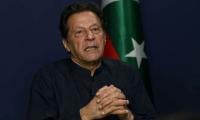
Many journalists argue that an even bigger man-made crisis struck earlier. During Imran Khan’s regime, Information Minister Fawad Chaudhry, working closely with the Establishment, cut all government advertisements to critical newspapers. Since the government uses public sector advertising—which contributes 22-23 percent of total media revenue—as a primary lever to force dissenting and independent media to toe the line. Coupled with awarding jail terms, kidnapping and harassing journalists, and forcing media houses to remove independent anchors from hosting programmes, these measures starved publications of vital revenue. “This minister is also reported to have boasted about stamping out the independent print medium and suggesting that it will be replaced with digital media platforms.”
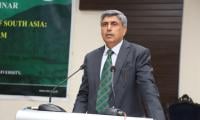
While it was rare that the media and journalists did not suffer pressures to curb their independence, freedom, and liberty of expression from any of the previous governments or military-led regimes, PTI’s Fawad Chaudhry presided over the deliberate and large-scale demise of independent print media, argues President APNS Senator Sarmad Ali, while he was approached to comment on the state of affairs in the media. He bitterly refers to this period as “COVID-18”—an artificial crisis that, he says, was more damaging than the pandemic itself. In that period alone, according to the President APNS, “the advertising revenue to the print medium declined by 40 percent.”
What followed was truly disastrous. According to the Pakistan Federal Union of Journalists (PFUJ), at least 7,500 journalists and associated media employees lost their jobs in over two years. While almost every outlet scaled back operations, more than two dozen publications and two TV channels were also forced to close. Even large and stable media groups were affected by the combined impact of the July 2018 elections, an ailing economy, withdrawal of government advertising support, and consequent dwindling commercial advertising revenue. “This form of political censorship remains one of the greatest threats to media today.”
While the PTI regime was the harshest, successive Pakistani governments and military regimes have weaponised laws, economic strangulation, and brute violence to strangle independent journalism. Even soon after Pakistan’s inception, the renowned Civil and Military Gazette was targeted—allegedly for its role in the Rawalpindi conspiracy case—exposing how early and ruthlessly media curbs were imposed to silence dissent.
After generals Ayub and Zia-ul-Haq, General Pervez Musharraf’s post-2002 TV license expansion came shackled to PEMRA, a regulator enforcing draconian “red lines.” When journalists defied him during the 2007 lawyers’ movement, Musharraf crushed them violently. However, the civilian rulers that followed him, merely swapped overt censorship for covert coercion: withholding millions in state advertising from critical outlets while lavishing the loyalist media.
The 2016 Prevention of Electronic Crimes Act (PECA), brutally amended in 2025, now criminalises nebulous offenses against Pakistan’s “ideology,” granting warrantless arrests and digital blackouts. Yet the state reserves its harshest iron fist for political dissenters, rights defenders and journalists while shockingly extremist tendencies—the true threat to societal tolerance—are propagated freely, spread unchecked.
While the state crushes political dissenters—-jailing journalists, blocking platforms, and strangling opposition media—extremist tendencies persist unchecked. Blasphemy accusations, sectarian vitriol, and militant rhetoric flood mainstream media and social networks, with the state green-lighting hate speech instead of curbing extremism. Successive regimes have co-opted extremism, pardoning mob violence and allowing the Talibanisation of public discourse to flourish unchecked.
Together this has greatly weakened rational public discourse and press freedom leaving the media at large but the newspaper industry, particularly vulnerable when an external shock arrived.
The COVID-19 pandemic delivered another harsh blow. Fear that printed papers—handled by vendors, passed between family members, or left on doorsteps—could carry the virus led many readers to stop buying newspapers.
“The pandemic’s damage outlasted the lockdowns. Habits didn’t return for many readers,” Senator Sarmad Ali quantified the toll on print: “nearly 30-40% percent of advertising revenue lost—a hemorrhage from which the medium has yet to recover.” It permanently rewired how ordinary Pakistanis consume news, pushing them further toward digital screens, he argues.
COVID-19 did not merely disrupt consumer behaviour—it engineered an almost lasting change in personal buying habits, dining preferences, movie-going culture, and grocery purchasing patterns. What began as fear-driven changes quickly solidified into new norms. The result was catastrophic for traditional industries: footfalls in malls, restaurants, and cinemas collapsed, while even grocery retail faced massive disruption. Many businesses witnessed their sales plunge off a cliff, entering a steep decline from which they have still not recovered years later.
Collectively, the digital revolution has contributed to declining circulation. Adding to this pressure, governments have increasingly shown a preference for bloggers, vloggers, and social media influencers over mainstream journalists. “The heavily government-driven narrative and non-authentic voices often receive better access, credentials, and state advertising deals,” Senator Sarmad argued. Unlike trained journalists who follow fact-checking and editorial standards, many digital creators operate without accountability.
The single greatest challenge facing the news medium today is the slow suffocation of verified, credible journalism beneath an avalanche of loud, lurid, and often toxic content—sensationalism that shouts, alongside unverified, state-aligned and political narratives engineered for control, spreading like smoke. In this noisy chaos, accuracy has fallen silent, “largely buried under what sells, not what holds true.” “Trust is drowning under a deafening tide of sensational and unverified content,” Sarmad added.
The government should reverse its dangerous preference for vloggers, bloggers, and influencers over credible journalism—a policy that has systematically undermined authentic and fact-based content.
Print media in Pakistan is not disappearing, but it is being transformed under extreme pressure. Its core strengths—credibility, depth, and permanence—remain valuable in an era of information overload. Yet the industry faces mounting challenges, including political censorship, audience migration to digital platforms, the lasting impact of COVID-19 on reading habits, and the government’s growing preference for unregulated influencers. More critically, the defining threat to news is no longer just misinformation, but the systematic hollowing out of credibility at the hands of “the several untrained bloggers and newspersons.”
The challenge for print media lies in balancing economic sustainability with journalistic integrity while adapting to a digital ecosystem that rewards speed, scale, and engagement. Long-term survival will likely depend on embracing new technologies, tailoring content to evolving audience preferences, effectively using social media, and developing new revenue models.
—The writer is a senior journalist and staff member of The News